Politics & Government
Blue Crab Population Reaches 19-Year High
Gov. Martin O'Malley announced the juvenile crab population is at its highest level on record and encouraged residents to buy local crabs.


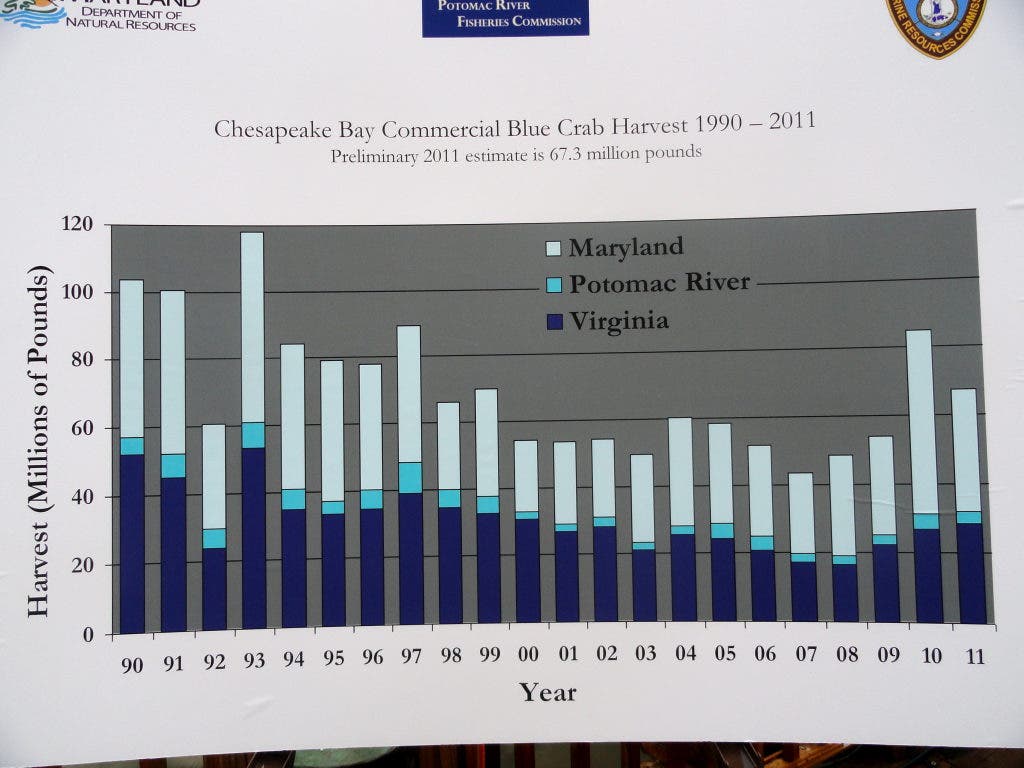
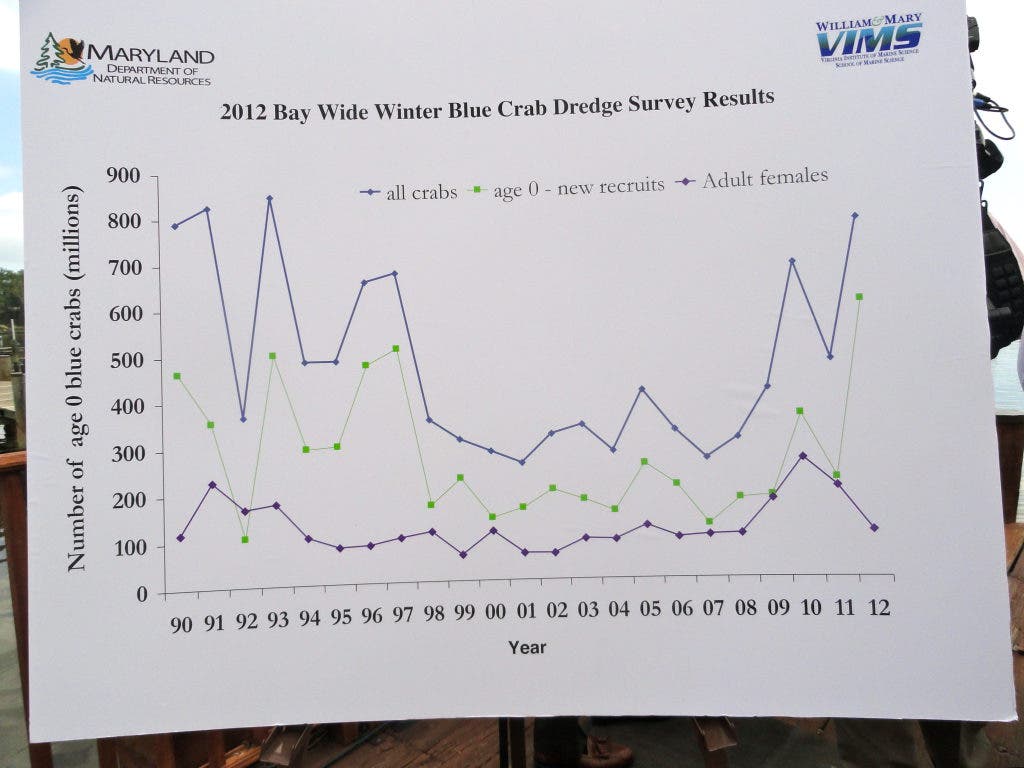

While at in Riva on Thursday, Gov. Martin O'Malley announced that the Chesapeake Bay’s blue crab population is the highest it’s been in almost 20 years.
Not only are there 66 percent more crabs in the bay than last year, the juvenile crab population is at its highest level on record at 587 million, O’Malley said.
“In 2008, I told you the crab population was at a 19-year low,” O'Malley said. “Because of a different set of better choices that all of us have made together, I’m glad to report that the population of the blue crab is at a 19-year-high.”
Find out what's happening in Severna Parkfor free with the latest updates from Patch.
According to the Maryland Department of Natural Resources' (DNR) annual winter dredge survey, approximately 764 million crabs spent their winter in the bay and the juvenile crab population tripled last year’s total. The previous record was set in 1997 with 512 million crabs.
The one cautionary note of the DNR survey showed that spawning-age female population decreased since last year.
Find out what's happening in Severna Parkfor free with the latest updates from Patch.
“Overall our female population remains above the safe threshold level. This kind of variation level is not out of the ordinary … we’re optimistic that our record juvenile population will bring better news next year in terms of these spawning-age females,” O’Malley said.
Behind the governor and other officials stood Steve Vilnit, a fisherman and DNR director of fisheries marketing. Vilnit said fishermen truly benefit from the "uplifting" numbers.
“This is huge. In a year or two when these are adult-sized crabs, catch limits can go up,” Vilnit said. “It’s showing that sustainability is there and this is an industry that’s growing.”
The DNR survey showed that fishermen harvested roughly 67.3 million pounds of crabmeat in 2011 throughout Maryland, Virginia and the Potomac River. Both the overall and juvenile population experienced a large increase since last year. In every other year a positive spike occurred, the population fell significantly the following year.
The ups and downs are a good sign and not something to worry about, according to Lynn Fegley, DNR deputy director of fishery services.
"We actually like to see the population in that very variable way because it’s sort of a sign that we’re back in that healthy mode. Crabs are a very short-lived species,” Fegley said. “We expect that, it’s one of the tricky parts of messaging this. It’s easy to get very alarmed when you see the dip but it doesn’t work that way.”
The Chesapeake Bay recently earned a D+ in its latest report card by the University of Maryland Center for Environmental Science (UMCES). If the grade had been better, Fegley said the crab numbers could be even higher.
“How much more response could we get if the bay was in much better shape?” Fegley said. “One may argue the bay can’t support as many animals now as it could 50 years ago. It’s just a different ecosystem, there are fewer oysters.”
Moving forward, O’Malley said the state must continue to work alongside Virginia and fishery managers to “stay the course” with science-based management. He added that one easy thing residents can do is to make sure they’re buying local crabs.
By the end of this May, the DNR hopes to launch its new program called “True Blue”—a way to help the public identify the restaurants that are using Maryland crabmeat.
“You’ll be able to go into a restaurant, look at a menu and know that you’re getting a crabcake that’s made with true Maryland crabmeat,” Vilnit said.
The program’s website, www.marylandseafood.org, won’t be up and running for a few months, he added.
Where do you go in Severna Park to get your crabmeat or best crabcake?
Get more local news delivered straight to your inbox. Sign up for free Patch newsletters and alerts.