Schools
Evanston School Board Candidate Profile: Kristen Scotti
The Northwestern PhD candidate wants to bring a disability lens to the Evanston Township High School board.


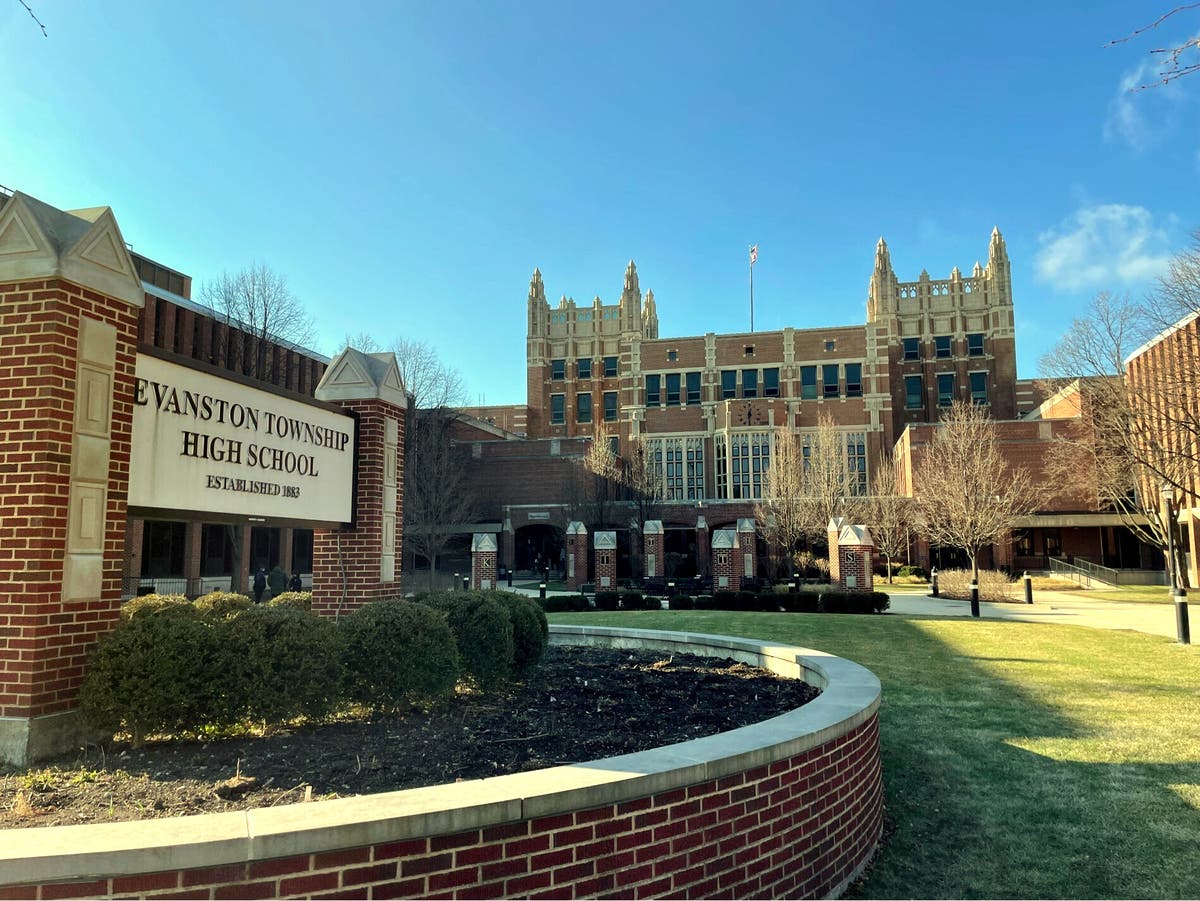
EVANSTON, IL — Four candidates are running for three contested seats on the Evanston Township High School District 202 school board in the April 4 municipal elections.
Two incumbents are seeking re-election: Monique Parsons and Elizabeth Rolewicz. They face two challengers: Leah Piekarz and Kristen Scotti.
Evanston Patch provided all candidates with a questionnaire ahead of Tuesday's vote and publishes their responses verbatim.
Find out what's happening in Evanstonfor free with the latest updates from Patch.
Kristen Scotti
Age (as of Election Day)
42
Does anyone in your family work in politics or government?
No
Find out what's happening in Evanstonfor free with the latest updates from Patch.
Education
B.S., Psychology, Northwestern University; PhD, Materials Science, Northwestern University (exp. Apr 2023)
Occupation
Materials Science & Engineering PhD Student, 5 years
Campaign Website
scotti4eths.com
Previous or Current Elected or Appointed Office
None
The most pressing issues facing the district are _______, and this is what I intend to do about them.
1. At the board level, student groups are effectively being erased and excluded from conversations that impact them the most. Some examples include: unhoused students not being included in any reports. Well-being and advanced coursework categories, as assessed in the Achievement Report/Year in Review, do not include data for low income students, English language learners or students on 504s/IEPs. Even when disabled student data are included, they are often not discussed, despite the fact that our data show we are failing to address the needs of these students. We tout equity work related to trans, gender-expansive and non-binary students while these students routinely encounter restroom access issues for which they are told to “self-advocate” against; we lack safeguards in our policies and administrative procedures to protect students who need gender support plans but are unable to secure parent/guardian support. We fail to consistently pair equity work with an intersectional lens; thus, we do not center our most marginalized students in this work. We need to report data for all marginalized groups and disaggregate within those groups, at minimum, by race. With that, we can determine where policy changes are needed and targeted supports need to be directed. We should be soliciting feedback from groups who are most impacted. Resource reallocation may be needed to address support gaps.
2. Disabled students on IEPs are suspended at the highest rate, relative to other subgroups tracked within ETHS. Within that group, Black students are disproportionately impacted. While suspension data related to students on IEPs are included in written board reports, they are not presented to the board (data related to other subgroups are), and board members don’t ask questions about disabled student data. The disproportionalities related to race, disability (and likely other marginalized identities) and the corresponding intersections are ALL important because that information should be considered while assessing causes, impacts and paths forward. For disabled students, these data indicate an inadequacy of supports—we need to be revisiting IEPs, identifying root causes, and responding accordingly.
3. As our disabled students have been underserved for far too long, this group needs special attention; this is evidenced by our outcome and our outplacement data. In addition to addressing disproportionate discipline rates, we should look at expanding co-taught courses (currently, quite limited, forcing students to select courses that offer too little or too much support) and empowering students with assistive technology, using an integrative approach, which includes applied practice for students and professional development for teachers. The Special Education Parent Advisory Committee needs to be reimagined to actively engage with parents; in this space, parent voices are often silenced (especially parents of students in our transition programs and the ETHS Day School). Student voice needs to be elevated and integrated. We need disability affinity groups and subgroups within that space for Black, Latino/a/e, and LGBTQIA+ students. A community task force (with disability representation) is in order.
What are the critical differences between you and the other candidates seeking this post?
I am the only candidate who has consistently advocated for an intersectional approach to equity work. While other candidates have agreed that increased attention is needed for our disabled student population, I am the only candidate who is disabled, an experienced disability advocate, and has provided concrete plans for how we can work to improve outcomes for this population. I am also the only candidate who has advocated for specific policy changes to better support our trans, non-binary, and gender-expansive students.
Describe the other issues that define your campaign platform
I support equity-driven policies that aim to eliminate the predictive roles that race, ethnicity, disability, language(s), class/income, gender and sexuality play in determining students' measured academic achievement, active participation, and sense of belonging at ETHS.
What accomplishments in your past would you cite as evidence you can handle this job?
I am a first-generation, non-traditional college graduate, a disabled lab scientist, and an ETHS parent. I have over 10 years of experience teaching, mentoring, and developing STEM curriculum (grade 3 to graduate level) using an inquiry-based learning model while incorporating independent development goals, principles of Universal Design for Learning, and multi-layer mentoring support. I also have experience forming and leading interdisciplinary collaborations aimed at facilitating student learning and engagement while affording students increased opportunities to explore future career and academic paths. As I am a scientist, I have a skillset that includes researching creative solutions, working with and understanding data, and learning seemingly unrelated things quickly. I have been an Evanston resident for over 10 years now; in that time, I've been actively engaged in our community.
Why should voters trust you?
My messaging has stayed consistent throughout my campaign (and well before that). I may not always say what everyone wants to hear, but I'm honest about where I'm at and where I'm coming from.
If you win this position, what accomplishment would make your term in office as a success?
100% graduation rate, 0 suspensions/expulsions, ALL students exiting high school with a plan for what they'll be doing next (that they're proud of); ALL students receiving the education that ETHS is capable of providing every student.
What are your views on fiscal policy, government spending and the handling of taxpayer dollars in the office you are seeking?
Fundamentally, providing a quality education to students is, itself, a community benefit. Students who receive quality educations are better able to contribute to the community. While some students are thriving at ETHS, others are not. We need to target the student groups that are not currently receiving a quality education at ETHS, providing increased interventions, supports, and opportunities. This may (or may not) require reallocation, but this needs to be assessed—it is the fiscally responsible choice and, ethically, what needs to be done.
What would you do to improve the district's retention and recruitment of educational professionals?
Considerable research exists with respect to how to foster environments teachers tend to thrive in; these environments provide teachers with resources, minimize class sizes to foster improved instruction and learning, provide professional development opportunities and ensure teachers’ professional judgment is respected by administration. While we’ve increased our social worker capacity, we are not meeting the needs of students; that overflow falls onto our teachers. We need more social workers. Most importantly, we need to seek teacher feedback and elevate and integrate teacher voice in decision making. The board can prioritize these issues within goals and policies and hold the administration accountable for ensuring appropriate action.
In what areas, if any, are students in the district exceeding standards? In what ways, if any, are they falling behind?
[no answer provided]
Do you think the current school board has done enough to support racial equality? If not, what specifically should be done to do so?
The board has done a lot of great work in supporting racial equity, but it's been limited due to a lack of intersectional focus. For example, the mentoring programs set up for Black youth are largely divided by boy/girl gender, leaving no room for non-binary, gender-expansive, and gender-fluid Black students. Many of these programs also have GPA minimum requirements, leaving out students who likely need more support. We need spaces that are more inclusive.
Is there any reason you would not serve your full term of office, other than those of health or family?
No
The best advice ever shared with me was:
Don't forget where you came from or the journey it took to get where you are.
What else would you like voters to know about yourself and your positions?
[no answer provided]
Get more local news delivered straight to your inbox. Sign up for free Patch newsletters and alerts.