Health & Fitness
Baltimore Hospitals and Landmarks Go Blue to Fight Colon Cancer
COVID-19 delayed cancer screening - may lead to 4,500 additional colorectal cancer deaths; American Cancer Society urges return to screening


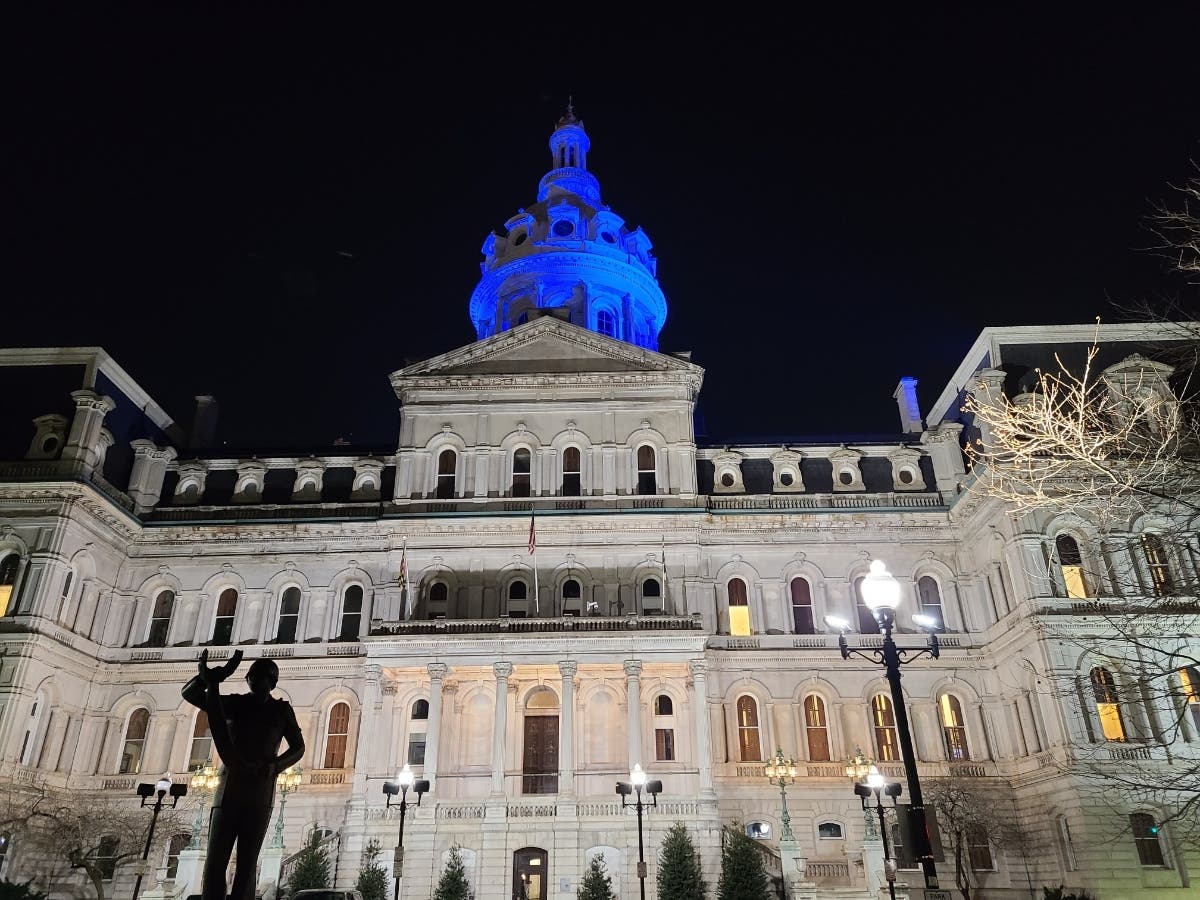


A blue glow in the night sky around Baltimore this March has been the result of many prominent area landmarks and buildings, including University of Maryland Medical Center, MedStar Union Memorial Hospital, Ascension St. Agnes Hospital, the Patterson Park Pagoda, Baltimore City Hall Dome, Baltimore Center Stage, CareFirst Building Canton and World Trade Center lighting up in beautiful blue hues for Colon Cancer Awareness Month.
The BLUE FOR COLORECTAL CANCER (#MDBlueforCRC) initiative has been led by the American Cancer Society and ACS CAN (American Cancer Society Cancer Action Network) to highlight the need to return to colorectal cancer screening after the pandemic caused a dramatic drop in cancer screenings, as well as to increase awareness that colorectal cancer is highly treatable and beatable when caught early. Due to COVID-19, colonoscopies declined nearly 90% in April 2020 from the previous year, which could result in an additional 4,500 deaths from colorectal cancer in the next 10 years.
Colorectal cancer is the 2nd leading cause of cancer deaths for men and women combined in the US but is also one of the few cancers that can be prevented through timely screening and removal of pre-cancerous polyps. For those reluctant to leave home for a screening colonoscopy due the pandemic, there are at-home options. Talk with your doctor. As part of the Colon Cancer Coalition’s nationwide #BlueForCRC landmarks across the country are lit blue this month. Here are the Go Blue Baltimore/Annapolis area locations for the month of March or specific dates. *
Find out what's happening in North Baltimorefor free with the latest updates from Patch.
- Ascension St. Agnes Hospital – March 5 -12*
- Baltimore Center Stage
- Baltimore City Hall Dome – March 9*
- Baltimore Fire Officers Local 964
- Baltimore Fire Fighters Local 734
- Bromo Seltzer Tower
- CareFirst BlueCross BlueShield, Canton – March 9*
- Center Stage – Mondays-Fridays in March
- Greater Baltimore Medical Center – March 8-31*
- Governor’s Mansion – March 12*
- Horseshoe Casino
- Medstar Franklin Square Hospital
- Medstar Good Samaritan Hospital
- Medstar Union Memorial Hospital
- Patterson Park Pagoda – March 9-11*
- Leidos Field at Ripken Stadium
- Luminis Health Anne Arundel Medical Center
- University of Maryland Baltimore Washington Medical Center – March 9*
- University of Maryland Greenebaum Comprehensive Cancer Center – March 5-12*
- University of Maryland St Joseph Medical Center – March 8-31*
- World Trade Center Baltimore
In 2021, an estimated 149,500 cases of colorectal cancer will be diagnosed in the US, and about 52,980 people will die from these cancers, and in Maryland an estimated 2,550 cases of colorectal cancer will be diagnosed and about 1,050 colorectal cancer deaths will occur. Black Americans have the highest colorectal cancer incidence and mortality rates of all racial groups in the US. Reasons for racial/ethnic disparities in colorectal cancer are complex, but largely reflect differences in risk factor prevalence and health care access, both of which are related to socioeconomic status.
- The American Cancer Society recommends that screening begin at age 45 for adults with average risk; USPSTF recent draft recommendations recently matched this age.
- Screening may begin earlier if you have a family history of colorectal cancer or polyps.
- Colorectal cancer is increasing among younger adults; one in five colorectal cancer patients are ages 20-55.
Risk Factors: Based on an ACS study, more than half (55%) of colorectal cancers in the U.S. are attributable to potentially modifiable risk factors. Modifiable factors that increase risk include obesity, physical inactivity, long-term smoking, high consumption of red or processed meat, low calcium intake, moderate to heavy alcohol consumption, and very low intake of fruits and vegetables and whole-grain fiber. Colorectal cancer risk factors that are not modifiable include a personal or family history of colorectal cancer.
Find out what's happening in North Baltimorefor free with the latest updates from Patch.
For more information or to help find the nearest screening options, www.cancer.org/colon or 1-800-227-2345.
About the American Cancer Society
The American Cancer Society is a global grassroots force of nearly 1.5 million volunteers dedicated to saving lives, celebrating lives, and leading the fight for a world without cancer. From breakthrough research, to free lodging near treatment, a 24/7/365 live helpline, free rides to treatment, and convening powerful activists to create awareness and impact, the Society is the only organization attacking cancer from every angle. For more information go to www.cancer.org.
###