Arts & Entertainment
Ale Together Now: Hard Ciders
Plus the label is a picture of a cherry killing a zombie cherry…. so you've 'gotta try it based on that alone!

Find out what's happening in Hartlandfor free with the latest updates from Patch.
Alcoholic cider has been enjoyed for millennia. It’s a tart, sweet beverage that varies by region but is always thirst-quenching on a hot day, and pleasantly warming on a winter’s eve. For June’s Ale Together Now Program, Michelle and Shelby teamed up for a very punny program celebrating the delicious diversity of hard ciders, complete with some great samples and a homebrewing demonstration!
Find out what's happening in Hartlandfor free with the latest updates from Patch.
Cider Production
The cider making process starts with apples, which are mashed into a pulp (or pomace) and pressed to extract all the sugary juices from the fruit. Historically, this would have been done with a stone wheel that was turned either by hand, water, or a horse-drawn mechanism. Then, juices were fermented in open wooden vats, similar to beer. The juice extraction is then fermented, during which process yeast consumes the sugar naturally present in the apple juice and produces carbon dioxide and alcohol. Cider makers can utilize a variety of beer, wine, and champagne yeasts of the Saccharomyces genus to produce different textures, aromas, and flavors in their ciders.
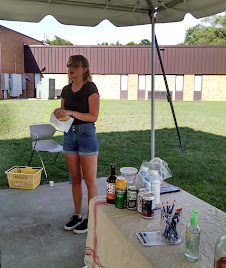
Secondary fruits or botanicals can also be added to the cider for an extra dimension of flavor and sugar content. After fermentation, some ciders are barreled in oak barrels for further flavor and aroma complexity. To start off our program, Shelby led a homebrewing demonstration for making a simplified hard cider. For this process, all that was needed was apple juice and champagne yeast! The juice is poured into a sterilized container, and the yeast is pitched (added to the juice). Then a three-piece airlock is applied to keep the brew from oxidizing while also allowing the carbon dioxide to escape the glass jar (so it doesn’t explode!). After a few weeks, this batch of cider can be bottled with some additional sugar to further carbonate it, or the cider can be enjoyed as is.
Our batch of cider when we first pitched the yeast (left) and after about 24 hours (right).
While watching the demonstration, Michelle shared a standard modern apple cider with us called Rockin’ Cock, from Northville Winery and Brewing Company in Northville. With bold flavor and 6.5% alcohol by volume, this was a wonderfully crisp and slightly sweet cider to give us an idea of what modern local ciders can be.
For the Love of Craft Cider
Similar to the boom in craft beer production, a revitalization of craft cider over the past twenty years has led to a wide availability of locally-made, delicious ciders – especially in
Michigan! The temperate climate and sandy soil here allow for optimal apple growing. As of 2015, the production of alcoholic and non-alcoholic cider in Michigan is second in the country,
just after New York.
Can't see the table below? Click here to view the original story.But still, the consumption of cider in the US is small in comparison to that of Britain. The British were historically (and still are) the largest producers and consumers of cider. In fact, 56% of all apples grown in England go to making cider! The development of cider styles equates to the uniqueness of craft beer innovation – people are getting weird and developing new styles and flavor profiles to counter and compliment the flavor profile of different apple varieties.
How About Them Apples?
Some apples have stronger sugar content (perfect for light, sweet, and high-alcohol ciders) and some have stronger tannin qualities (perfect for more traditional, bitter ciders). This is why cider makers must consider the flavor and aroma profile of the apple varieties they will use in their brew, and the lasting effects of tannins and acids during and after fermentation. Sweet ciders, with a high sugar content, will lead to a higher alcohol by volume – and are made with apple varieties like Gala, Fiji, and Honeycrisp. Tart ciders, made with high-acid apples like Granny Smith, will aid in preservation and slow oxidation. Ciders with a high tannin content (think Red Delicious apples) will lead to a stronger bitterness and a dry, crisp mouthfeel.
Cider Styles: Standard Ciders
Standard ciders are made with just apples. Modern ciders tend to utilize sweet and bittersweet apples used in cooking, such as Gala, Fuji, and Golden Delicious. These apples are low in tannins, have strong fruity aromas, and give lots of sugar and alcohol content to a cider. In essence, they make ciders easy to drink. Heritage ciders tend to utilize sharp and bitter sharp apples, such as Crabapple and Kingston Black. These apples are higher in tannins and tend to be dryer with color ranges from golden to pale amber. English Heritage ciders are dry with a higher alcohol by volume and deep golden color. French Heritage “cidre” tends to be sweeter, with a pale golden hue and low alcohol content.
We tried a sample of a standard heritage apple cider from Magners in Tipperary, Ireland. This brew was a little less sweet than our first sample, with a slightly more bitter/bittersharp flavor. Magners has been in business since the 1930’s, and uses about seventeen different varieties of apple in their brews.
Cider Styles: Specialty Ciders
Specialty ciders are the innovative side of cider making, as variable and unique as the people who make them. Common Specialty ciders have additional fruit added to them, such as berries or stone fruit. They can also have spices and herbs added to enhance flavor and aroma, or can also be dry-hopped or wood-aged. Some Specialty ciders utilize wild yeast strains, such as Brettanomyces, to give a tart/sour quality to the brew. Newer classifications of ciders include Rosé ciders (made with Pink Pearl or Amour Rouge apples) and Sparkling Ciders (fermented with champagne yeast).
Michelle shared a sample of an un-pearably good specialty cider with us: Grizzly Pear cider from Blake’s Orchard and Cider Mill in Armada, MI! It’s tart, sour, and packs some intense pear flavor.
We also got to try a Raspberry Cider from Sierra Rose Winery in Grand Rapids. The raspberry goes very well with the apple juice in the brew, making for a sweet, sparkly, and slightly tart cider.
Cider in Michigan
There are over 190 breweries, wineries, and cider mills that produce hard cider in Michigan. The sandy soil and temperate climate of certain Michigan regions make for ideal conditions for
apple trees. Some fantastic regional ciders can be found at Blake’s in Armada, Virtue in Fennville, Shorts Brewing in Bellaire, B Nektar in Detroit, Tandem in Suttons Bay, and Farmhaus in Hudsonville. To try more local brews, visit breweries like Spicer Orchards in Fenton, Northville Winery and Brewing in Northville, Witches Hat in South Lyon, Bløm in Ann Arbor, JK’s Farmhouse in Flushing, and Ore Creek in Pinckney.
Our last cider sample was Zombie Killer, an apple cider with honey and cherries from B Nektar in Ferndale. It’s sweet, with a light honey and cherry flavor. Plus the label is a picture of a cherry killing a zombie cherry….so you’ve 'gotta try it based on that alone!
Whatever your favorite style of cider, be sure to tip your hat to the sweet, sparkly, diverse world of apple cider brewing when you enjoy your next brew. Cheers!
This press release was produced by the Cromaine District Library. The views expressed are the author's own.
