Schools
Arizona State University: ASU Course Shines Light On Common Threads Of The 'Atlantic Revolutions'
Even though they are more like apples and oranges, historians and politicians have long succumbed to the temptation to compare the Ameri ...


Marcia Paterman Brookey
2022-03-14
Find out what's happening in Phoenixfor free with the latest updates from Patch.
Even though they are more like apples and oranges, historians and politicians have long succumbed to the temptation to compare the American and the French revolutions. But it is far more important and interesting to examine what they had in common, together with their sequels in the Caribbean and Latin America.
“It’s only recently that historians have admitted that the American, French, Haitian and Latin American revolutions at the end of the 18th and early 19th centuries were not discrete historical episodes, but formed a kind of chain, one leading to the other,” said Kent Wright, associate professor in Arizona State University's School of Civic and Economic Thought and Leadership.
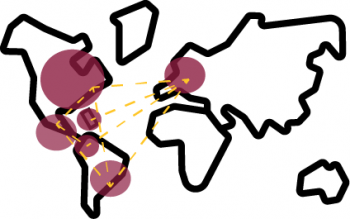
CEL 375 - Politics and Leadership in the Age of Revolutions, 1776-1826 examines the American, French, Haitian and Latin American revolutions of the time period.
Find out what's happening in Phoenixfor free with the latest updates from Patch.
Today, he explained, one of the most popular trends in historiography is to explore how these revolutions were related to one another, at the levels of economics, politics and ideology.
In fall 2022, Wright will introduce students to what historians now refer to as “The Atlantic Revolutions” in CEL 375 Politics and Leadership in the Age of Revolutions, 1776–1826 (class #94802, meeting Tuesdays and Thursdays from 10:30–11:45 a.m.).
“CEL 375 is a hybrid, interdisciplinary course with different aims," Wright said. "Students will build a solid introduction to the historiography of the period, for which we will use Wim Klooster’s new edition of his ‘Revolutions in the Atlantic World,’ a synoptic survey of the entire set of Atlantic upheavals. We will also focus on the political thinking of the era — not just the famous essays and treatises by the likes of Montesquieu and Rousseau, Paine, Burke, Wollstonecraft, de Staël and Constant, Guzman and Marina — but also the flood of declarations, of independence and rights and constitution-making that accompanied the revolutions.”
This is the founding moment for modern politics, the epoch that gave birth to democracy and republicanism, nationalism and imperialism, conservativism, liberalism and progressivism, feminism and abolitionism, roughly as we still know them today.
— Associate Professor Kent Wright
The turbulent period from 1776 to 1826 was marked by revolutionary uprisings in the Americas and Europe overthrowing aristocracies, kings and the established Catholic church, and the spread of new ideas.
"This is the founding moment for modern politics, the epoch that gave birth to democracy and republicanism, nationalism and imperialism, conservativism, liberalism and progressivism, feminism and abolitionism, roughly as we still know them today," Wright said. "While I’m a little skeptical about the idea of ‘leadership’ as an object of scholarly study, if there were ever an era in which to pursue it, the age of revolutions would be it."
In CEL 375, students will consider the topic of "charismatic leadership" by reading David Bell’s recent survey “Men on Horseback: the Power of Charisma in the Age of Revolution.” They will then examine biographies, and each student will have the opportunity to study classic and recent biographies of leading figures of the era: Washington, Adams and Jefferson; Danton, Robespierre and Napoleon; Toussaint Louverture, Miranda, Bolívar, O’Higgins and San Martín, to list a few.
Associate Professor Kent Wright
Wright has taught at ASU for nearly 28 years. Before joining the School of Civic and Economic Thought and Leadership at its creation in 2017, he taught first in the interdisciplinary humanities program, then in the History Department, where he served as both director of undergraduate students and head of the faculty.
A native of Michigan, he did his graduate studies at the University of Chicago, where he specialized in modern intellectual history in general, and the era of the Enlightenment and French Revolution in particular. Wright is the author of “A Classical Republican in Eighteenth-Century France: the Political Thought of Mably” (Stanford). He is completing a book for Cambridge, “The Revolutionary Atlantic, 1750-1830,” and at work on two others: “A Bright, Clear Mirror: the Enlightenment in Modern Thought” and an intellectual biography of Montesquieu. He has published numerous essays, articles and book chapters on Montesquieu and Rousseau, as well as on 18th- and 20th-century European historiography. From 2011 to 2014, Wright also served as editor of the journal French Historical Studies.
Wright's class integrates the fall 2022 list of courses offered by the School of Civic and Economic Thought and Leadership, an academic unit of the College of Liberal Arts and Sciences. The school combines philosophy, history, economics and political science to examine great ideas and solve contemporary problems. Courses such as Comparative Political Thought, Tocqueville: Problems and Prospects of American Democracy, and Globalism, Nationalism and Citizenship prepare students for careers in fields including business, law, public office, philanthropy, teaching and journalism.
Spring break often evokes images of the beach or celebrating with friends, however, students from one high school decided to do things a little differently.
Nine students and their teachers from the Arthur Morgan School, a Quaker school in North Carolina, contacted Arizona State University President’s Professor Heather Bimonte-Nelson and asked if she could help them explore the intricacies of neuroscience to supplement a class they were taking called Our Social Brains. In this course, the seventh to ninth graders learned about neuroanatomy, the basics of psychology and neuroscience, and advanced concepts such as how access to mental health resources differs in various communities.

ASU President’s Professor Heather Bimonte-Nelson teaches students from Arthur Morgan School in North Carolina about neuroanatomy and the basics of psychology and neuroscience.
Download Full Image
The students searched for neuroscience research labs and decided they wanted to take a road trip from their school in North Carolina to visit ASU and learn about brains and how scientists study them.
Bimonte-Nelson’s lab, the Behavioral Neuroscience of Memory and Aging Lab, conducts research aiming to characterize the cognitive and brain changes that occur during aging, as well as to determine the roles that sex, hormones and brain chemistry play in brain function and cognition.
Bimonte-Nelson is an active proponent of bringing neuroscience to the community who hosts hosting brain fairs for children in Title I schools in order to expose them to science. Naturally, she jumped at the chance to help. Over the past decade that she has hosted brain fairs, thousands of young students have participated and expanded their first-hand understanding of brain science. What she didn’t expect was the depth of knowledge that these middle and high school students had already.
“One of the seventh-grade students asked me which part of the brain is responsible for proprioception. I was blown away!” said Bimonte-Nelson, adding, “Knowledge is power, and these learners are invested and dedicated to gaining knowledge. It is so empowering to see how the excitement surrounding neuroscience is growing in such young generations — these students could be the future of brain science, and they could be the changemakers that solve some of our most perplexing brain puzzles.”
Jessica Verpeut, an assistant professor and director of the SOCIAL Neurobiology Lab, also helped with the brain fair and provided a hands-on lecture about the cerebellum. While many people see the cerebellum as a “little brain” that controls simple movements like balance while walking, she conducts research to understand the role it plays in complex coordinated movement and decision-making in early life.
“These young students are the next generation of neuroscientists, and helping to plant the seed of higher education is so important,” Verpeut said. “We really have a great opportunity to model how research can change lives, and this was an opportunity we couldn’t turn down.”
This press release was produced by Arizona State University. The views expressed here are the author’s own.
