Schools
Arizona State University: Paul Weiss To Deliver Distinguished Eyring Lecture Series At ASU
Paul Weiss is a leading American nanoscientist whose goal is to research the ultimate limits of miniaturization to develop a new chemica ...


Jenny Green
2022-03-11
Find out what's happening in Phoenixfor free with the latest updates from Patch.
Paul Weiss is a leading American nanoscientist whose goal is to research the ultimate limits of miniaturization to develop a new chemical understanding of the physical and biological world.
Weiss, a member of the American Academy of Arts and Sciences with many international awards, will be the featured School of Molecular Sciences’ Eyring Lecture Series speaker March 17 and 18 at Arizona State University's Tempe campus.
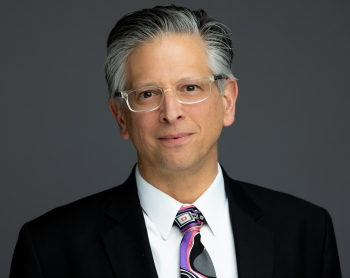
Paul Weiss holds a University of California, Los Angeles Presidential Chair and is a distinguished professor of chemistry and biochemistry, bioengineering, and materials science and engineering.
Download Full Image
Find out what's happening in Phoenixfor free with the latest updates from Patch.
The general lecture on March 17, titled “Nanotechnology Approaches to Biology and Medicine," will be presented at 6 p.m. in the Marston Theater in ISTB4, and will be available to view via livestream at https://video.ibm.com/asutv.
Weiss holds a University of California, Los Angeles, Presidential Chair and is a distinguished professor of chemistry and biochemistry, bioengineering, and materials science and engineering. He leads an interdisciplinary research group focused on understanding and controlling chemistry, physics, biology and materials at the smallest scales.
“Paul is proving himself, and his research group, to be masters at manipulating and probing matter at the finest space and time scales, using a combination of photonic and electronic techniques,” said William Petuskey, director of Advanced Materials Initiatives at ASU’s Knowledge Enterprise and a professor in ASU’s School of Molecular Sciences.
“His innovations of molecular self-assembly combined with the advanced fabrication of electronic nanodevices is simultaneously creating scientific opportunities for probing the mechanisms of inter-molecular communication of crucial importance for quantum information sciences, as well as creating technological innovations of nanodevice arrays for probing complex electromagnetic phenomena in the brain. His enthusiasm and collaborative generosity make him a force of science for the benefit of society.”
Weiss has developed tools to see, feel and manipulate matter on the nanoscale, simultaneously measuring spectra, structure and function of systems under high vacuum and in solution. He pioneered applying hierarchical strategies for controlling placement of single molecules on the Angstrom scale and arrays of them on the centimeter scale. He is among the few experimentalists who demonstrated function of single molecules as switches and motors, determining and controlling their mechanisms of function and addressing ultimate limits of miniaturization.
In work ranging from quantum chemistry to mechanical engineering — including experiment, theory and simulation — Weiss has explored how the functions of single molecules are coupled by building from the bottom up. He has demonstrated that atoms and molecules communicate on surfaces through substrate electrons over distances significantly greater than chemical bond lengths, with important consequences regarding electronic and optical properties.
“In and out of science, I have always loved stories,” Weiss said. “I find that the best way to communicate science to the public is to connect with our stories; connecting this way works for our students and for other scientists, too. This strategy was reinforced with the first communicating science workshop that we held at CNSI (the California NanoSystems Institute at UCLA), which I direct with Alan Alda and the Center for Communicating Science from Stony Brook University (Dean Howie Schneider and his team). What makes us do what we do and why we care is much more interesting than a particular number that we pulled out of our experiments.
“I think that this is also what we can learn from our friends in the entertainment industry. What is the story here? Where can we capture the interest of the public? It is a two-way street, because we have stories to tell — not just from the lab.”
The Eyring lectures are part of an interdisciplinary distinguished lecture series dedicated to stimulating discussion by renowned scientists who are at the cutting edge of their respective fields. Each series consists of a leadoff presentation to help communicate the excitement and the challenge of science to the university and community. Past lecturers have included Nobel laureates Ahmed Zewail, Jean-Marie Lehn, Harry Gray, Richard Smalley, Yuan T. Lee, Richard Schrock and, most recently awarded, John Goodenough.
The technical lecture, “Atomically Precise Chemical, Physical, Electronic, and Spin Contacts," will take place at 2:30 p.m. on March 18 in the Biodesign auditorium. It will also be available via Zoom at https://asu.zoom.us/i/87081218152.
Weiss is the founding editor-in-chief of ACS Nano, one of the top scientific journals in nanoscience and nanotechnology. Prior to that, he was senior editor of the journal IEEE Electron Device Letters. In 2019, he won the IEEE Pioneer Award in Nanotechnology. From 2009–14, Weiss held the Fred Kavli Chair in NanoSystems Sciences and was the director of the UCLA California NanoSystems Institute, of which he is a member.
The Eyring Lecture Series is named in honor of the late Leroy Eyring, an ASU Regents Professor of chemistry and former department chair, whose instructional and research accomplishments and professional leadership at ASU helped to bring the Department of Chemistry and Biochemistry into international prominence. The Eyring Materials Center and the Navrotsky Eyring Center for Materials of the Universe at ASU are named in his honor.
With the rise of new technologies and techniques to manipulate, extract, locate and analyze geographic data, Arizona State University School of Geographical Sciences and Urban Planning graduate student Mehak Sachdeva cautions that when interpreting results from analyses, you should consider the scale at which that analysis was done.
Sachdeva, a geographic information sciences PhD candidate, was awarded third place in the John Odland Award national student paper competition hosted by the Spatial Analysis and Modeling Specialty group at the American Association of Geographers 2022 Annual Meeting.
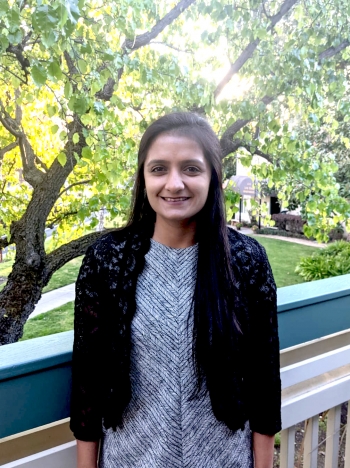
Mehak Sachdeva
Download Full Image
In her paper, titled “A Geographical Perspective on Simpson’s Paradox,” Sachdeva interrogates a statistical conundrum that has largely remained undiscussed in spatial science.
“The Simpson’s Paradox by itself is possible in any kind of data, but this is one of the few papers where we talk about it in terms of geographical data,” Sachdeva said. “This may be the first study that makes a comparison between global and local models to explore an instance of geographical Simpson’s Paradox.”
The Simpson’s Paradox is a statistical phenomenon where the results of aggregated data analysis are different or contrasting to those with data that are disaggregated.
Sachdeva and her co-author Stewart Fotheringham, Regents Professor in the School of Geographical Sciences and Urban Planning, explored the classic problem through two case studies, including measuring the impact the age of houses had on their house price in King County, Washington.
When analyzing housing data at a county scale — using a local regression technique called Multi-scale Geographically Weighted Regression (MGWR) — researchers found that newer houses were worth more than older houses at the neighborhood scale; but when the same data were grouped and analyzed for the entire study area — using Ordinary Least Squares regression (a common global regression technique) — the exact opposite was found; as the average age of houses increased, the average value also increased.
Even when using the same data set and analyzing the effect of the same variable, the age of a housing unit on its value, the way information was spatially grouped and analyzed gave completely opposite results.
Sachdeva affirms that neither types of analyses are right or wrong, but rather it’s important to have the awareness that Simpson’s Paradox can occur in spatial analysis and should be better understood when interpreting results to inform decision-making.
“It's very common for people to do a global analysis and to apply those results to interpret trends for individual houses in a neighborhood (often termed as ecological fallacy), and that's something that we inherently should not be doing,” she said. “Finding two contrasting results between the application of global and local models is totally normal and understandable if you know how to interpret the results.”
The American Association of Geographers John Odland Award national student paper competition was open to undergraduate and graduate students across the nation, and entries were judged on their research’s potential contribution to the use of mathematical models, statistical techniques, and other technological and computational approaches for analyzing spatial phenomena in any subfield of geography.
“I am honored to receive the award and for the recognition,” Sachdeva said. “The Spatial Analysis and Modeling specialty group is a great cohort of students, postdocs, faculty and professionals with a shared interest in spatial analytics, and it has been truly rewarding to be a part of it over the past few years.”
Sachdeva encourages other students from ASU to be a part of the growing spatial analysis community and to participate in future research paper competitions.
“I feel communities such as the Spatial Analysis and Modeling Specialty group provide incredible platforms to present research,” she said. “More representation from (ASU) would be great. It’s an incredible platform to gather feedback and have an insightful discussion with a valuable cohort of researchers similarly interested in spatial analytical problems.”
This press release was produced by Arizona State University. The views expressed here are the author’s own.
