Politics & Government
Historian Declines Paid Offer To Present Bruce's Beach History
Noted historian Alison Rose Jefferson decides to pass on Manhattan Beach's offer to pay her for presenting the history of Bruce's Beach.


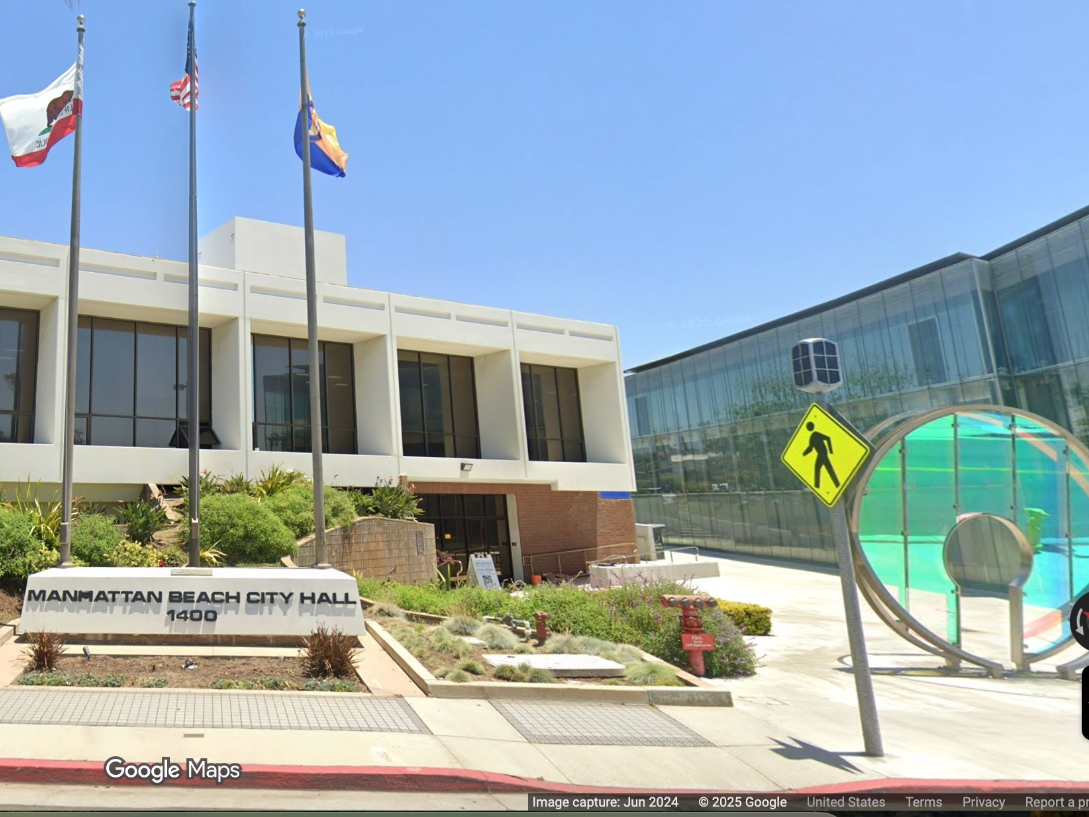
MANHATTAN BEACH, CA — Noted historian Alison Rose Jefferson, author of the recent book "Living the California Dream: African American Leisure Sites during the Jim Crow Era" who has been speaking publicly with the media about the history of Bruce's Beach in Manhattan Beach which she details in her book, turned down the Manhattan Beach City Council's offer to pay her to present that history to Council at its August 4 meeting. The offer to pay Jefferson $2,000 for that presentation was discussed last night as council member Nancy Hersman revealed what had transpired and why Jefferson had ultimately declined the offer.
Council members Hersman and Steve Napolitano reached out to Jefferson after they were tasked to locate historians who could provide information on Bruce's Beach. "Ms. Jefferson was identified to us as someone who did their doctoral thesis, in part, on its [Bruce's Beach] history so we reached out to her," Napolitano told Manhattan Beach Patch. "Money was not offered, it was required by Ms. Jefferson to appear. I told her we haven't paid people to speak to council and that this was an opportunity to present her findings to the community and set the record straight. Her position was that we were paying for her expertise, so we relented and said we'd get back to her."
"She asked for a $2,000 honorarium for the 40-minute talk," said Hersman, "and we agreed pending [City Manager] Bruce [Moe] and [mayor] Richard’s approval. They agreed. When I talked with her again to confirm, we talked about her giving us additional resources to put in the staff report for further reading. I mentioned that we were going to include Bob Brigham’s 1956 thesis for residents to download. She said she would allow the {Bob Brigham's] thesis to be included in the list of resources but that she would not do the presentation if we included the download. She said that it would be unlikely that people would buy her book if they could download the thesis for free.
Find out what's happening in Manhattan Beachfor free with the latest updates from Patch.
"This surprised me since she references the thesis throughout her chapter on Bruce’s Beach. I checked back with Richard and he said we had told the public that we would give them the thesis so we needed to do that. I went back to her and apologized for any confusion but that we needed to include the download and asked her to reconsider. She said no," offered Hersman.
Manhattan Beach Patch has reached out to Jefferson for comment and will update this article or post a new one once we have Jefferson's comments.
Find out what's happening in Manhattan Beachfor free with the latest updates from Patch.
Bruce's Beach, which is one of the city's parks, has been a lightning rod of conversation lately. Major media, including the New York Times and Los Angeles Times, have published articles about land once owned by Blacks who, people believe, were forced out of Manhattan Beach, their land taken through eminent domain with improper compensation. Though reportedly the actual land Willa and Charles Bruce owned and on which their resort stood is directly adjacent The Strand where a Los Angeles County lifeguard building, parking lot, restrooms, and grassy area now stand, the park has become synonymous with racial injustice to a growing legion of Blacks, residents, and members of the general public.
To that end, a young Manhattan Beach woman is circulating an online petition on change.org titled "Bruce's Beach: Justice for the Bruce family." The petition has 11,682 signatures and it's goal is 15,000. Its initial goal was 10,000, which it has obviously surpassed. In the first paragraph of the online petition its many backers "implore Manhattan Beach City Council and Mayor Richard Montgomery to address and reveal the full history of Bruce's Beach."
The Manhattan Beach City Council has voted unanimously to agendize a look at the history of Bruce's Beach after council members Hersman and Hildy Stern asked to have a factual history presented at a council meeting. Part of what they will rely on, and from which Jefferson used to formualte her chapter on Bruce's Beach in her recent book, is a 1956 thesis done by Manhattan Beach native Robert Brigham who investigated the matter for his master’s degree at what is now California State University, Fresno. Brigham interviewed more than a dozen people who lived during that time and his thesis has also informed the work of noted Manhattan Beach resident and historian Jan Dennis’ in her history books on Manhattan Beach.
The Bruce's land was purchased by Willa in 1912 in Manhattan Beach for $1,225. The built Bruce's Lodge, and in 1920, purchased an adjacent lot for another structure for the Lodge. By 1923, Bruce's Lodge had become well known and was a prime spot for Black beachgoers, who weren't allowed to enjoy the beach and ocean save for one other spot in Santa Monica.
But Black beachgoers at Bruce's Lodge were subject to harassment, had their cars vandalized, tires slashed. An arson fire was set to the Bruce's Lodge but firefighters were able to extinguish it, unlike another Black-owned property nearby which was taken to the ground in another fire. The Ku Klux Klan was also active in the area at that time, harassing Blacks and others who didn't fit their desired status.
Then starting in 1921, Manhattan Beach resident George Lindsey asked the reigning body then, the Manhattan Beach Board of Trustees to “take measures to discourage colored people from establishing homes in Manhattan,” according to Brigham in his thesis. “Although sympathetic, the members of that body were reluctant to take action lest they go on the record as being bigots,” he wrote.
Next, in 1923, Lindsey again petitioned to request "the condemnation of the blocks where the Bruces and four other Black families — Milton and Anna Johnson; ret. Maj. George and Ethel Prioleau, who purchased and split a lot with duplex housing with a friend, Elizabeth Patterson; and Mary Sanders — owned land," according to Spectrum News. And, on Oct. 16, 1924, the city passed ordinances that accomplished the condemning of those blocks with the goal of creating a public park.
Jefferson writes in her chapter devoted to Bruce's Beach that court documents from the time show the “illogical nature of creating a public park out of this section, as there was already a 144,000-square-foot land tract about a half-mile south, which had been given to the city for park usage.”
In 1929, the legal case was settled and the Black landowners whose properties were being taken by eminent domain received payments as settlement. Willa was paid $14,500 for her property of two lots; Mary Sanders, another Black landowner who did not contest the action, accepted a $4,129 settlement. The remaining affected Black landowners all received less than $2,501.
"There is so much 'misinformation' on the history of Bruce’s Beach," Mayor Montgomery told Manhattan Beach Patch. "It is well past the time to inform our community of the facts. Allowing the data to speak to the factual history will allow everyone to hear the same information at one time." He expects the Bruce's Beach history to be on the agenda at council's next meeting on Tuesday, August 18. The meeting starts at 6 p.m. and can be viewed online or listened to via phone call.
For his part, Montgomery had been looking forward to having Jefferson address council "because she wrote a book on Bruce’s Beach, is not a resident, and hopefully may have uncovered some 'facts' we were not aware of," he said.
"I want to also say that we appreciate Ms. Jefferson's experience and were disappointed that it didn't work out," said Napolitano. "We will move forward regardless and still have a presentation based on available research."
Mayor Pro Tem Suzanne Hadley, who said last night's council meeting was the first time she'd heard about the possibility of Jefferson being paid $2,000, told Manhattan Beach Patch, "I prefer maintaining our decades-long MB tradition of not extending honoraria to speakers before council. First, because we're spending taxpayer money, and second, because of the appearance of bias."
Manhattan Beach Patch has reached out to Jefferson via her website and had not received any communication as of publication.
Get more local news delivered straight to your inbox. Sign up for free Patch newsletters and alerts.