Politics & Government
Noroton Heights Rezoning Plan Gets Chilly Reception
Neighbors of the commercial district asked sharp questions Tuesday of developer Tom Golden's mixed-use proposal.


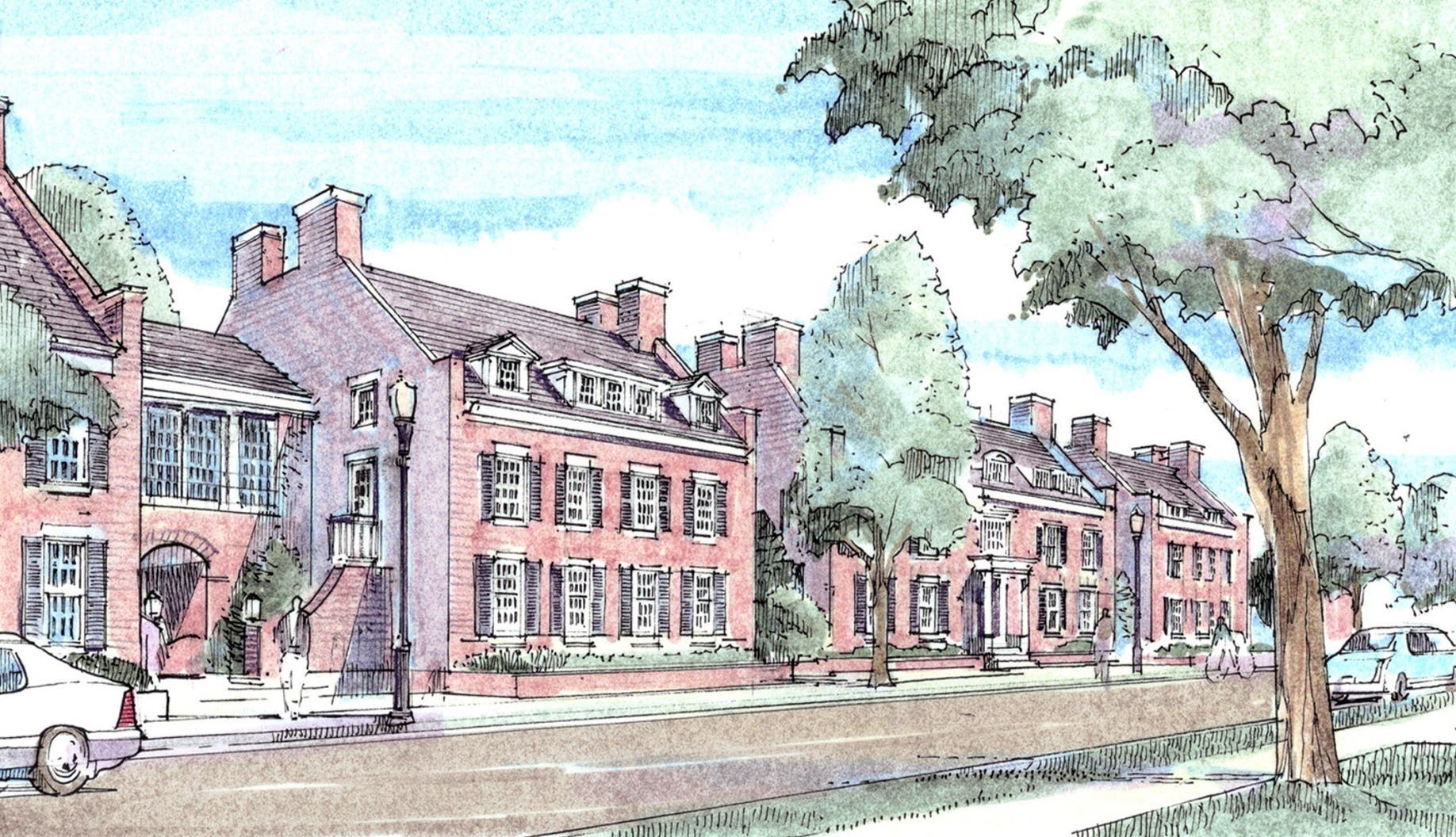


Developer Tom Golden's rezoning proposal for the Noroton Heights commercial district met stiff resistance from a group of neighbors Tuesday night during a public hearing at Town Hall.
Golden, who owns many of the parcels in the area, is seeking to update the zoning restrictions that govern the collection of shops off of Heights Road, potentially opening the site to a mix of retail, office, and residential development.
But nearby residents voiced grave concerns Tuesday about the impact of such an overhaul on traffic, safety, flood mitigation, and property values. One neighbor raised the question of whether the commission had already made up its mind in favor of the plan.
Find out what's happening in Darienfor free with the latest updates from Patch.
"It seems like you're asking all the questions that are necessary in order to get this passed instead of asking the questions as to whether or not it should happen in the first place," Ken Byrne, a resident of West Avenue, told the commission.
Attorney Bruce Hill, who represents Golden, began the hearing by stating that the rezoning plan would allow for comprehensive—rather than piecemeal—redevelopment.
Find out what's happening in Darienfor free with the latest updates from Patch.
"What we're getting in this application, I think, is a big picture approach," Hill said, stating that the rezoning step would only be "the beginning of the process."
P&Z Commission chairman Fred Conze echoed Hill's sentiments, noting that commissioners had urged Golden to consider a comprehensive redevelopment since beginning informal meetings with the developer two and a half years ago.
"There are two ways in which this area can grow," Conze said. "One is on a building by building basis, and historically you end up with potential problems going that way. ... We basically suggested to Tom Golden that he consider looking at sort of a planned redevelopment of the entire area."
The proposed overlay—termed the Noroton Heights Mixed Use Zone—would give the commission power to raise height limitations on individual buildings from two stories to three and to permit the construction of parking structures of up to one story above ground, among other changes.
Though Golden has released a set of renderings that portray a major transformation of the site, Hill said that these were purely conceptual and that any future construction would have to go through a separate approval process.
"The purpose of the regulations as proposed is essentially to provide a framework or parameters within in which your commission will then evaluate any future applications for redevelopment of the zone," Hill said. "There's nothing in these proposed regulations that will allow any kind of as-of-right development."
During Hill's presentation, vice chairman Joe Spain raised concerns about the architectural consistency of the site if and when it is developed. Ultimately, the commission opted to refer the proposal to the Architectural Review Board for an advisory discussion at its July 20 meeting.
"The last thing we want to do is eight acres in basically a red-brick colonial and one resident in glass and chrome," Conze said. "I don't think that would suit anybody's purpose, so we want to make sure the buildings are consistent architecturally and design-wise."
The public hearing—with Hill's permission—was extended to late July, but neighbors who had come to speak Tuesday showed little interest in waiting two weeks.
Nick Jordan, a resident of West Avenue since 1964, said that the multifamily housing likely to be built if the rezoning plan is approved would hurt the character of the surrounding area, which is currently dominated by single-family homes.
Fellow West Avenue resident Vladimir Kushnir detailed the flooding issues he had encountered living in a house developed by Golden, arguing that subterranean parking structures depicted in Golden's renderings would be at a high risk of inundation.
"I saw with my own eyes where the level of water is. It was about two inches below our basement floor," Kushnir said, adding, "This whole garage ... almost all of it will be underneath the water level, so the first question is: how are we going to solve that problem?"
Kushnir also asked about the prospect of subsidized housing at the site. Because of inclusionary zoning laws, some of the units in a new residential complex would need to be set aside as affordable dwellings.
Byrne then raised a litany of potential problems with the addition of multifamily housing to the area, beginning with property values.
"The real reason for getting a new zone is to change the valuation of the property, potentially rebuild, and to cause an increase in worth and wealth," he said. "That's fine, except the fact that across the street, those properties are going to be devalued as a result of it."
Byrne also touched on fears of school overcrowding, safety issues posed by an influx of new residents, continued flooding concerns, and increased traffic volume as reasons to mistrust Golden's plan.
Sallie Bohrer, the lone member of the public to speak in support of the rezoning proposal, referenced her campaign against a plan to build a retention basin in Baker Park in order to address flooding in Noroton Heights.
After First Selectman Dave Campbell came into office, that plan was abandoned in favor of or concrete cistern, under the Stop & Shop parking lot. Bohrer said the prospect of incorporating water retention into the new development had earned it her backing.
Still, that particular approach is far from certain to be included in any Golden development. At a June 15 hearing, Hill expressed trepidation about the idea, criticizing the Leonard Jackson study used to support it.
"[It] is a proposal that we have serious concerns about from the point of view of feasibility, costs, as well as the potential impact on any redevelopment of the site," Hill said at the time, arguing that it gave "too brief a treatment" to alternative methods of controlling the flow of water.
Matt Forsyth, also a West Avenue resident, said the vagueness of any new development made it hard for residents to arrive at an informed opinion of the proposed rezoning.
"It's very difficult for some of us to grapple with the issue in any more depth than asking questions simply because ... the renderings are renderings. They are not a plan," Forsyth said, adding, "I think the more we can find detail, the more we can address specific plans ... all of that will help the residents of our neighborhood decide what we think makes sense."
Maureen Meehan of Oak Park Avenue added that the degree of parking provisionally included in Golden's renderings was proof positive that the scale of the project was too big.
"For this commission to consider underground parking, it just boggles my mind," Meehan said. "We don't have parking garages for a reason."
Before adjourning, Conze worked to reassure residents that the rezoning stage was only a preliminary step.
"All of the issues people have raised her are perfectly legitimate issues, and before a spade is ever put in the ground, all of them are going to have to be dealt with," Conze said. "You should not take this as cast in stone."
The public hearing on Golden's plan will resume July 27 at 8 p.m. in the Town Hall auditorium.
Get more local news delivered straight to your inbox. Sign up for free Patch newsletters and alerts.