Community Corner
US Border Patrol Says Number Of Cuban Refugees Arriving On Florida Shores Is Overwhelming
U.S. Border Patrol said over 175,000 Cuban refugees made the journey to FL since October 2021, more than 1980's historic Mariel boatlift.


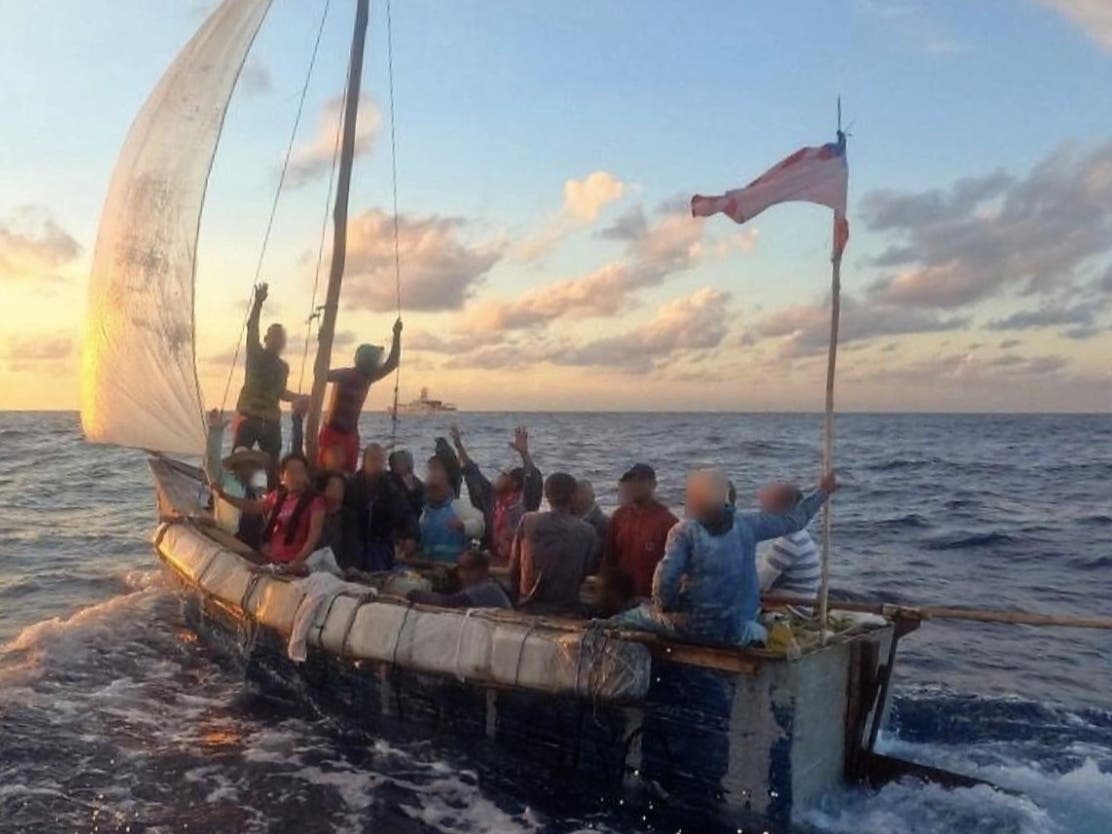



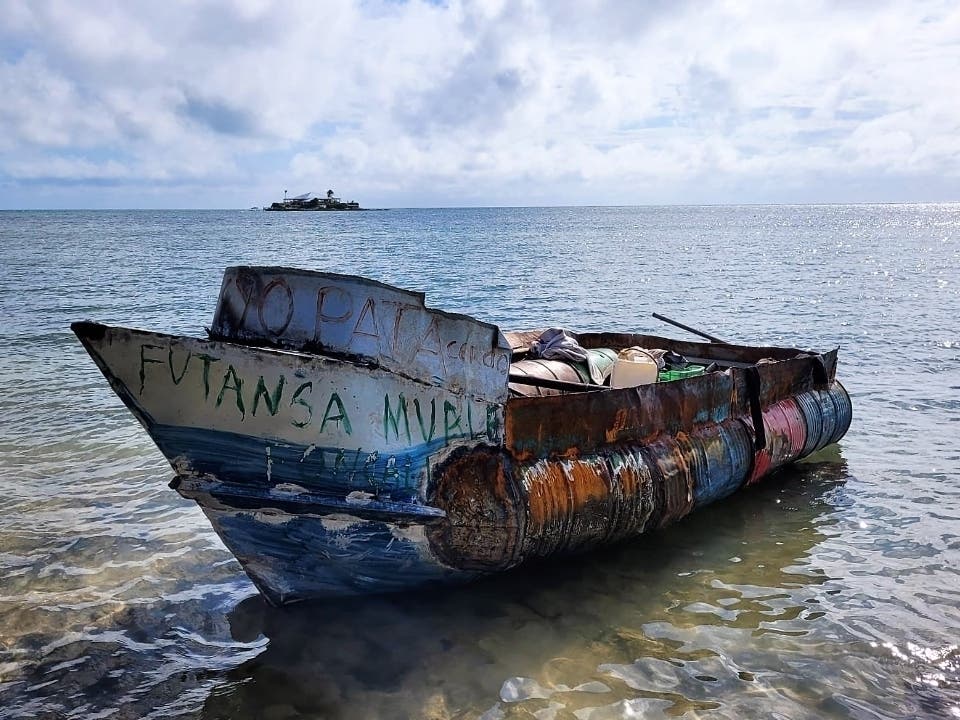
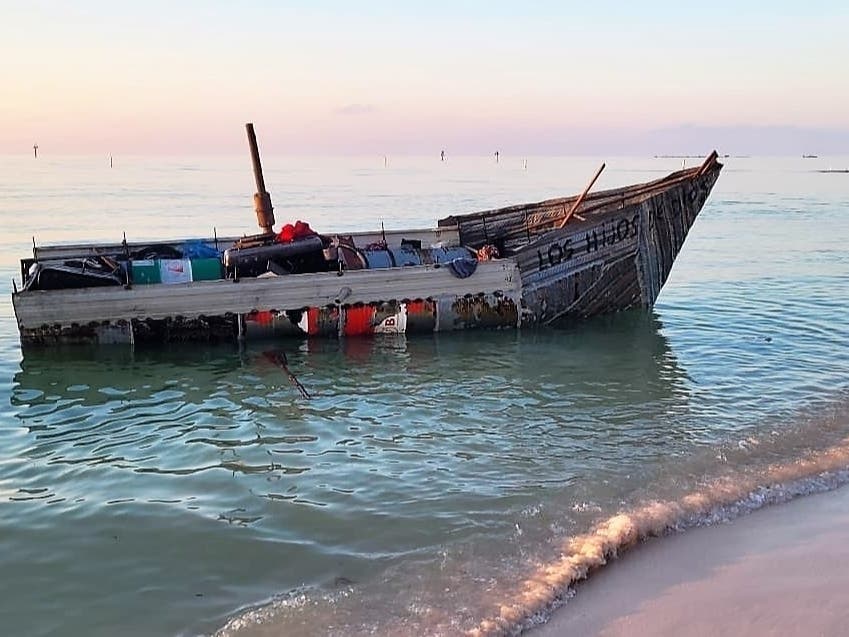

FLORIDA KEYS, FL — At 5 a.m. on Christmas Day, while American children were still in bed dreaming of the bounties Santa would leave beneath their Christmas trees, a dilapidated dinghy packed with Cuban refugees who barely had room to draw a breath made its way to the Florida Keys at the end of a treacherous 94-mile journey across the Florida Straits.
U.S. Border Patrol Chief Agent Walter N. Slosar and his team spotted the overcrowded dinghy while it was still miles away and waited on shore to assist as it landed at Key Colony Beach in the Florida Keys and deposited 15 hungry, thirsty, weary passengers.
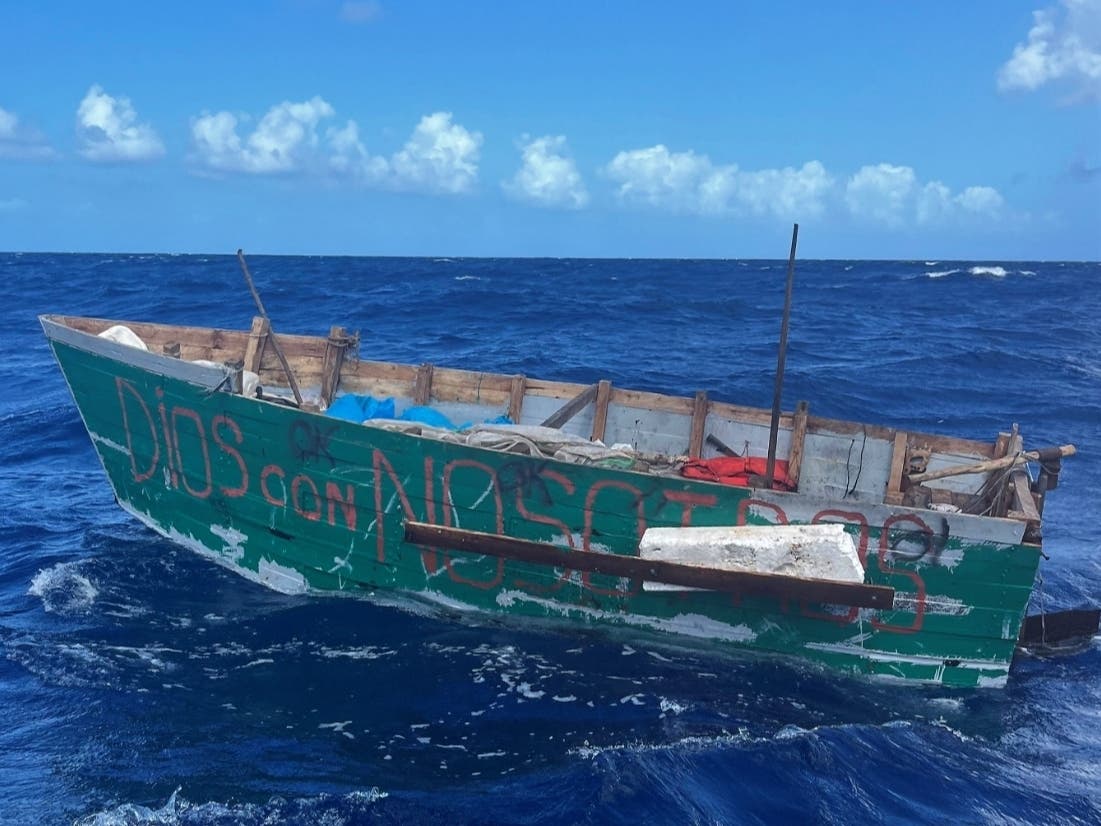
Handwritten in Spanish on the side of the dinghy was a prayer for its safe arrival, "Con La Bendicion de Dios," meaning "With God's Blessing."
Find out what's happening in Tampafor free with the latest updates from Patch.
For Slosar, the little boat filled with bedraggled, dazed men, women and children was an all-too-familiar sight. Over the past year, he's witnessed the arrival of countless such vessels filled with Cuban refugees intent on crossing the narrow but treacherous expanse of water separating communism from democracy.
Florida officials dealing with the wave of immigrants said it has created a humanitarian crisis in the state.
Find out what's happening in Tampafor free with the latest updates from Patch.
Since Oct. 1, the Miami Sector of the U.S. Border Patrol, which safeguards 1,200 miles of the coastal border along Florida, has experienced "over a 400 percent increase in migrant encounters," said Slosar. Many hailed from the Matanzas region, an area known for its artists, poets, musicians and scholars. All are considered dissidents by Cuban authorities and vulnerable to arrest and imprisonment.
Although the distance is less than 100 miles, the often-choppy waters of the Florida Straits are especially hazardous when crossing in a handmade vessel constructed of salvaged scraps of wood and oil drums.
Slosar displayed a photo of one vessel that was little more than planks of wood strapped together with rope and mounted on salvaged scraps of rubber boat to keep it afloat.
One of the most intrepid crossings was made by two young men on well-worn wind surfboards minus the sails. They crossed the straits on their stomachs, using their hands to paddle. The only items they carried with them were bleach bottles filled with water, attached to the boards with ropes.
Under heavy U.S. sanctions, Cuba is all but bankrupt. Frequent blackouts, gas shortages, empty grocery store shelves and state-sponsored restrictions on internet and cell phone service led to historic unrest among the Cuban people in July, followed by a crackdown by the military.
What's resulted is a mass exodus of refugees from Cuba headed to the U.S., nearby Haiti and South America.
U.S. immigration officials reported that 177,848 Cuban immigrants arrived in the U.S. last year, compared to 39,303 in 2021 and 14,014 in 2020.
That's more than the 125,000 who fled then-dictator Fidel Castro's regime during the infamous Mariel boatlift between April 15 and Oct. 31, 1980. The economic hardships and continued authoritarian leadership in the country have prompted the recent wave of Cubans risking their lives crossing the Straits of Florida.
On Jan. 14, Lucee Arvanitis-Santini was aboard a Royal Caribbean cruise ship when it encountered 17 Cuban refugees packed into a small boat in the middle of choppy seas.
"The captain immediately told us that we are helping to save them, and that was the right thing to do," Arvanitis-Santini said. "They were out there for 16 days and would have died because of the dangerous weather."
She thought it was only appropriate that the name of their cruise ship was Liberty of the Seas.
"I can't imagine being that desperate to risk everything, even your life. This was heartbreaking to see," Arvanitis-Santini said. "As an immigrant, I know how lucky I am to be here. My kids who are Americans now will never know that kind of pain, thank God. But this should not be the norm."
It was a sight that fellow passenger Shelly Koch said she'll never forget.
"In the middle of the ocean, herein lies a manmade boat with 17 refugees escaping Communist Cuba, one of them frantically waving a red piece of cloth," Koch said. "As they grew closer, you could see them cheering, smiling, laughing and clapping."
Their happiness was shortlived, however. When the cruise ship made port in Nassau, Bahamas, the U.S. Coast Guard took the refugees into custody with plans to return them to Cuba.
Until Jan. 1, Florida Gov. Ron DeSantis rarely mentioned the wave of Cuban refugees reaching Florida shores on rickety boats.
Until that time, his attention was focused on the illegal crossings at the Mexican border. He garnered national headlines when he used state taxes to charter planes to fly Venezuelan refugees to Martha's Vineyard in Massachusetts to protest what he calls President Joe Biden's lax immigration policies.
The events on New Year's Day forced DeSantis to acknowledge the scope of the crisis occurring on Florida's shores. On that day, local, state and federal officials were overwhelmed when nearly 500 Cuban refugees and 100 Haitian refugees arrived in Key Largo and the Dry Tortugas, an island located 68 miles south of Key West, in unsafe boats crammed with refugees.
Homeland Security said this included the largest single group of refugees encountered so far —364 Cuban refugees who landed at Dry Tortugas National Park.
Meanwhile, Monroe County Sheriff Rick Ramsay and his 194 deputies worked around the clock to help the Border Patrol and Coast Guard accommodate the surge of refugees landing on the shores of the Florida Keys.
“Refugee arrivals require a lot of resources from the sheriff’s office as we help our federal law enforcement partners ensure the migrants are in good health and safe,” said Ramsay.
Ramsay said the problem was exacerbated by a lack of resources. He took to Facebook to complain that federal officials were either unaware or simply slow to react to the growing crisis. When he pleaded for help, Ramsay said he was told the refugees would simply have to wait for basic necessities like food and water.
"This federal failure is creating a humanitarian crisis," Ramsay said. “This shows a lack of a working plan by the federal government to deal with a mass migration issue that was foreseeable."
Slosar conceded his agents were hard-pressed to keep up with all the vessels arriving.
Some of the crafts made it to remote, uninhabited islands off-shore where the refugees, including young children, had to be rescued by the Border Patrol and taken to makeshift refugee camps in the Keys, said Slosar.
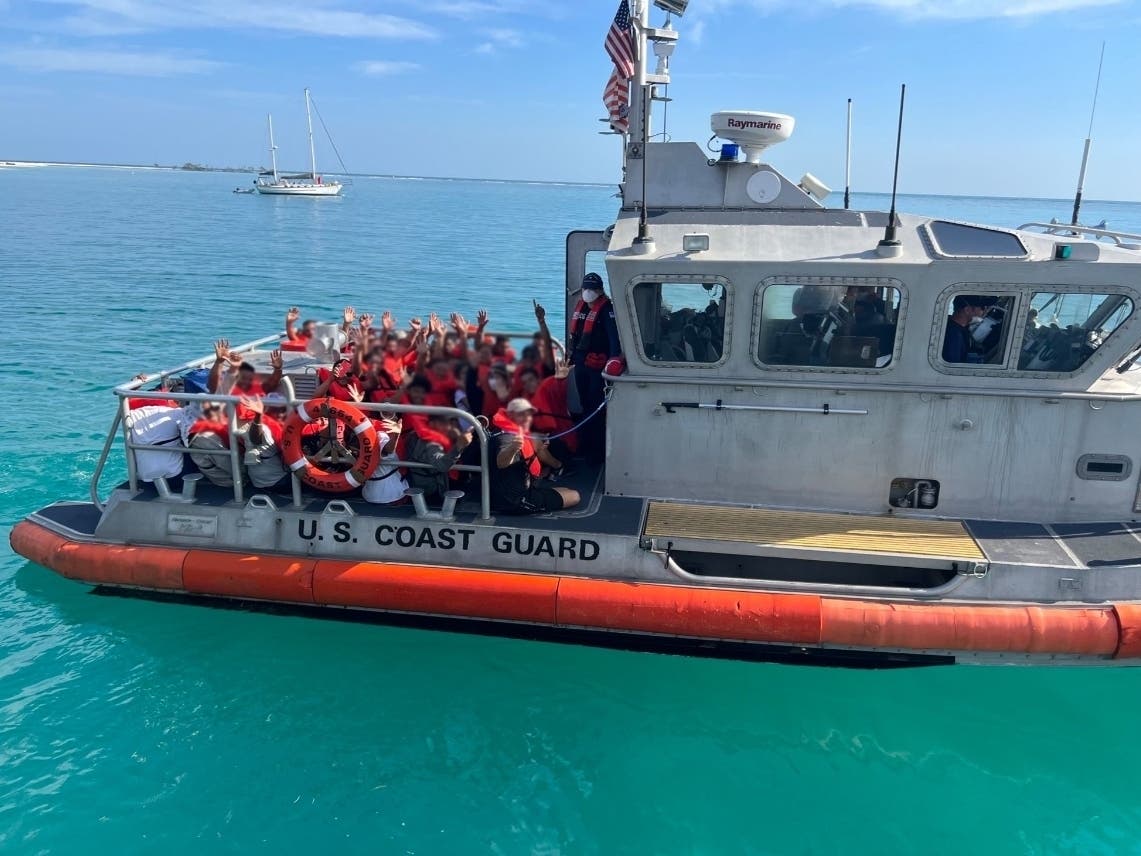
Once at the refugee camps, they received food, water and medical care before they were transferred to U.S. immigration facilities so officials could determine their legal status.
This meant determining if the refugees qualified for political asylum or would be "processed for removal and repatriation to their country of origin," said Homeland Security in a statement.
The U.S. Coast Guard was instructed to patrol for refugees in the straits and head them off before they reached Florida shores. After spending days desperately attempting to reach the United States, the heartbroken refugees were transferred aboard Coast Guard cutters and returned to Cuba for involuntary repatriation.
As recently as Thursday, the Coast Guard posted on Twitter that Cutter Kathleen Moore's crew "repatriated" 16 Cubans to Cuba after being stopped off Islamorada. Since Oct. 1, Coast Guard crews intercepted 5,528 Cuban refugees and returned them to Cuba.
Slosar said the measure of the refugees' desperation was evident on Labor Day weekend and again the first week of November as hurricanes Ian and Nicole approached. U.S. authorities attempted to warn Cubans by American television and radio broadcasts not to attempt crossing the Straits of Florida during the approaching storms.
Nevertheless, desperate Cubans braved tropical storm-force winds and 10-foot waves to reach Florida.
In some cases, the ramshackle boats broke up and refugees attempted to swim to the nearest island. Others were rescued by Coast Guard cutters.
"Crews stopped these unsafe boats from illegally landing in the U.S. ahead of Tropical Storm Nicole Monday off the Florida Keys," the Coast Guard tweeted. "Thankfully, we rescued these people before the storm made the seas worse."
In a series of Facebook posts, Slosar provided perspective on the influx of Cuban refugees attempting to reach Florida shores in the past month:
Dec. 31: Over 24 hours, U.S. Border Patrol agents and law enforcement partners responded to five migrant landings throughout the Florida Keys and encountered 88 Cuban migrants.
Jan. 4: Homeland Security Task Force Southeast units responded to an increase in maritime migrations over the New Year holiday weekend in the FL Straits, Windward and Mona Passes. Since August 2022, task force partners intercepted 7,784 migrants at sea and 4,401 landed migrants and 65 confirmed deaths.
Jan. 6: During 24 hours, U.S. Border Patrol agents and law enforcement partners responded to five migrant landings and encountered 90 Cuban migrants in the Florida Keys. The migrants arrived on rustic vessels and residents notified local authorities.
Jan. 8: On Sunday, Border Patrol agents and law enforcement partners responded to two migrant landings in the Florida Keys and encountered 53 Cuban migrants. “Four of the migrants were taken to an area hospital and treated for dehydration.
Jan. 10: U.S. Border agents and law enforcement partners responded to a migrant landing in Key Colony Beach and encountered 19 Cuban migrants. Thank you to Miami Florida Highway Patrol for your support today.
Jan. 13: During the past 24 hours, U.S. Border Patrol agents with support from law enforcement partners responded to three migrant landings in the Florida Keys and encountered 50 Cuban migrants. Two of the events occurred on Long Key and another occurred in the Marquesas Keys.
Jan. 18: Early that morning, 15 migrants from Cuba made landfall via a rustic vessel in the Florida Keys. At 7 a.m., Border Patrol agents and law enforcement partners responded to Big Pine Key and encountered the individuals who departed from the Matanzas region.
Florida Takes Action
On Jan. 6, DeSantis issued an executive order declaring a state of emergency, and sending 30 state troopers, 62 Florida Fish and Wildlife Conservation Commission officers, 24 Florida Department of Law Enforcement personnel and 150 Florida National Guardsmen to South Florida to help the U.S. Border Patrol, U.S. Coast Guard and Homeland Security deal with the "alarming influx" of Cuban refugees.
DeSantis once again attributed this latest immigration crisis to the Biden administration.
“As the negative impacts of Biden’s lawless immigration policies continue unabated, the burden of the Biden administration’s failure falls on local law enforcement who lack the resources to deal with the crisis,” said DeSantis. “That is why I am activating the National Guard and directing state resources to help alleviate the strain on local resources. When Biden continues to ignore his legal responsibilities, we will step in to support our communities.”
The number of refugees "is overwhelming law enforcement and social service agencies in Monroe County at the southern tip of Florida, which lacks the necessary resources to manage the movement of hundreds of migrants while also ensuring adequate public safety," the governor said.
DeSantis also assigned the Florida Division of Emergency Management the duty of setting up a base camp and command posts in Marathon and Key West to provide MREs (meals ready to eat) and other necessities to the refugees.
As of Jan. 13, the division said more than 5,200 migrants have arrived in Florida in 306 boats. The division followed up on Jan. 26, reporting that nearly 10,000 Cuban migrants have been intercepted.
The Cuban refugees aren't only entering the U.S. via the Florida straits, U.S. Customs and Border Protection reported.
In November 2021, the Nicaraguan government dropped its visa requirements for Cubans. As a result, many Cubans are flying to Nicaragua and then journeying to the U.S. on foot through Mexico.
In this case, DeSantis' attention to the Southwest border may be justified. U.S. Customs reported that the number of Cuban and Nicaraguan migrants crossing the Mexican border has eclipsed the number of Mexicans and Central Americans crossing the border.
According to U.S. Customs and Border Protection, in November 2022, 68,044 Cuban and Nicaraguan migrants crossed the Mexican border, compared to 58,559 Mexicans and Central Americans in November.
“Individuals from Mexico and northern Central America accounted for just 30 percent of unique encounters in November, a significant drop from the 53 percent they represented a year ago, as more migrants arrive from a variety of other countries, including Cuba and Nicaragua,” said U.S. Customs and Border Protection Acting Commissioner Troy Miller, stating the reason is the failing communist regimes in Cuba and Nicaragua.
While the total number of migrants crossing the border in November — 204,155 — was just 4 percent higher than in October, the majority were from Cuba and Nicaragua.
But a change in U.S. policy will now make it easier for Cubans to enter the country legally.
Hope For Cuban Refugees
On Jan. 5, President Biden announced additional border enforcement measures to limit illegal immigration coupled with the implementation of a new parole process for eligible Cuban nationals that will allow them to enter the U.S. without risking their lives trekking through inhospitable jungles and cartel-dominated lands, putting their lives in the hands of human smugglers or journeying on rickety boats through the Florida Straits.
Biden said the process gives Cubans "safe, lawful and orderly pathways to come to the United States."
Homeland Security outlined the process in a memo published in the Federal Register, saying it's similar to the process put in place to allow refugees from Ukraine and Venezuela to enter the U.S. through sponsorships by Americans.
When the new policy was implemented for Venezuelans, Homeland Security said the number of Venezuelans attempting the dangerous journey to the border fell from 40,593 in October to 668 in November.
Homeland Security Secretary Alejandro Mayorkas said he believes the parole program has already led to a dramatic reduction in the number of Cubans making the harrowing crossing via the Florida Straits.
Last week, Mayorkas, who fled from Cuba to Miami with his own family as a boy, visited Miami to see for himself the impact of the program.
“These expanded border enforcement measures are working,” said Mayorkas. "We are seeing a significant positive impact of the parole processes we announced on Jan. 5. There is a safe and lawful way to enter the U.S. that many are already benefitting from. People should not risk their lives taking to the sea. That leads to too much tragedy and will not work."
Homeland Security warned Cubans that attempting to cross to the United States illegally by boat may make them ineligible for the parole program.

Homeland Security Secretary Alejandro Mayorkas ended his trip to Miami last week by visiting with members of the U.S. Coast Guard Southeast who have been working to rescue Cuban refugees making the dangerous crossing by boat.
Get more local news delivered straight to your inbox. Sign up for free Patch newsletters and alerts.