Community Corner
Essay: On The Subject Of Honoring Christopher Columbus
"Italian people have a rich history worthy of honoring, one that is actually obfuscated by focusing on Columbus," Milva McDonald writes.


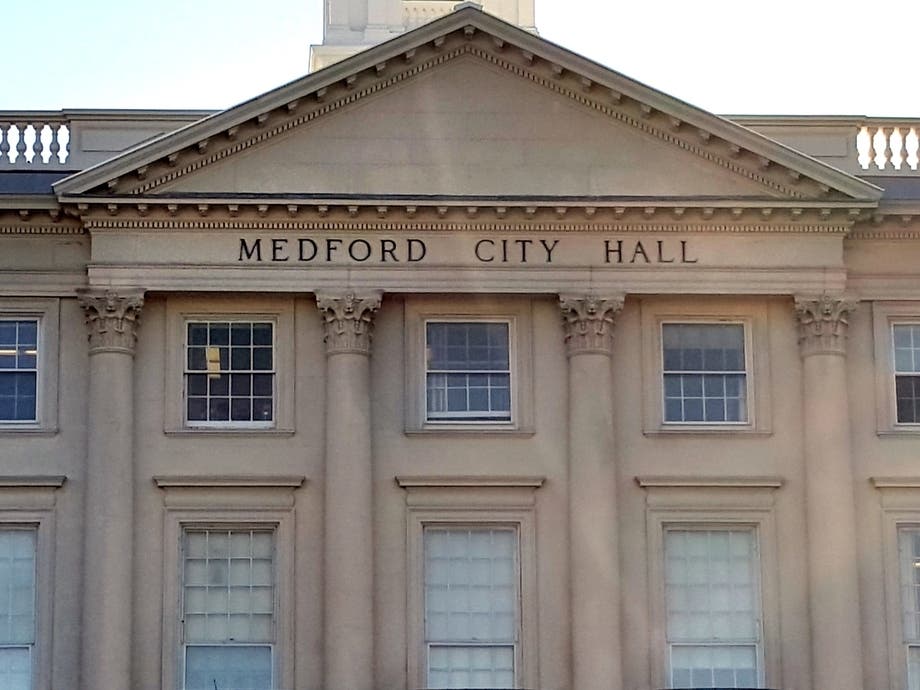
MEDFORD, MA — The following letter was submitted by Medford resident Milva McDonald.
My Italian grandfather came to the United States through Ellis Island in the early 20th century. My mother married his son and arrived in America in the late 1950s. She became a naturalized citizen while she was pregnant with me, her third child. Although I grew up in a household where Italian was spoken regularly (dialect, of course), where Italian traditions like seafood on Christmas Eve were observed, and where Italian ethos like absolute loyalty to family were imprinted on me and my brothers, Christopher Columbus was not often talked about.
That makes sense for my mother, who grew up as a peasant in a tiny Italian village in Abruzzo. In Italy, people generally don’t make a big deal about Columbus. My father, on the other hand, grew up in Connecticut. They didn't talk much about it, but he and his father would have likely experienced some level of the hate, xenophobia, and sometimes violence directed at Italian immigrants in the United States for many years.
Find out what's happening in Medfordfor free with the latest updates from Patch.
While this xenophobia had waned by the time I was growing up in the 1970s, traces of it remained and still remain, in the form of stereotypes that paint Italians as loud, ignorant, prone to organized crime, and other unflattering, morally questionable characteristics.
The pressure to become Americanized that my grandfather and his children felt filtered down to me and my brothers in particular ways. Although adults in my house spoke Italian interchangeably with English, my brothers and I were discouraged from doing so. “Speak English!” was a refrain I heard over and over. My siblings and I could understand Italian, but none of us spoke it. We were expressly told not to. My mother also learned English and over the years spoke Italian less and less.
Find out what's happening in Medfordfor free with the latest updates from Patch.
This kind of push to Americanize was common among immigrants in the 20th century, but because of the high level of xenophobia against Italians, it may have been particularly cogent for them.
It is against this backdrop that Christopher Columbus, whose slim connection to Italy is his birth in Genoa, became a vehicle for Italian pride. Although Columbus’s greed and barbarism made him a controversial figure during his lifetime, and despite the fact that other explorers had reached the Americas first, and notwithstanding the detail that Columbus did not step foot on what is now US soil, Columbus became credited with “discovering” America. He also became one way that Italians in America could seek to overcome prejudices against them.
It is ironic, then, that in a 21st century debate about whether we should honor Christopher Columbus, a man who embodied the core definition of racism – the belief that he and others of his heritage were better than the native peoples he encountered – many Italians continue to defend him. Ironic, because people who oppose the continued exaltation of Columbus today have motives quite similar to those of Italians who sought to raise him up in the previous two centuries.
Within this irony, if we can embrace it, is common ground. Columbus may have helped Italians overcome the prejudice they faced as immigrants in the United States, but history demands truth.
As historical research and primary sources have uncovered Columbus's heinous misdeeds and brought to light the fallacy of the accomplishments with which he’s credited (namely “discovering” America), the valid question of whether he should continue to be celebrated has arisen. Intertwined in this question are historical realities of the United States itself – our mistreatment of Native Americans, and our enslavement of scores of Africans. As our nation acknowledges, as it must, the deep pain and continued damage these legacies incur, the effort to take Columbus, an enslaver, brutalizer, and murderer of Native peoples, down from his pedestal, is driven by the same desire to overcome prejudice and violence that catalyzed his construction as an Italian-American icon in the first place.
Political correctness has little to do with the push to take down the false idol of Columbus. Rather, it is about validating and acknowledging history, and standing with Native Americans and people of color who are facing hate, discrimination, bigotry, and systemic racism right now. Italian Americans, with their own history of facing prejudice and hate, are in a position to understand this better than many. It requires healing our own ancestral anxieties about racism, owning our own value despite hurtful stereotypes that still circulate about us, and seeing that, while Christopher Columbus for a myriad of complicated, valid reasons may once have made sense as a person we could look up to, that time has long past.
People who oppose the lifting up of Columbus in whatever form, whether it be a holiday, a statue, or the name of a school, do so because they believe that this kind of lifting up has power, power that can help to either overcome, or to reinforce, prejudice. We Italian Americans overcame the prejudice against us and the violence we incurred as a result. Now it is time for us to help others do the same.
Italian people have a rich history worthy of honoring, one that is actually obfuscated by focusing on Columbus. As one Italian American has said, councilman Mike Bonin of Los Angeles, the great grandson of Italian immigrants, “I’ve thought about my ancestors and…celebrating Columbus…does not honor their story and their struggle and their history; it insults it, and it besmirches it. They came here to build something, not to destroy something. They came here to earn something and not to steal something. They came here to make life better for their children, and not to take away something for someone else’s children. I think the best way as an Italian-American that I can honor their sacrifice and their heritage is to try and make the world better for their children and for my children. And part of that is trying to make a better world.”
I couldn’t agree more.
Get more local news delivered straight to your inbox. Sign up for free Patch newsletters and alerts.