Weather
Winter Storm Warning Issued For Much Of The Hudson Valley
A winter weather advisory has also been issued for southern Westchester County. Here's the latest.


Editor's Note: See also Saturday morning update: Latest Timing, Totals For Hudson Valley's 1st Winter Storm Of 2024
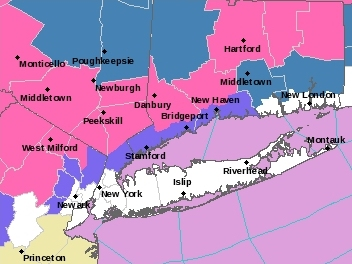
HUDSON VALLEY, NY — As the first winter storm of 2024 neared the region, the National Weather Service updated its outlook to warning level Friday afternoon for Orange, Putnam, Rockland and northern Westchester counties and issued a winter weather advisory for southern Westchester.
For Orange, Putnam, Rockland and northern Westchester, the NWS warned of heavy snow with total snow accumulations of 5 to 9 inches. The heaviest snow will fall during the evening into early morning hours. There could be some light rain or drizzle mixed in overnight.
Find out what's happening in Pearl Riverfor free with the latest updates from Patch.
The winter weather advisory for southern Westchester predicts total snow accumulations of 2 to 4
inches and winds gusting as high as 35 mph. Rain will likely mix in as the night progresses.
Dutchess and Ulster counties still remain on storm watch.
Find out what's happening in Pearl Riverfor free with the latest updates from Patch.
Snow totals could reach up to a foot in the Mid-Hudson and Capital Regions, with potentially higher totals in parts of the Catskills, state officials said.
Snow is expected to start falling around 4 p.m. Saturday and fall, sometimes up to an inch an hour, not leaving the region completely until after sunset Sunday.
Travel could be very difficult due to snow covered roadways and reduced visibility.
"I urge everyone to pay attention to their local forecast and to plan travel accordingly," Gov. Kathy Hochul said in a Friday storm briefing. "New Yorkers are no strangers to snow, but it’s always important to be prepared and to know how to safely handle incoming weather."
State officials offered some tips for safe driving:
- Do not drive unless necessary.
- If you must travel, make sure your car is stocked with survival gear like blankets, a shovel, flashlight and extra batteries, extra warm clothing, set of tire chains, battery booster cables, quick energy foods and brightly colored cloth to use as a distress flag.
- If you have a cell phone or other communications device such as a two-way radio available for your use, keep the battery charged and keep it with you whenever traveling. If you should become stranded, you will be able to call for help, advising rescuers of your location.
- The leading cause of death and injuries during winter storms is transportation accidents. Before getting behind the wheel, make sure that your vehicle is clear of ice and snow; good vision is key to good driving. Plan your stops and keep more distance between cars. Be extra alert and remember that snowdrifts can hide smaller children. Always match your speed to the road and weather conditions.
- It is important for motorists on all roads to note that snowplows travel at speeds up to 35 mph, which in many cases is lower than the posted speed limit, to ensure that salt being dispersed stays in the driving lanes and does not scatter off the roadways. Oftentimes on interstate highways, snowplows will operate side by side, as this is the most efficient and safe way to clear several lanes at one time.
- Motorists and pedestrians should also keep in mind that snowplow drivers have limited lines of sight, and the size and weight of snowplows can make it very difficult to maneuver and stop quickly. Snow blowing from behind the plow can severely reduce visibility or cause whiteout conditions. Motorists should not attempt to pass snowplows or follow too closely. The safest place for motorists to drive is well behind the snowplows where the roadway is clear and salted. Never attempt to pass a snowplow while it's operating.
The New York State Department of Environmental Conservation reminds those responsible for the large-scale removal and disposal of snow to follow best management practices to help prevent flooding and reduce the potential for pollutants like salt, sand, oils, trash, and other debris in snow from affecting water quality. Disposal of snow in local creeks and streams can create ice dams which may cause flooding in nearby areas. Public and private snow removal operators should be aware of these safety issues during and after winter storms.
MTA employees will be deployed throughout the operating region spreading salt and clearing surfaces of snow, keeping signals, switches, and third rails operating, and attending to any weather-related challenges.
Metro-North crews will be positioned throughout the system to respond quickly, said Metro-North President Catherine Rinaldi. "Customers, particularly those in the northern regions of Metro-North territory, should plan extra travel time and use TrainTime for real-time updates if they expect to travel this weekend."
For more storm forecast news SEE: HV Snow Totals Revised Upward For Weekend Storm
Get more local news delivered straight to your inbox. Sign up for free Patch newsletters and alerts.
