Community Corner
February Stargazing: 4 Weekends, 4 Reasons To Look At Skies
With less moisture in the atmosphere, stars sparkle more in the winter. February also has a new moon, a neat celestial trio and a micromoon.


ACROSS AMERICA — February is a good month for stargazers to engage their inner moon child with several astronomical events, including a “micromoon,” the opposite of a supermoon, on the last weekend of the month.
Skies will be perfect for evening stargazing starting Friday when the moon darkens and rises after midnight, then shows itself about 50 minutes later each night until it shrinks to a thin crescent.
It’s a good time to try to catch a glimpse of constellations best seen in February, including Auriga, Camelopardalis, Canis Major, Columba, Gemini, Monoceros and Puppis.
Find out what's happening in Across Americafor free with the latest updates from Patch.
With the assistance of a telescope, which isn’t necessary to see everything going on in the sky this month, stargazers may also see some interesting deep sky objects within the constellations, according to the 2024 Constellation Guide.
Some of the best-known are the open star clusters, including Messier 36, Messier 37 and Messier 38, the Eskimo Nebula, the Christmas Tree Cluster, the Cone Nebula and the Rosette Nebula.
Find out what's happening in Across Americafor free with the latest updates from Patch.
Meteor showers don’t resume until April, but skygazers have plenty of other reasons to poke their heads in the sky in February, according to AccuWeather. None of the astronomical events require a telescope, the site said, but the instruments do provide a closer look.
Stars Sparkle With New Moon
The sky darkens dramatically with the new moon on Feb. 9. Our natural satellite is not visible in this phase, but its absence gives extra shine to the constellations. Stars sparkle more in the winter months because atmospheric moisture is lower than on hot, humid summer nights, AccuWeather said.
Celestial Trio Worth A Look
After sunset on Saturday, Feb. 17, the moon will appear above the constellation Orion in the southern sky with Jupiter glowing by its side.
The celestial trio will be visible again on the nights of Feb. 18-19, but stargazers should catch it on the 17th if sky conditions allow. With each passing night, the moon will appear farther away from Orion and Jupiter, according to AccuWeather.
Full Snow Micromoon
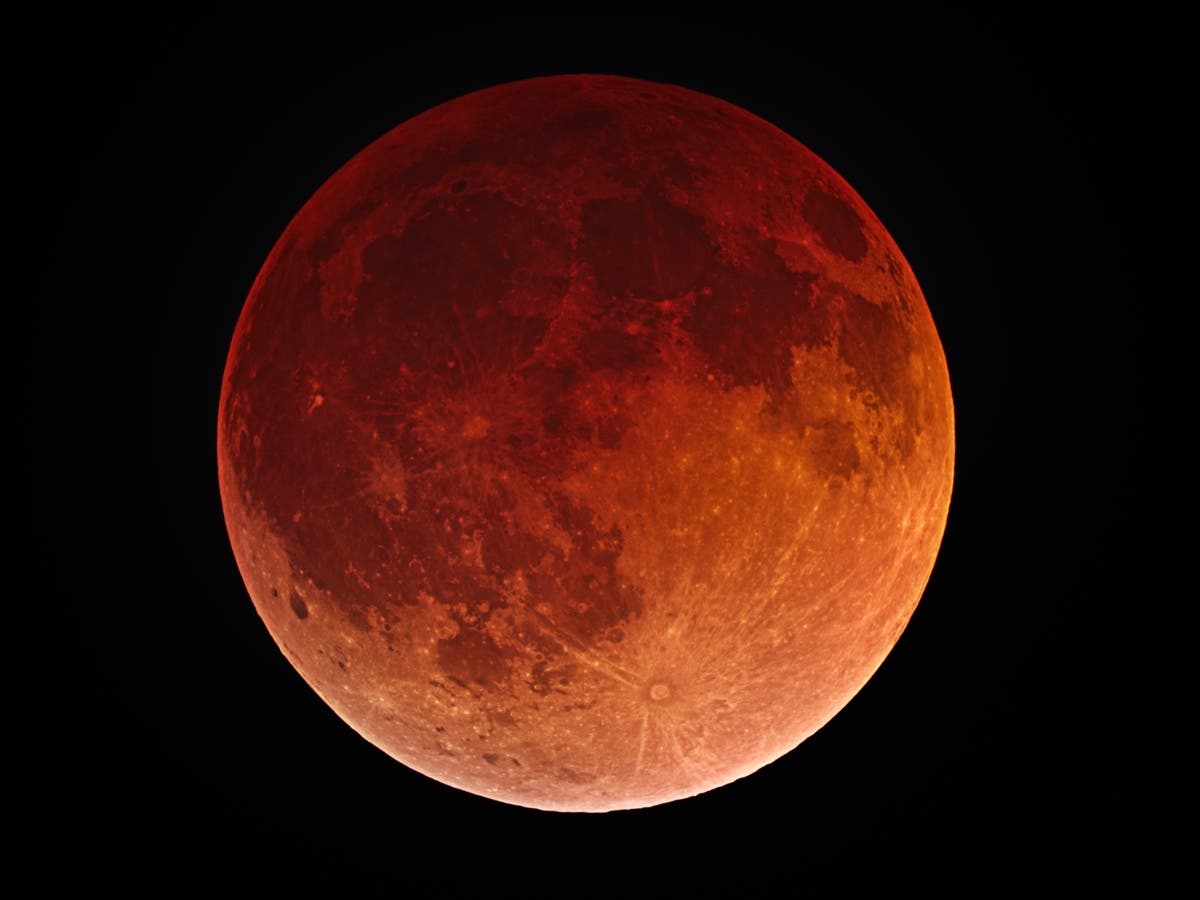
The Feb. 24 full moon is a micromoon, the opposite of a supermoon — that is, a full moon that appears slightly larger and brighter than usual as it makes its closest approach to Earth in its elliptical orbit, called perigee, according to NASA.
A full moon that occurs when the moon is farthest away from
Earth, or at apogee, is called a micromoon and appears about 14 percent smaller and 30 percent dimmer than usual, according to AccuWeather.
The February full moon reaches peak illumination at 7:30 a.m. EST on Saturday, Feb. 24, when it’s already below the horizon. But it will appear full the evening before and on Saturday evening, too. Look in the eastern sky around sunset. By midnight, it will reach its highest point in the sky.
The February full moon is often called the snow moon for obvious reasons, according to The Old Farmer’s Almanac, which sites National Weather Service data showing February, on average, is the nation’s snowiest month.
Native Americans gave names to each month’s moon to keep track of the season, but some of the names also come from Colonial American and European cultures.
Other names given to the February moon are connected to animals, according to The Old Farmer’s Almanac. The Cree traditionally called it the bald eagle or simply eagle moon, the Ojibwe called it the bear moon, the Tlinget called it the black bear moon, the Dakota called it the raccoon moon, certain Algonquin peoples called it the groundhog moon, and the Haida called it the goose moon.
Get more local news delivered straight to your inbox. Sign up for free Patch newsletters and alerts.