Politics & Government
Gas Plant That's Part Of PJM's Fast-Tracked Process Is Getting Pushback In Virginia
Tenaska's 1.5 gigawatt proposal would be part of the reliability resource initiative for "shovel-ready, high-reliability" projects.

October 24, 2025
SCOTTSVILLE, Va.—In rural Fluvanna County about an hour west of the state capital, a proposed natural gas power plant offers a window into a multi-state effort to speed more electricity sources onto the grid.
Find out what's happening in Across Virginiafor free with the latest updates from Patch.
All but a handful of the projects in the initiative by PJM Interconnection, which runs the regional grid, would belch carbon pollution. Tenaska Energy’s proposal is among those dubbed by PJM as “shovel-ready, high-reliability” generation projects that would get a faster path through the clogged queue to connect to a grid increasingly stressed by power-hungry data centers.
But power plants need local approval, too. Tenaska’s proposal, which has some support, also faces concerns from residents about health effects, noise and transparency.
Find out what's happening in Across Virginiafor free with the latest updates from Patch.
Last week the Fluvanna County Planning Commission deferred until November any decision on whether the 1.5-gigawatt plant is in “substantial accord” with the county’s comprehensive plan, a crucial step needed along with a special-use permit that will be voted on in January.
“I think we’d like to rely on science and independent judgment before we’re asked to take what is a very critical step for this community and its long-term future,” said commission member Kathleen Kilpatrick.
The company wants to build the project next to a gas plant it already operates in the county, the Tenaska Virginia Generating Station. Amber Kidd, a Fluvanna resident, told Inside Climate News that she supports the Nebraska-based developer’s proposal, given that her family has worked at the existing plant without any safety issues.
“We are a fossil-fuel family,” said Kidd. “I’m very proud of where we work and want to see this come. Rural areas that continue to refuse growth, they die off. … I support the jobs.”
In a county of about 30,000 people that President Donald Trump won by about six points, his staunch support for fossil fuels is far from universally shared by its residents. Lauren Banning, at the planning commission meeting last week, said she is concerned about toxic emissions more than a “negligible tax break, a few jobs, not even 50.”
“My kids love playing outside all day long, but if I’m scared of the air not being breathable, how is this helping our county and our community?” Banning said.
The proposal
The proposed $2.2 billion plant, called the Expedition Generating Station, is expected to come online in 2031 after obtaining local, state and federal permits. It would be built on 50 acres within a 425-acre parcel directly adjacent to Tenaska’s 1-gigawatt gas plant in Fluvanna that began operations in 2004.
Timberly Ross, a spokesperson for the company, told Inside Climate News that the planning commission vote deferral “pushes us back a few months, but we remain committed to bringing this much-needed development to Fluvanna County.”
Tenaska said the new plant could power up to 1.5 million homes. It’s part of PJM’s Reliability Resource Initiative, called RRI for short. PJM, which oversees a competitive market for wholesale electricity in all or part of 13 states and the District of Columbia, is inserting RRI projects into its backlogged queue of interconnection requests.
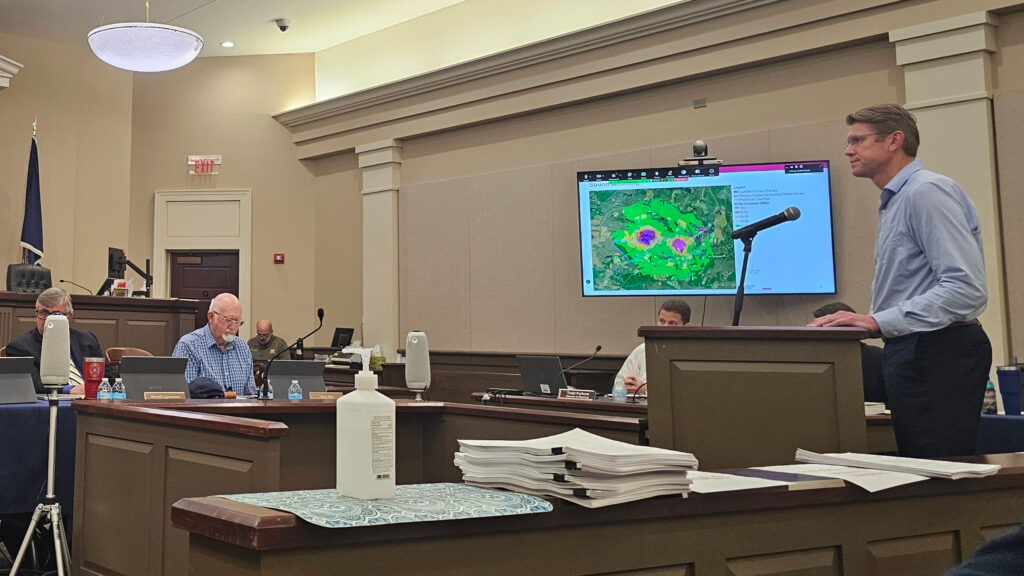
Jarrod Pitts, senior director of project development at Tenaska Energy, stands at the podium before the Fluvanna County Planning Commission. (Photo by Charles Paullin/Inside Climate News)
Most of the non-RRI projects waiting to connect to the grid are renewables.
PJM created the initiative to ensure ample electric generating capacity and avoid shortages resulting from data centers’ surging demands. But clean energy supporters have decried that projects that are mostly fueled by natural gas will leapfrog renewables that have long waited their turn to start cranking out electricity.
Virginia’s largest utility, Dominion Energy, is planning for several gas plants alongside a number of renewable energy projects of its own to meet demand. Tenaska is an independent power producer that would sell electricity from Expedition either directly into the regional grid or to Dominion through a power purchase agreement.
Since the Virginia Clean Economy Act’s goal to decarbonize the electric grid by 2050 applies to only Dominion and utility Appalachian Power, Tenaska is not bound by requirements to prove the need for the plant or retire it within the next 25 years.
“This location is attractive due to access to existing transmission corridors, water supply and natural gas pipelines,” the company said in a presentation before the planning commission.
Tenaska also builds renewables projects. But a Fluvanna County ordinance passed last year sets requirements on solar development that have effectively banned it.
“Tenaska submitted a variety of projects and technologies into that [PJM] process, including battery projects, which were accepted,” said Ross, Tenaska’s spokesperson. But in Fluvanna, given local hostility to renewables, Ross said the gas plant “is the appropriate technology for this location.”
Questions about air pollution, noise
Tenaska hasn’t yet disclosed expected pollution levels from the new plant. Nor has it shared in planning meetings what its current plant’s emissions have been.
Instead, at the planning commission meeting, Tenaska representatives noted what the company had anticipated its existing plant’s emissions of nitrogen dioxide, sulfur dioxide and two types of fine particle pollution would be, estimated years before the project was built. They said it showed rates “less than 15 percent of the applicable standard.”
All of those pollutants can cause serious health problems, particularly involving the lungs.
Josephus Allmond, a resident of Fluvanna and an attorney with the Southern Environmental Law Center, shared information on cancer rates at a meeting in October held by Chris Fairchild, the Board of Supervisors’ chairman. Allmond cited a 2012 report by the regional health district showing that lung cancer incidents in Fluvanna County between 2004 to 2008, the period just after Tenaska built its first plant, increased more than 30 percent compared with 1999 to 2003.
“My question for the folks at Tenaska: That was for a plant slightly under 1,000 megawatts—can we expect an even bigger increase in incidents of lung cancer if this plant is approved?” said Allmond.
Residents asked the company at that meeting why it wasn’t sharing actual pollution figures from its operating plants around the country. Tenaska officials said they would share more emissions data later, through the state’s pollution permitting process.
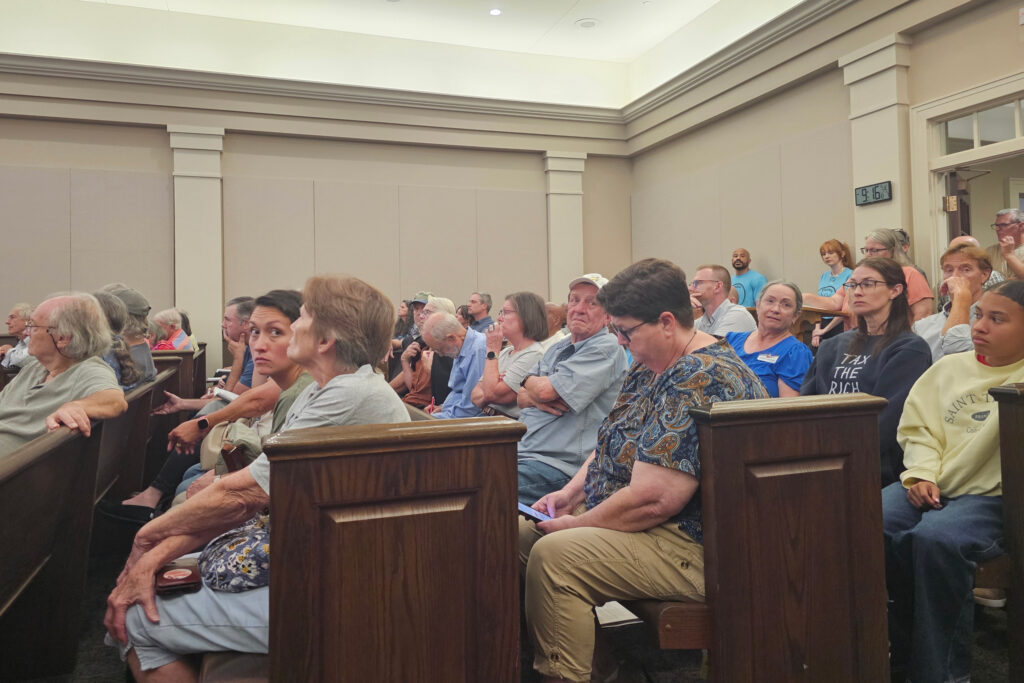
Residents attend the Oct. 7 Fluvanna County Planning Commission meeting. (Photo by Charles Paullin/Inside Climate News)
The company on its website also states that “claims regarding the plant and local cancer cases are ridiculous and defamatory.” Federal air standards protect against health impacts, including cancer, the company contends, and it says the new plant will be categorized as a “minor source of hazardous air pollutants” under the Clean Air Act.
Another worry raised by residents at that meeting was noise. Fairchild said the existing gas plant can be heard from his nearby Cunningham Creek Winery.
“I have the same concerns,” Fairchild told the residents. “But we don’t deal with a $2 billion item every day. There are a lot of concerns that haven’t been addressed.”
The company’s spokesperson told Inside Climate News that the current plant is a net positive for the area.
“Tenaska has operated in Fluvanna County for more than 20 years, consistently meeting stringent air quality standards, operating under the county-mandated sound levels and providing roughly $35 million in tax revenue to the county,” Ross said. “Our application … not only provided those facts but also included robust supplemental materials, including an independent sound study, economic impact study, traffic plan and visual renderings.”
Laurie Partner, a local real estate agent whose husband works at the plant, said to the planning commission that the smoke coming from the stacks was “steam,” and cancer can come from other sources like smoking and microwaving plastics.
“It was almost sickening to me to hear all the misinformation that was stated there,” Partner said in an interview with Inside Climate News.
Sharon Harris, a Fluvanna resident, said she sees a lot of misinformation floating around the county about a main alternative to new gas plants: solar. As a founding member of the Fluvanna Horizons Alliance, which opposes Tenaska’s project, she wants to raise awareness of who needs the power—data centers, not local residents—and a better understanding of how solar works.
Local resentment toward clean energy has grown through hours-long county meetings discussing potential harms to farmland from solar, stormwater runoff concerns and a presentation from the Citizen Defenders of Fluvanna County on what to do with solar panels after they’ve reached the end of their life. Some residents still see it as an expensive form of energy, even though financial advisory firm Lazard’s widely cited research on electricity costs shows solar is now the cheapest option.
“There’s definitely a lack of knowledge and information in our community,” said Harris.
This story was originally published by the Virginia Mercury. For more stories from the Virginia Mercury, visit VirginiaMercury.com.