Politics & Government
Man In 'Joker' Mask Who Set Chicago P.D. Car Ablaze In 2020 Sentenced
Federal prosecutors initially charged him with arson but reduced the charges earlier this year.


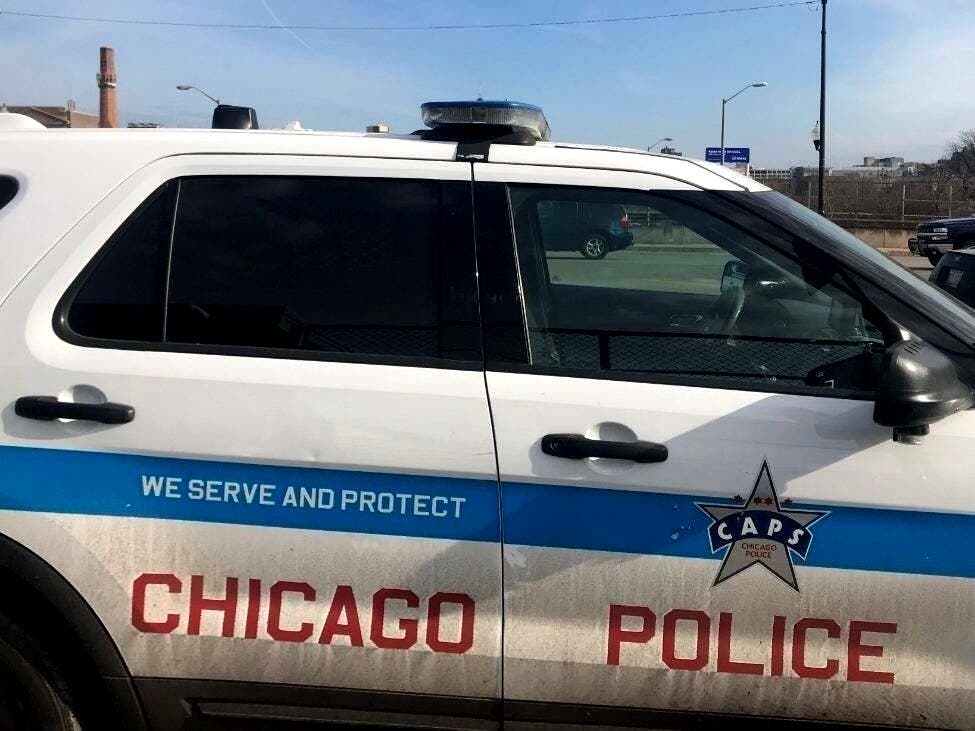
CHICAGO — A Chicago man who admitted setting fire to a Chicago Police Department SUV during downtown rioting in 2020 was sentenced to nearly three years in prison Wednesday, records show.
Timothy O'Donnell, 33, pleaded guilty earlier this year to one count of interfering with law enforcement during the commission of civil disorder in downtown Chicago on May 30, 2020.
"[O'Donnell's] crime was extremely serious. He hijacked a critical moment in time for this city to, apparently, live out a scene from his favorite movie," Assistant U.S. Attorney James Durkin said last month in a sentencing memo.
Find out what's happening in Chicagofor free with the latest updates from Patch.
"[O'Donnell] also recorded footage of the protests on his tablet and narrated some of the scenes. In one of those recordings, as the defendant walked down Wacker Drive, he casually joked, 'beautiful day for a barbecue,'" the prosecutor said. "Minutes later, he set fire to the CPD vehicle."
O'Donnell was arrested a few days after the incident, according to court records. Following a detention hearing, U.S. Magistrate Judge Gabriel Fuentes ordered him to remain jailed ahead of trial, finding that there was no condition that could assure O'Donnell would show up for future court dates.
Find out what's happening in Chicagofor free with the latest updates from Patch.
The judge cited O'Donnell's history of failing to appear in court across multiple states. In his ruling, Fuentes said the "Joker" mask that O'Donnell was accused of wearing indicated he was trying to hide his identity and noted that he had reportedly called himself "The Riddler" in the past.
"[G]iven that the detention motion implicates both flight risk and community safety, the Court at least notes that 'The Riddler' was a villainous character in the fictional DC Comics story of 'Batman,' featured in comic books, movies, and television programs," Fuentes said in the June 9, 2020, order.
"The fact that a defendant who has called himself 'The Riddler' stands accused of lighting a police car on fire during a Loop demonstration while wearing a clownlike mask and posing for photographs immediately afterward is, at the very least, troubling in a context in which the Court is considering the degree to which Defendant can be trusted to respect laws and Court-imposed requirements in order that he be released into the community pending trial in this case," the judge said.
Immediately following O'Donnell's arrest, he was interrogated by trio of law enforcement officers. After about a quarter-hour of questioning, he told them, "I'm in fear. I'm not going to say anything further on that matter without a lawyer present," but the officers continued to question him anyway, for another hour and a half, according to U.S. District Judge Andrea Wood, who later tossed out all of O'Donnell's statements made after he invoked his constitutional right to an attorney.

A federal grand jury had initially returned an indictment charging O'Donnell with having "maliciously damaged and destroyed and attempted to damage and destroy, by means of fire, a Chicago Police Department vehicle," records show.
But weeks before the case had been set to go to jury trial, prosecutors reduced the charge and O'Donnell agreed to plead guilty.
Prosecutors filed a fresh charging document, called a superseding information, in February. It alleged that O'Donnell "did knowingly commit an act to obstruct, impede, and interfere with a law enforcement officer lawfully engaged in the lawful performance of official duties incident to and during the commission of a civil disorder, which in any way or degree obstructed, delayed, and adversely affected commerce and the movement of any article and commodity in commerce."
The offense carries a maximum sentence of five years in prison, compared to 10 years for the federal arson charged that O'Donnell had been facing.
In the plea agreement, O'Donnell acknowledged that the police car he set on fire was in use by officers working during a civil disorder and that burning it did interfere with their operations and wind up costing more than $58,000 to replace.
"His actions put scores of people at risk, including police officers, firefighters, protesters, and bystanders; he interfered with law enforcement officers trying to protect the public at a time when their services were critical; he caused thousands of dollars in damages; and he served as the poster child for images that tarnished this city. And that last point may have been his goal," Durkin said. "After setting fire to the CPD vehicle, the defendant stuck around to pose for pictures in front of the wreckage he created. He added to the chaos of an already chaotic night for no reason other than to live out his own fantasies."
Related: 'Joker' Charged With Lighting Chicago Police Car To Watch It Burn

In a letter to Woods ahead of sentencing, O'Donnell took full responsibility for the blaze, which he said was an "outlandish display of angst that I may have bene harboring from various personal accounts of mental and physical abuse by law enforcement when I was either traveling or homeless."
O'Donnell explains that he spent most of his 20s hitch-hiking and riding freight trains across the country, busking with instruments, selling visual art and sometimes sleeping outdoors.
"I spread a message of love, kindness, music and art along my way while exploring the many trades and jobs America has to offer," O'Donnell told the judge.
"I did however have my run ins with drugs and they have cursed my record but I assure you I'm not some felonious vagabond just ripping off people from state to state," he said. "I would like to think I was blessing the public with my stories from the road, poetry and art."
O'Donnell's plea agreement anticipated sentencing guidelines would call for between 41 and 51 months in prison. Wood imposed a 34-month sentence at Wednesday's hearing in Chicago.
Get more local news delivered straight to your inbox. Sign up for free Patch newsletters and alerts.