Politics & Government
Goodlander Sponsors Bill To Give Tax Dollars To News Outlets That Cover Her
Rep. Maggie Goodlander's Education Not Endless Scrolling Act would tax social media and bankroll a Local Journalism Preservation Trust Fund.


Just a few months after Congress ended federal subsidies for NPR and PBS, a New Hampshire Democrat is ready to get taxpayers back in the business of funding the news.
U.S. Rep. Maggie Goodlander is an original co-sponsor of the Education Not Endless Scrolling Act, which would tax social media companies and use the revenue to fund, among other things, government subsidies for local reporters — including the ones that report on Goodlander and her fellow politicians.
Find out what's happening in Concordfor free with the latest updates from Patch.
“Big Tech monopolists are endangering the health and safety of America’s kids, destroying American jobs, and crushing the free press in communities across our country. For what? Profit,” said Goodlander. “It’s time to hold these big corporations accountable and invest in the sources of America’s strength: our students, our workers, and our small businesses.”
Goodlander’s anti-profit progressive rhetoric is part of a growing push in Congress and some deep-blue states to get tax dollars into the pockets of the people who cover the news. But will reporters work as hard to cover the government if it’s covering their paychecks?
Find out what's happening in Concordfor free with the latest updates from Patch.
The Education Not Endless Scrolling Act would impose a 50 percent excise tax on digital advertising revenue above $2.5 billion, affecting companies like Google, Facebook, and Amazon. (Interestingly, it would not touch Elon Musk’s X — loathed by the left — based on the latest revenue numbers.)
The legislation would direct the funds to pay for vocational education, one-on-one student tutoring, and subsidies for local news outlets. Specifically, it calls for a “Local Journalism Preservation Trust Fund” to give tax credits to news outlets for hiring local journalists and to small businesses for buying ads.
“When Big Tech usurps local journalism in pursuit of increased digital ad revenue, communities become less resilient, less informed, and ultimately less democratic,” according to a press release from U.S. Rep. Jake Auchincloss (D-Mass.), who filed the legislation last week.
Critics say Democrats like Goodlander and Auchincloss have the problem backward.
“If you don’t trust media now, wait until it’s government-funded,” writes J.D. Tucille at Reason magazine.
“If a massive chunk of journalists’ income comes from one reliable source — government coffers —they’ll inevitably treat government as the audience to please rather than locals who’ve proven difficult to court and who distrust the press.”
And then there’s the example of NPR and PBS, both of which gave far more favorable coverage to their liberal allies than their conservative opponents while they were on the taxpayer dole.
“Local papers in the mold of left-leaning National Public Radio stations wouldn’t serve a politically diverse public. Most Americans already mistrust the press, and making journalists more dependent on government will compound the suspicion of bias,” The Wall Street Journal editorialized regarding a similar scheme in 2021.
Lily Tang Williams, the Republican challenging Goodlander in 2026, offers an objection based on her personal experience as a former resident of communist China.
“While I fully recognize the vital role of local and independent journalism. Taxpayer dollars should never be used to fund news coverage,” Williams told NHJournal. “Having grown up in a communist country with state-controlled media, I know firsthand how dangerous government-funded press can be. It seems the congresswoman has forgotten the true meaning of freedom of the press as enshrined in the First Amendment.”
And then there are the taxpayers themselves. While there have been few polls on the topic, the available data show that “Americans mostly oppose local news organizations receiving government funding — with six in 10 opposed to federal (66 percent) or local (60 percent) government subsidies.”
That hasn’t stopped blue states, including New York, New Jersey, and California, from passing legislation giving taxpayer support to local news. In every case, the programs are managed by left-of-center organizations. For example, California’s $25 million program is run by the UC Berkeley Graduate School of Journalism. New Jersey has handed out $10 million to newspapers through a consortium whose executive director is a former staffer from the left-wing Southern Poverty Law Center.
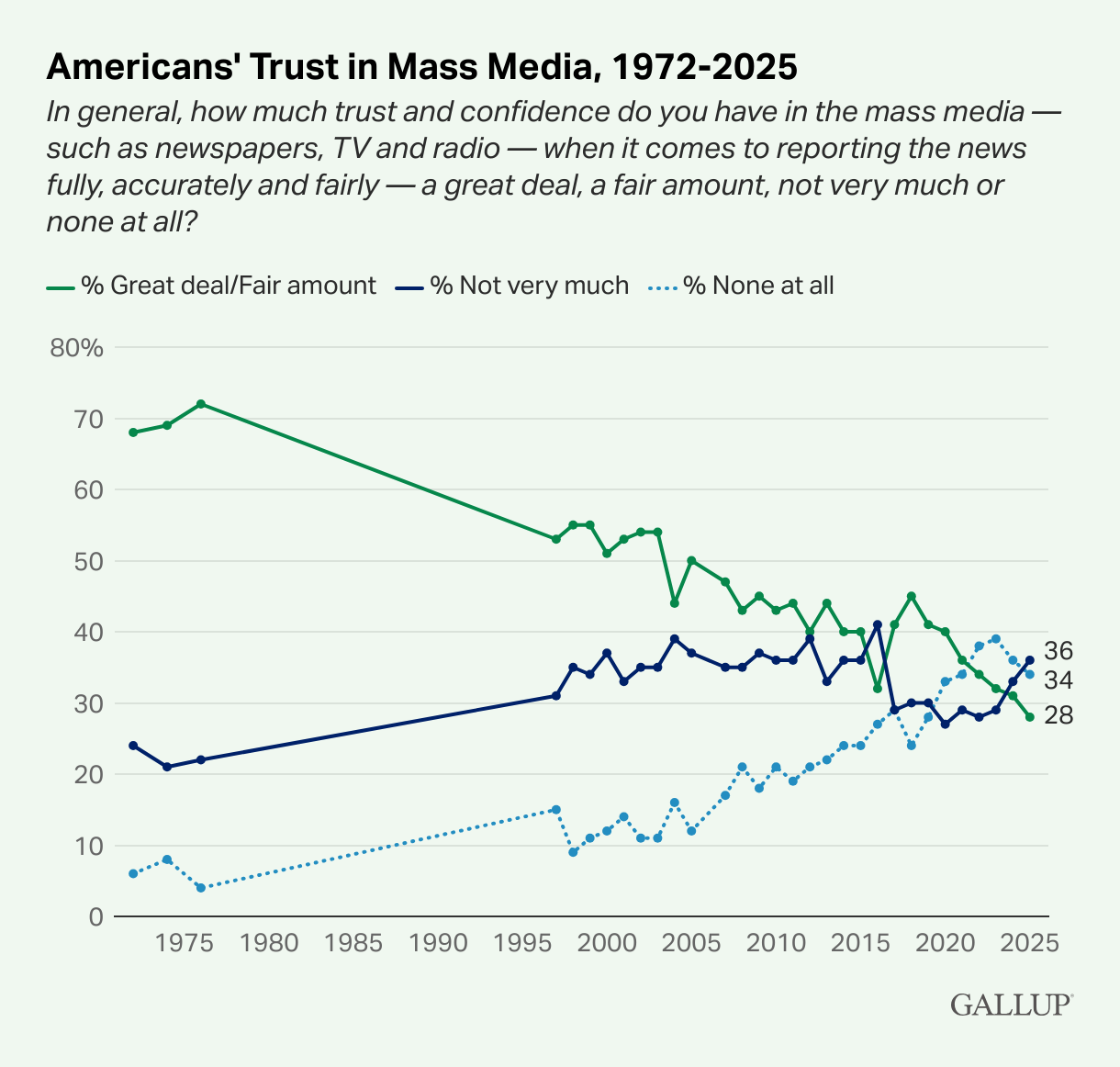
Oddly, this push comes as Gallup polls show America’s trust in news reporting is at an all-time low.
“Confidence in the mass media is historically low, with fewer than three in 10 Americans now placing trust in newspapers, television, and radio to report the news fully, fairly, and accurately,” Gallup reports.
While Goodlander says her goal is to support local news, she would not respond to requests for comment from New Hampshire Journal about this policy.
This story was originally published by the NH Journal, an online news publication dedicated to providing fair, unbiased reporting on, and analysis of, political news of interest to New Hampshire. For more stories from the NH Journal, visit NHJournal.com.


