Politics & Government
Dead Whale In Raritan Bay Last Week Had Signs Of Infectious Disease
This whale and the whale that washed up in Lavallette Friday showed signs of infectious disease, said a group that retrieved the carcass.


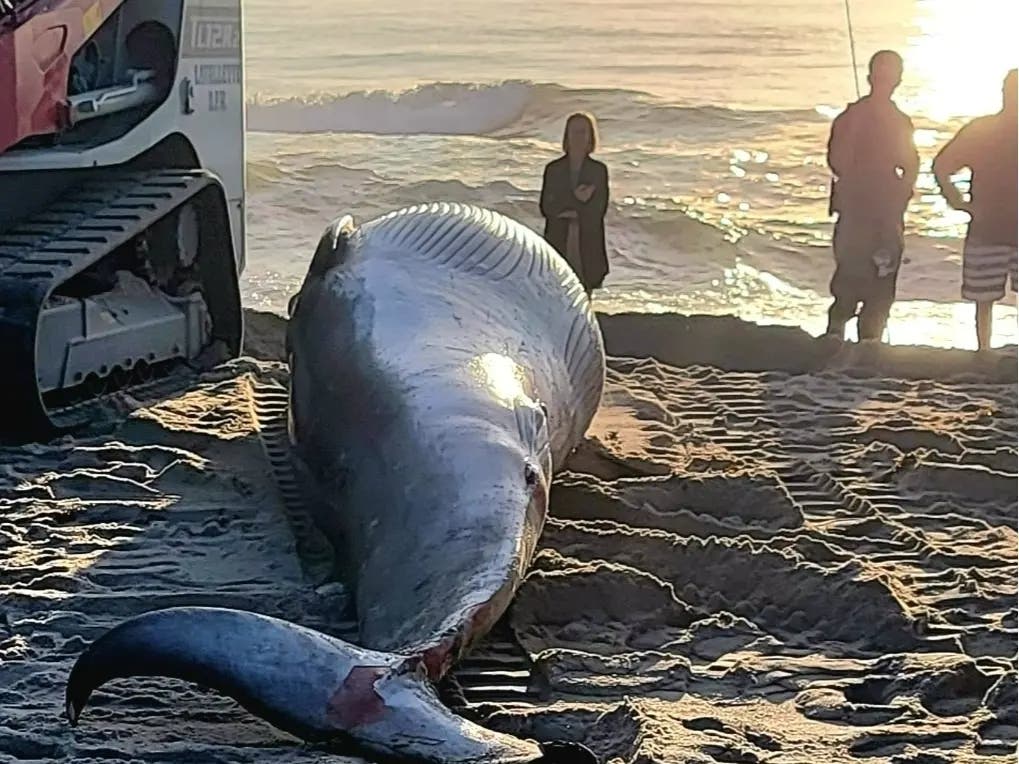
MATAWAN, NJ — A dead whale was seen floating in Raritan Bay last Thursday.
The whale was expected to wash ashore at Sandy Hook, but it actually drifted with the current and washed up Saturday morning on the beach in Ft. Tilden in Queens, according to the Marine Mammal Stranding Center and the Atlantic Marine Conservation Society, both of which were keeping an eye on the whale.
The Atlantic Marine Conservation Society retrieved the carcass of the whale and said it was a 23-foot female minke whale. They also said it showed signs of having an infectious disease, such as a virus or bacteria.
Find out what's happening in Matawan-Aberdeenfor free with the latest updates from Patch.
Separately, a dead minke whale washed ashore in Lavallette early Friday morning. That whale, a smaller juvenile male about 10 to 12 feet long, was found at 6:30 a.m. on the beach at Trenton Avenue.
The Atlantic Marine Conservation Society said its team "documented similar findings of infectious disease" for the Lavellette whale, which it described as having "a thin body condition."
Find out what's happening in Matawan-Aberdeenfor free with the latest updates from Patch.
Samples from both whales were collected and sent to state labs so an exact cause of death could be determined, the group said.
For the past 20 years, the Atlantic Marine Conservation Society has been the main group tasked with removing dead whales from New York Bight off New York City and New Jersey. Infectious disease is the leading cause of death for minke whales found in those waters, they said.
According to the U.S. federal government, humpback whale deaths and strandings have increased off the East Coast, in what the federal government named in 2017 "an unusual mortality event," according to the National Oceanic and Atmospheric Administration (NOAA) Fisheries. But NOAA says the increase in whale deaths started in 2016, before surveys for offshore wind farms began.
The Atlantic Marine Conservation Society said they could not tie either of these two most recent whale deaths to sonar being used to build wind turbines off New Jersey/New York.
"To date, no large whale mortality since the beginning of the current Northwest Atlantic humpback whale, North Atlantic right whale, and minke whale unusual mortality events has been attributed to offshore wind activities," the group said Tuesday on their Facebook page.
They also listed the most common causes of deaths per whale species:
- Boat strikes and entanglement in fishing gear are the leading cause of what makes humpback and North Atlantic right whales strand themselves on beaches.
- Infectious disease is the leading cause of what makes minke whales strand themselves on beaches.
Friday's report: Whale Washes Up On Beach In Lavallette (Oct. 4)
Get more local news delivered straight to your inbox. Sign up for free Patch newsletters and alerts.


