Sports
Charles Albert Bender, aka 'Chief', Native American Pitching Ace
Native American Heritage Month


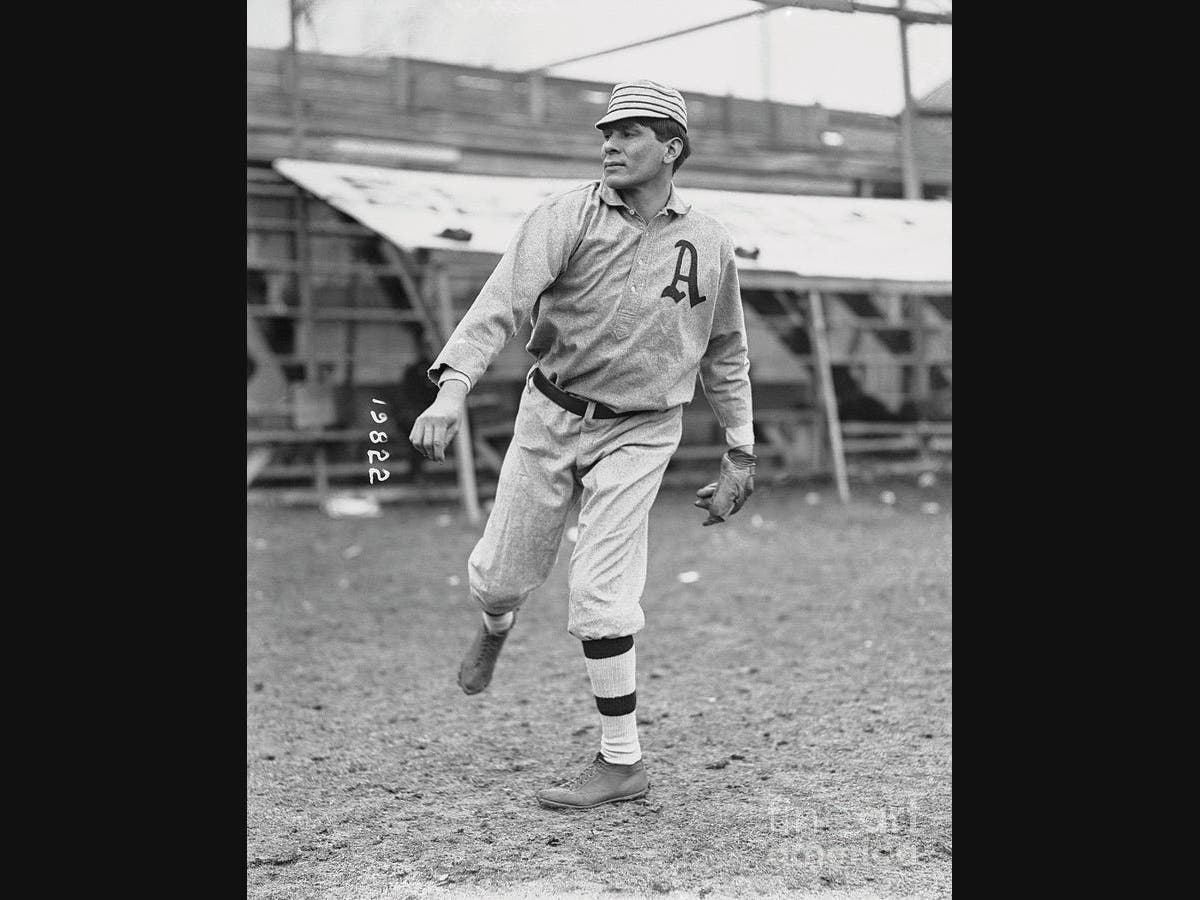

During baseball's Hot Stove League—the period between the last World Series pitch and Spring Training's start—fans engage in spirited debates that can never be settled. Recently, an online site asked which pitcher you, as manager, would choose to start a must-win game. The familiar names came flooding in: Sandy Koufax, Bob Gibson, Greg Maddux, and yes, Babe Ruth. The Bambino's World Series stats are imposing. Pitching for the 1916 and 1918 Boston Red Sox, Ruth notched a 3-0 record against the National League's Brooklyn Robins and Chicago Cubs, with a combined 0.87 ERA.
Missing from the fans' compilations was Charles Albert Bender, who stands as one of baseball's most accomplished yet underappreciated pioneers, whose dominance helped define the American League's early decades. Bender helped the Philadelphia Athletics achieve greatness during their first two dynasties from 1910 to 1914.
November is Native American Heritage Month, an excellent time to pay tribute to the long-forgotten Bender. His manager, Cornelius McGillicuddy—better known as Connie Mack—recognized his right-hander's rare ability to pitch under pressure. "If I had all the men I've ever handled, and they were in their prime, and there was one game I wanted to win above all others, Albert would be my man," Mack said. Mack, who always addressed Bender as Albert and never Chief, would know about good pitching. During his 64-year baseball career that began as a catcher and continued as a manager, he had under his wing fellow all-time A's pitching greats Lefty Grove, Herb Pennock, Eddie Plank, and Rube Waddell, and had watched Cy Young, Walter Johnson, and Grover Cleveland Alexander.
Born on May 5, 1884, on Minnesota's White Earth Indian Reservation, Bender was of Ojibwe heritage. His identity shaped the twists and turns in his baseball career as well as his personal life.
Bender's path to baseball glory began at Pennsylvania's Carlisle Indian Industrial School (CIIS), where he developed his pitching skills while receiving an education. Jim Thorpe, considered the greatest Native American athlete, also attended CIIS.
Scouted by several MLB teams, Bender signed with the A's in 1903 at just 19 years old. One of the greatest Dead Ball Era pitchers, Bender quickly established himself as the A's ace. He combined an exceptional fastball with an effective curveball, but his signature pitch was the nickel curve, a breaking ball that modern fans would identify as a slider. This pitch, which Bender helped popularize, gave him a devastating weapon against the league's best hitters.
Bender's numbers reflect his consistent excellence. Over seventeen major league seasons, he compiled a 212-127 record with a 2.46 ERA and a .625 winning percentage, averaging only two walks per start while striking out 1,711 batters. He won 191 games for the Athletics, helping the Mackmen capture five American League pennants and three World Series championships in 1910, 1911, and 1913. His postseason performance was outstanding, posting a 6-4 record with a 2.44 ERA.
In 1915, Bender signed with the rogue, short-lived, last-place Federal League Baltimore Terrapins, went 4-16, and was released by the team in September. After the 1915 season, Bender was picked up by the Philadelphia Phillies, where, pitching mostly in relief, he had a 7-7 record in 1916. In 1917, he showed flashes of his previous level of performance with an 8-2 mark and a 1.67 ERA but was nonetheless released by the Phillies at the end of the season. During the 1918 season, Bender went to work in the Philadelphia shipyards to contribute to the war effort.
Pitching in an unenlightened era, Bender endured crude, demeaning taunts with grace, dignity, and even humor. While fans would yell "Go back to your tepee" or do crude war dance imitations, Bender kept setting batters down. When a female fan asked Bender for an autograph, she said, "I thought all you Indians wore feathers." Bender replied, "We do, but I'm molting." Decades after his retirement, the Sporting News headline read, "Chief Bender Answers Call to Happy Hunting Grounds." Bender silently protested the slurs; he often signed autographs "Charles."
If Bender could offer modern pitchers’ advice, coaches would find his counsel bizarre. A top-flight trap shooter, Bender toured the country putting on demonstrations. He felt that the concentration trapshooting required led to excellent focus and good mound discipline. Christy Mathewson, Grover Cleveland Alexander, Honus Wagner, Ty Cobb, Eddie Collins, Roger Bresnahan, and Frank Baker often joined Bender in trapshooting contests for cash prizes. A survey of standout players in the early 20th century found that 49 of 50 owned double-barreled shotguns and identified trapshooting as their favorite sport.
After Bender's pitching days ended, he worked in a shipyard to help the World War I effort, managed successfully in the minor leagues and at the U.S. Naval Academy, and served as coach and scout for multiple MLB teams. In 1953, Bender became the first Minnesota-born player inducted into the Hall of Fame, and he remained the only one until Dave Winfield joined him in 2001. On May 22, 1954, a year after his enshrinement, Bender died a few weeks shy of his 71st birthday and shortly before his induction ceremony.
For much more about Bender's life and contributions, read Tom Swift's award-winning "Chief Bender's Burden."
Joe Guzzardi is a Society for American Baseball Research historian. Contact him at guzzjoe@yahoo.com


