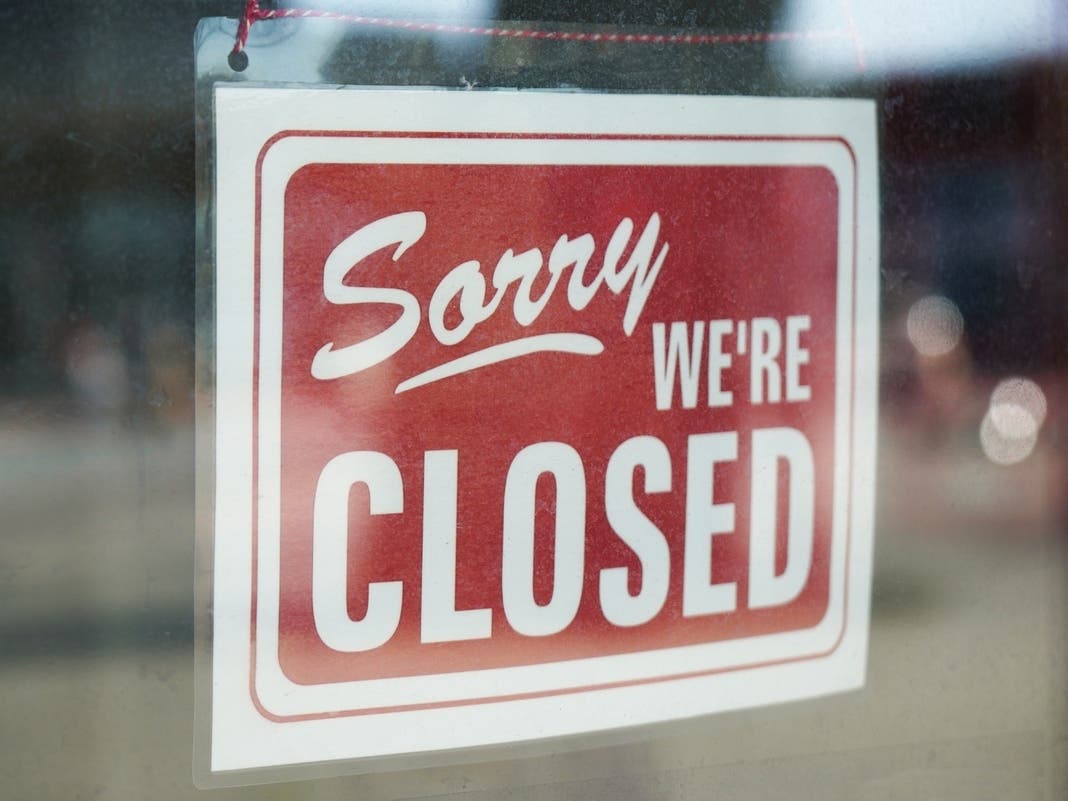
How to Secretly Live in a Mall. Artist Michael Townsend and seven of his artist friends secretly lived in a mall for four years. It all started back in 2003 in Providence, Rhode Island, when the city decided to demolish a series of old mill buildings and build a luxury mall, “Providence Place.” One of these buildings was an artist colony led by Townsend called “Last Thunder.” Townsend watched the mall being constructed and noticed there was a strange unused space (approx. 750 sq ft.) that wasn’t being used. Townsend showed the abandoned space to his compatriots and said, “let’s live here, it has everything we need right here in the mall.” It was their protest against the gentrification of Providence. They commandeered the space, building a cinder block wall and door for privacy. That meant hauling two tons of heavy materials up an incredibly steep staircase. “I knew that those scenes with the wall and the cinder blocks and sneaking in the cement would be incredible adrenaline rushes.” They found an unlocked security door to get in and out of the mall and ran an undetected extension cord from the mall’s electric panel for electricity. They secretly brought in a couch and other furniture. For food, they could eat at the mall’s food court and get popcorn from the mall’s multiplex. For sinks and toilets, they conveniently used the mall’s restrooms which were nearby. Eventually they got a hot plate and refrigerator so they could cook their own meals. But after four years their luck ran out. They were eventually busted by mall security guards. Of course, as true artists they filmed it, all of it. And that footage is now incorporated in a documentary called “Secret Mall Apartment” directed by Los Angeles filmmaker Jeremy Workman and produced by actor Jesse Eisenberg (now playing at the Lumiere in Beverly Hills). BTW, Townsend was ultimately prosecuted for trespassing and banned from the mall. But in the ultimate irony, the film opened at the Providence Place Theaters last month, where Townsend was allowed to return and treated like a celebrity.
Housing Starts Declined in May. This week we have the rare opportunity when (1) housing starts, (2) new home sales, and (3) existing home sales are all reported at the same time by the government’s bean counters. So let’s start with housing starts. May was a tough month for homebuilders, as both housing starts and new permits fell to the slowest pace since the COVID shutdowns. However, the details were not quite as bad as the headline. First, the decline in starts in May was entirely due to a 29.7% drop in the volatile multi-family category, easily offsetting the 0.4% increase for single-family starts. The other silver lining is that homebuilders continued focusing on completing projects in May, with completions increasing 5.4% to a 1.526 million annualized rate. That marks the eleventh month in the last twelve with completions running above a 1.5 million pace. The same cannot be said for starts and permits, which have been stuck in low gear since the Federal Reserve began tightening monetary policy back in 2022, and hover around levels reminiscent of 2019. Looking at the big picture, builders face a number of headwinds: high home prices and mortgage rates that are no longer being held artificially low, the largest completed single-family home inventory since 2009, restrictive government regulations, and relatively low unemployment which makes it hard to find workers. Now, builders must also contend with much tougher immigration enforcement and the uncertainty of new tariffs and how they’ll affect building costs. This weighs heavily on the NAHB Index (a measure of homebuilder sentiment) which fell to the lowest level since the end of 2022 in May at 32. (Keep in mind a reading below 50 signals a greater number of builders view conditions as poor versus good, now the fourteenth consecutive month that has been the case.) Meanwhile, the total number of homes under construction continues to fall, down 13.7% in the past year. In the past, like in the early 1990s and mid-2000s, this type of decline was associated with a housing bust and falling home prices. But this time really is different. With the brief exception of COVID, the US has consistently started too few homes almost every year since 2007. So, while multiple headwinds may hold back housing starts, a lack of supply is lifting home prices.
New Single-Family Home Sales Declined in May. New home sales disappointed in May, coming in weaker than any economics group expected, and hitting a seven-month low. May’s decline of 13.7% was the largest since 2022 (and happened on the heels of the largest gain since 2023 in April). From a big picture perspective, buyers purchased 623,000 homes at an annualized rate. However, while that pace may be well below the highs of the pandemic, sales today are roughly where they were pre-pandemic in 2019. Though econmists expect a modest upward trend in sales in 2025, the housing market continues to face challenges. The biggest (and most obvious) is that lingering devil “affordability.” The Fed has recently paused their rate cuts, meaning the housing market is on its own for the time being with the average 30-yr fixed mortgage still hovering near 7%. Meanwhile, though median sales prices are down 7.3% from the peak in October 2022 they have been rising again recently and are up 3.0% in the past year. The Census Bureau reports that from Q3 2022 to Q1 2025 (the most recent data available) the median square footage for new single-family homes built fell 5.6%. So, while part of the drop in median prices is due to smaller/lower-cost homes, there has also been a drop in the price per square foot. This may be the result of developers offering incentives to buyers in order to move inventory. Supply has also put more downward pressure on median prices for new homes than existing homes. The supply of completed single-family homes is up over 280% versus the bottom in 2022. While the future cost of financing remains a question, lower priced options and an abundance of inventories will help fuel new home sales in 2025.
Find out what's happening in Culver Cityfor free with the latest updates from Patch.
Existing Home Sales Increased in May. Existing home sales eked out a small gain in May, but remained sluggish after declines earlier this year. Sales activity has been characterized by fits and starts since 2022, with any positive upward trend eventually running into a ceiling of around 4.300 million homes. Big picture, sales are still well below the roughly 5.250 million annualized pace that existed pre-COVID, let alone the 6.500 million pace during COVID. Affordability remains the biggest headwind, and unfortunately with the Federal Reserve still on pause with rate cuts, 30-year mortgage rates remain near 7%. Meanwhile, the median price of an existing home is up 1.3% from a year ago. Speaking of price, it looks like the housing market has bifurcated (based upon price). While overall sales are down 0.7% in the past year, homes worth $750,000 to $1,000,000 managed a small gain of 1.0% over that same period. So, it looks like buyers and sellers in smaller segments at the higher end of the market have begun to adjust to the new reality of higher rates. However, it also suggests that at the lower end of the price spectrum inflation has priced many Americans out of the existing home market. Existing home sales also face significant competition from new homes, where in many cases developers are buying down mortgage rates to compete and move inventory. (When interest rates are higher, firms, including homebuilders, forego more potential earnings by holding onto inventories.) Finally, many existing home-owners remain reluctant to sell due to the so-called “mortgage lock-in” phenomenon, after buying or refinancing at much lower rates before 2022. This remains an impediment to activity by limiting future existing sales (and inventories). However, there are signs of progress with inventories rising 20.3% in the past year. That has helped push the months’ supply of homes (how long it would take to sell existing inventory at the current very slow sales pace) to 4.6 months in May, a considerable improvement versus the past few years, but still below the benchmark of 5.0 months that the National Association of Realtors uses to denote a normal market. A tight inventory of existing homes means that while the pace of sales looks like 2008, economists aren’t seeing that translate to a big decline in prices.
Home Flipping Profits Drop in First Quarter. ATTOM real estate analytics released its first quarter 2025 “U.S. Home Flipping Report” showing that 67,394 single family homes and condominiums were flipped in the first quarter of 2025, accounting for 8.3 percent of all home sales from January through March. The share of flipped properties, as a percentage of all sales, rose to 8.3 percent from 7.4 percent the previous quarter. But it was down slightly compared to the same time last year, when flips accounted for 8.7 percent of all sales. The buying slowdown also appears to be affecting home flippers. The 67,394 homes and condos flipped nationwide during the first three months of the year marked the lowest number in a quarter since 2018. Returns have also been falling, with the typical flipped home netting a 25 percent return on investment (before expenses) in the first quarter of 2025. That was down from 28 percent in the previous quarter and continued a gradual decline from the recent high of 48.8 in the fall of 2020. Gross profits on a typical flipped home, the difference between the median purchase and median resale price for home flips, were down to $65,000 from $70,000 in the fourth quarter of 2024. The typical investor paid $260,000 for a home they flipped in the first quarter of 2025 and sold the property for $325,000. Among the metro areas analyzed, home flippers accounted for the biggest share of sales in Macon, GA (flips compromised 21 percent of all home sales); Warner-Robins, GA (20.6 percent); Atlanta, GA (15.9 percent); Memphis, TN (14.7 percent); and Akron, OH (13.3 percent). Besides Atlanta and Memphis, the metro areas with populations over 1 million that had the highest proportion of flips were Birmingham, AL (12.8 percent); Kansas City, MO (11.6 percent); and Salt Lake City, UT (11.1 percent). Of those biggest metro areas, the smallest proportion of flips was in Honolulu, HI (4.7 percent); New Orleans, LA (4.9 percent); Seattle, WA (5.5 percent); Pittsburgh, PA (5.9 percent); and Portland, OR (6.1 percent).
Find out what's happening in Culver Cityfor free with the latest updates from Patch.
5 Things To Know About Potential Changes To California’s Building Laws. Government runs on acronyms. In California, few inspire such strong reactions as “CEQA.” Those four letters stand for the “California Environmental Quality Act”. It’s a state law that’s been around since 1970. Depending on whom you ask, it’s either the reason California retains its natural beauty in the face of unrelenting development pressure or why the state has plunged into a housing crisis. But now the Legislature is debating the most substantial overhaul to CEQA in generations. One proposal would exempt urban housing from its requirements and the other would weaken its rules for almost everything else. Here’s why the law is so integral to California and what these changes might do. The law is straightforward. CEQA requires proponents of a development (housing, highways, power plants, warehouses and many more) to disclose and, if possible, lessen its environmental effects before breaking ground. In practice these rules have meant thousand-plus page reports that include lengthy analyses of soil testing and traffic modeling, and sometimes endless litigation that puts entire projects at risk. Supporters of CEQA say the law is essential to preventing development from dirtying California’s waterways and mountain ranges and protects communities from harm. They say the law’s effects on stopping development are overblown, pointing to studies that show few projects face lawsuits. Those who want CEQA overhauled respond that even threats to sue can derail projects, such as housing or clean energy infrastructure, that the state needs to be more affordable and respond to climate change. The reformers contend that a project’s opponents weaponize the broad requirements in CEQA to try to stop the developments, including homeless shelters and a food bank in recent years, for reasons that haves nothing to do with the environment. The two new bills have been proposed by veteran lawmakers who have written many of the CEQA and housing reforms in recent years. They are frustrated that large-scale development hasn’t followed. Gov. Gavin Newsom, who has embraced the call, endorsed the two bills and put them on a fast-track to approval as soon as this month.
“An Evening with Jennifer Greene.” On Thursday night, July 10, 2025, we will have the honor to host the renown real estate investor, Jennifer Greene. Jennifer has developed a unique approach to real estate investing by creating strong value-added relationships with referral partners across several professions. Jennifer is a marketing wiz and turns the real estate market upside down. Don’t miss her presentation! Thursday, July 10th, 6:30 to 9:30 pm. Iman Cultural Center, 3376 Motor Avenue (between National and Palms), Culver City CA. FREE Admission. Please RSVP at our website, LARealEstateInvestors.com.
Vendors Expo Returns! Our world-famous "Vendors Expo" returns in 2025, on Thursday night, July 10, 2025. The Vendor Expo opens starting at 6:30 pm. We'll have 30+ of the finest vendors featuring real estate products and services you will want to utilize as a successful investor. Our Vendor Expo will be held at the Iman Cultural Center, 3376 Motor Avenue (between National and Palms), Culver City CA. FREE Admission. Please RSVP at our website, LARealEstateInvestors.com.
This Week. Investors will continue looking for additional information about tariff policies and monitor the situation in the Middle East. For economic reports, the Institute of Supply Management National Manufacturing Sector Index will be released on Tuesday and the Services Sector Index on Thursday. The key Employment report also will be released on Thursday from the Bureau of Labor Statistics, and these figures on the number of jobs, the unemployment rate, and wage inflation are always closely watched. Markets will be closed on July Fourth.
Weekly Changes:
10-Year Treasuries: Fell 010 bps
Dow Jones Average: Rose 1,400 points
NASDAQ: Rose 800 points
Calendar:
Tuesday (7/1): ISM Manufacturing
Thursday (7/3): Employment
Thursday (7/3): ISM Services
For further information, comments, and questions:
Lloyd Segal
President
Los Angeles County Real Estate Investors Association
310-792-6404