Monday Morning Quarterback
(Monday, August 11, 2025)
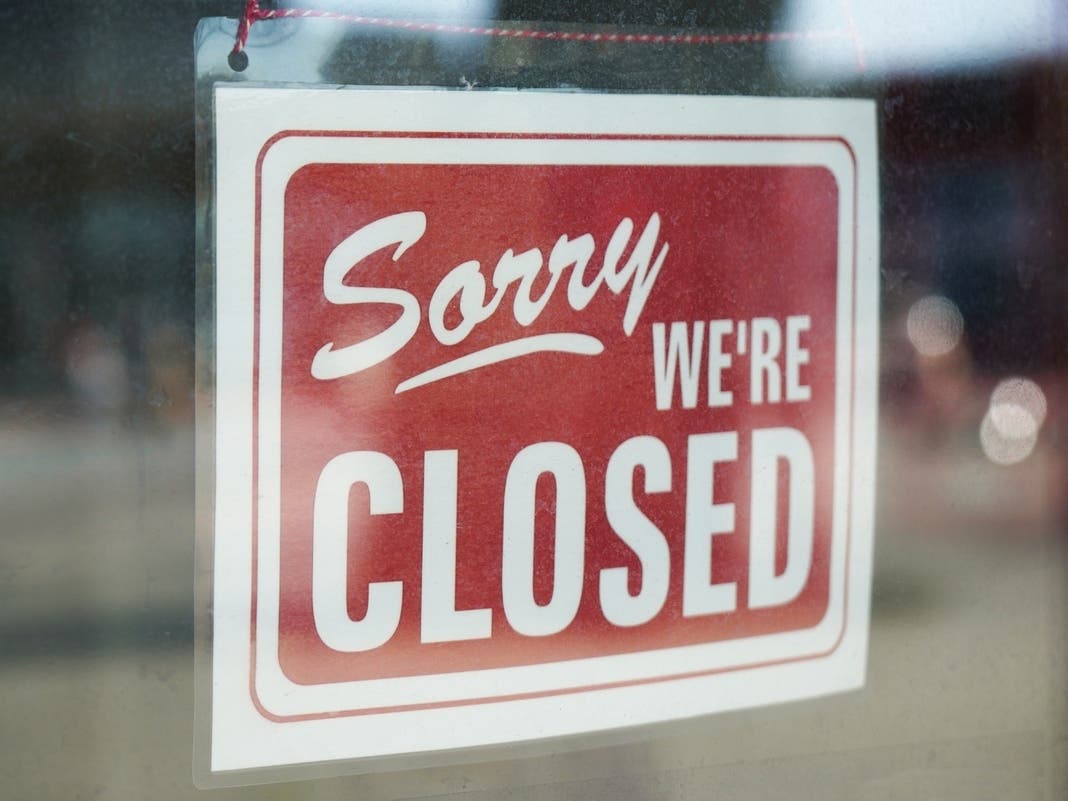
Surprise, surprise!!! Beverly Hills has emerged as the most expensive rental market in the Los Angeles metropolitan area, with one-bedroom apartments commanding a median rent of $3,100, according to the latest Zumper Los Angeles Metro Area Report. Santa Monica was second at $2,900. Both cities outpaced third-place Irvine, where one-bedroom units rent for $2,790, highlighting the premium tenants pay for Bverly Hills and Santa Monica's coveted locations. But the rental market's strength contrasts sharply with a cooling residential sales market. Apartment rents have climbed approximately 3% year-over-year and vacancy rates have plummeted to just 4.4% (translating to 95-96% occupancy). Meanwhile, the commercial real estate sector presents a tale of stark contrasts. The office market continues to struggle with vacancy rates hitting 30-31% by late 2024 and remaining at those elevated levels into 2025 — among the highest in Southern California. Class A asking rents have softened to approximately $55-60 per square foot annually as landlords offer generous concession packages to attract tenants. The retail sector faces similar headwinds, with citywide availability reaching 15.7% in the second quarter of 2025 — the highest level in a decade. Notable casualties include closures of national chains such as Rite Aid, H&M and REI, adding more than 100,000 square feet of vacant space to the market over the past year. Statewide, California's one-bedroom median rent was $2,055 last month. At the other end of the spectrum, San Bernardino and Palmdale tied as the most affordable markets at $1,400 for one-bedroom units. Looking ahead, upcoming events including the 2026 World Cup and 2028 Olympics are expected to boost demand across all real estate sectors. The combination of returning tourists, new residents from planned developments, and pro-business city initiatives implemented through 2028 may help revitalize struggling commercial segments while maintaining pressure on the already tight rental market. In other real estate investor news, let’s get down into the weeds…
Find out what's happening in Culver Cityfor free with the latest updates from Patch.
California Lawmakers Side With Landlords To Kill Renter Eviction Relief. “This is a very small ask from the state of California,” Wahab, a Democrat representing the Fremont area, recently told her fellow lawmakers. “(It’s) very small to allow people 14 days to either ask for family members and loved ones to give them money to stay housed, to ask their cities or any of the other nonprofits that help people with rental assistance stay housed, or to even be able to wait for their check.” Despite Wahab’s pleas, her Senate Bill 436 failed to advance out of the Assembly Judiciary Committee last week. It was the latest example of renters’ efforts to add protections for California’s 17 million renters, despite lawmakers otherwise taking aggressive steps this year to address the state’s housing and homelessness crises. But when it comes to giving tenants more power and easing some of the nation’s highest rents, California voters and the 120 senators and Assembly members who represent them have largely balked. Last fall, California voters decisively shot down a rent-control initiative that would have allowed local governments to block landlords from raising rents. A more aggressive rent-control measure never received a hearing this spring in the Assembly Judiciary Committee, even though it was authored by San Jose Assemblymember Ash Kalra, the committee chair. Another bill to limit fees landlords can charge tenants on top of monthly rent was held until at least next year, despite the author being San Francisco Assemblymember Matt Haney, the chair of the Assembly Housing Committee. The stalled bills were a remarkable display of how difficult it is for lawmakers to pass rental protection measures since committee chairs usually are influential. Wahab chairs the Senate Housing Committee. Her measure, which would have extended the start of the past due eviction process from three days to two weeks was handily defeated.
Find out what's happening in Culver Cityfor free with the latest updates from Patch.
Housing Starts Rose 4.6% in June. Both housing starts and permits rebounded in June, but the details showed it was another weak month for homebuilding. First, the modest rebound for both starts and permits comes after activity declined in May to the slowest pace since the COVID shutdowns. Second, the 4.6% increase in starts was entirely due to a 30.0% jump in the volatile multi-family category, which offset the 4.6% decline for single-family starts. Single family starts are down 10.0% in the last year while permits for these builds are down 8.4%, not a good sign. Lately, homebuilders had been focusing their efforts on completing projects, but that wasn’t the case in June, as completions plunged 14.7% to a 1.314 million rate, the slowest pace in more than three years. Looking at the big picture, builders face a number of headwinds: high home prices and mortgage rates that are no longer being held artificially low, the largest completed single-family home inventory since 2009, restrictive government regulations, and relatively low unemployment, which makes it hard to find workers. Now, builders must also contend with stricter immigration enforcement and the uncertainty of new tariffs and how they’ll affect building costs. This weighs heavily on the NAHB Index (a measure of homebuilder sentiment) which remained near the lowest level since the end of 2022 in June at 33. (Keep in mind a reading below 50 signals a greater number of builders view conditions as poor versus good, now the fifteenth consecutive month that has been the case.) Meanwhile, the total number of homes under construction continues to fall, down 13.4% in the last year. In the past, like in the early 1990s and mid-2000s, this type of decline was associated with a housing bust and falling home prices. But this time really is different. With the brief exception of COVID, the US has consistently started too few homes almost every year since 2007. So, while multiple headwinds may hold back housing starts, a lack of supply is lifting home prices. In some high-flying areas prices are moderating, but national average home prices will likely continue higher.
New Single-Family Home Sales Increased 0.6% in June. New home sales managed to eke out a small gain in June, kicking off the summer buying season on a disappointing note after May’s large decline. From a big picture perspective, buyers purchased 627,000 homes at an annualized rate and sales have fallen year-over-year for six months in a row. Moreover, that pace remains well below the highs of the pandemic, and sales today are roughly where they were pre-pandemic in 2019. It’s clear the housing market continues to face challenges. The biggest (and most obvious) is affordability. The Fed has paused their rate cuts, meaning the housing market is on its own for the time being with the average 30-yr fixed mortgage still hovering near 7%. However, in contrast to the existing homes market, buyers are seeing a decline in prices for new builds. Median sales prices are down 12.7% from the peak in October 2022 and have fallen 2.9% in the past year. The Census Bureau reports that from Q3 2022 to Q1 2025 (the most recent data available) the median square footage for new single-family homes built fell 5.6%. So, while part of the drop in median prices is due to smaller/lower-cost homes, there has also been a drop in the price per square foot. This is partially the result of developers offering incentives to buyers in order to move inventory. Supply has also put more downward pressure on median prices for new homes than existing homes. The supply of completed single-family homes is up over 280% versus the bottom in 2022 and is currently at the highest level since 2009. While the future cost of financing remains a question, lower priced options and an abundance of inventories should give a modest boost to new home sales in 2025.
Existing Home Sales Declined in June. Meanwhile, the elephant in the room, existing home sales, came in weaker than expected in June, hitting a nine-month low as persistently high prices continue to put a damper on activity. The existing homes market has been characterized by fits and starts since 2022, with any positive upward trend eventually running into a ceiling of around 4.300 million homes. Big picture, sales are still well below the roughly 5.250 million annualized pace that existed pre-COVID, let alone the 6.500 million pace during COVID. Affordability remains the biggest headwind, and unfortunately with the Federal Reserve still on pause with rate cuts, 30-year mortgage rates remain near 7%. Unfortunately, buyers are getting squeezed at both ends, with the median price of an existing home up 2.0% from a year ago. Notably, that price increase has happened despite the inventory of existing homes rising 15.9% in the past year. That has helped push the months’ supply of homes (how long it would take to sell existing inventory at the current very slow sales pace) to 4.7 in June, a considerable improvement versus the past few years, and approaching the benchmark of 5.0 that the National Association of Realtors uses to denote a normal market. However, many existing homeowners remain reluctant to sell due to a “mortgage lock-in” phenomenon, after buying or refinancing at much lower rates before 2022. This remains a major impediment to activity by limiting future existing sales (and inventories). While the situation has clearly improved recently, a tight inventory of existing homes means that while the pace of sales looks like 2008, we aren’t seeing that translate into a big decline in prices. Existing home sales also face significant competition from new homes (see above), where in many cases developers are buying down mortgage rates to compete and move inventory (when interest rates are higher, firms, including homebuilders, forego more potential earnings by holding onto inventories). Look for the housing market to remain stuck in low gear until affordability improves.
Where Does Elon Musk Really Live? The question begs to be asked: Where does the richest man on earth, Elon Musk, actually live? One might think the billionaire, who currently holds title of the richest person in the world, would have the real estate portfolio to end all real estate portfolios. The SpaceX and Tesla CEO has a net worth of over $400 billion, thanks to his advancement of electric cars, space exploration, and AI technology. But unlike most billionaires who tend to buy up extravagant properties and homes throughout the world, Musk stays close to home—in Texas. Most recently, he has been causing unrest on his tree-lined street due to a 16-foot chain-link fence he erected without proper permits. Despite denials of a secret compound, Musk discreetly moved into a 6,900 square foot, six-bedroom mansion on an upscale cul-de-sac in West Lake Hills, Texas, in 2022. In recent months, the billionaire has been causing unrest with neighbors. Shortly after moving in, Musk hired a construction team to erect a 16-foot chain-link fence, as well as security cameras, around his property. Residents of the once quiet leafy street quickly started filing complaints over the legalities of the new security measures and the attention that comes with it. It turns out that the SpaceX owner never obtained the proper permits to build the obstructive fence, and in turn, violated six city ordinances. Not only are residents disturbed by the fence and gate, which are reportedly direct violations of their six-foot maximum height rule, but neighbors have complained about the increase in traffic reportedly coming in and out of the Musk’s house as being unprecedented and disruptive. At a gathering of the Zoning and Planning Commission in April, Mr. Musk lost his appeal to keep the fence and gate on his property, according to the New York Times. His gate is currently 16 feet tall, making it more than 10 feet above the maximum allowance. According to council members at a public hearing on May 14, homeowners of West Lake Hills are only granted variances to their property when faced with hardships that are not self-created or driven by personal needs.
Wave-Riding Canines Compete in the World Dog Surfing Champion-ships. Who’s the top dog? Charlie, the 10-year-old yellow lab is top dog. Charlie joined about 15 to 20 other canine wave riders in Pacifica, 14 miles (22 kilometers) south of San Francisco, last Saturday at the “World Dog Surfing Championships,” an annual contest that draws thousands of spectators to Pacifica State Beach. Pooches competed against similarly sized peers for a chance to appear in the finals. Additional heats featured multiple dogs surfing tandem or riding with people. Labs, terriers and spaniels in monogrammed life vests “dog-paddled” out into the Pacific. Once out on the waves, their owners helped them hop on colorful boards and hang ten as the crowd cheered from the beach. Judges scrutinized how long the dogs remained on their boards, how long they held their balance and whether they performed any tricks, like turning around while riding. Iza, a 5-year-old French bulldog, won the single surfer heat for medium-size dogs for the first time this year, her owner David Fasoli said. Fasoli found "pure joy" during the pandemic when he brought home a surfboard from his job at Costco and taught Iza to balance in the swimming pool. The two soon started swimming in the ocean and learning to ride waves as passersby at the beach watched in awe. Now, their competitions are all about defying expectations. Charlie, who has his own Instagram page, entered the extra-large single surfer heat. He also rode tandem with two other dogs in what their humans called "The Dream Team." "He loves the crowd," owner Maria Nieboer said. Charlie and Nieboer's husband, Jeff Nieboer, prepare for waves together. When Jeff spots a good one, he turns the board around and tells Charlie to "get ready." Charlie's "Dream Team" compatriot, fellow yellow lab Rosie, was in four heats.
"How to Get Started As a Real Estate Investor." Our special guest for our August meeting be Justin Colby visiting us from the sunny the of Florida. Justin is an expert in helping people get stated as real estate investor. All the do's and don'ts. If you want to become a real estate investor but didn't know where to start - then this presentation is for you! (And if you're already investing and want some finer points to learn, you should be here as well.) Don’t miss his presentation! Thursday, August 14th, 6:30 to 9:30 pm. Iman Cultural Center, 3376 Motor Avenue (between National and Palms), Culver City CA. FREE Admission. Please RSVP at our website, LARealEstateInvestors.com.
Vendors Expo Returns! Our world-famous "Vendors Expo" returns in 2025, on Thursday night, August 14, 2025. The Vendor Expo opens starting at 6:30 pm. We'll have 30+ of the finest vendors featuring real estate products and services you will want to utilize as a successful investor. Our Vendor Expo will be held at the Iman Cultural Center, 3376 Motor Avenue (between National and Palms), Culver City CA. FREE Admission. Please RSVP at our website, LARealEstateInvestors.com.
FIX & FLIP WORKSHOP. Saturday, August 23, 2025, 9:00 am to 6:00 pm. (and bonus session on Sunday at an actual rehab.) Learn how to find, finance, fix, and flip houses. Los Angeles County Real Estate Investors Association, at the Iman Cultural Center, 3376 Motor Avenue, Los Angeles, CA 90034. The cost of the workshop is $249.00 per person if paid before August 16th. After August 126th, the price increases to $349.00 per person. Gold members can attend for free. www.LARealEstateInvestors.com.
This Week. Looking ahead, investors will continue to look for additional information about tariffs and monitor comments from Fed officials for hints about monetary policy later in the year. For economic reports, the Consumer Price Index (CPI), a widely followed monthly inflation indicator that looks at the price changes for a broad range of goods and services, will come out on Tuesday from the Bureau of Labor Statistics. The Producer Price Index (PPI), another monthly inflation indicator, will be released on Thursday also from the Bureau of Labor Statistics. Retail Sales and Import Prices will be released on Friday from the Census Bureau. Since consumer spending accounts for over two-thirds of U.S. economic activity, the retail sales data is a key measure of the health of the economy.
Weekly Changes:
10-Year Treasuries: Rose 005 bps
Dow Jones Average: Rose 600 points
NASDAQ: Rose 700 points
Calendar:
Tuesday (8/12): Consumer Price Index
Thursday (8/14): Producers Price Index
Friday (8/15): Retail Sales
For further information, comments, and questions:
Lloyd Segal
President
Los Angeles County Real Estate Investors Association
Lloyd@LARealEstateInvestors.com
310-792-6404
.jpg)