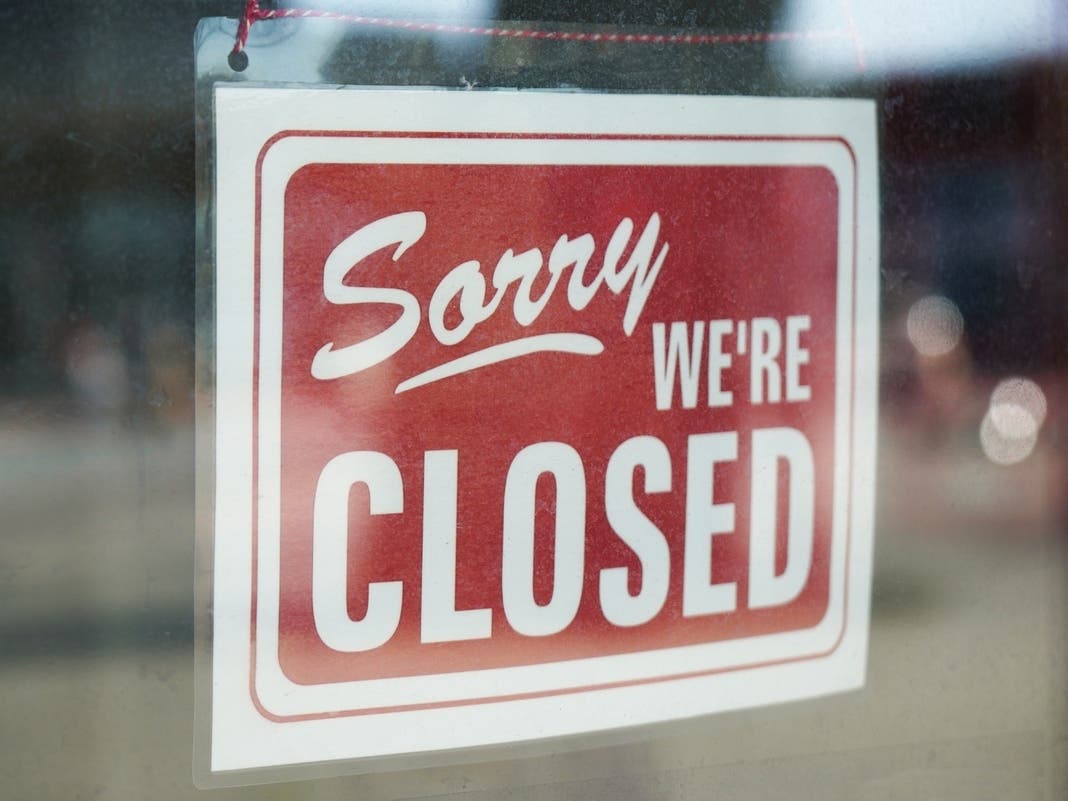
Los Angeles apartment construction has dropped by over a third in three years as developers struggle with unprofitable economics and regulatory uncertainty. Even though demand for housing in the region is red hot, many people who build apartments for a living have paused putting shovels in the ground because, they say, it’s just too hard to turn a profit. The supply of fresh rental units, which make up the bulk of new housing in Los Angeles, is petering out despite robust demand. The vacancy rate is among the lowest in the country, while rental rates are among the highest nationwide. Still, the number of new units under construction in Los Angeles has been falling each quarter since early last year and is set to dive to a more than 10-year low, according to real estate data provider CoStar. Under 19,000 apartments were under construction in the three months through September. That’s 30% fewer than three years earlier, according to CoStar’s count. Developers say they can’t raise the money they need to build as many of their biggest backers (think pension funds, insurance companies and other institutions looking for long-term investments) don’t want to park their money in L.A. because the rapidly changing rules make it impossible to predict profits. The years since COVID-19 have demonstrated how tangled regulations of the industry can get in L.A. So investors are taking their money to other cities. If the investors won’t invest, builders can’t build. Recent policy out of Washington also hasn’t helped. Higher tariffs have sparked rising prices in construction materials and equipment, while the ICE crackdown on undocumented workers has thinned and spooked much of the international workforce the industry depends on. California’s construction industry depends on immigrant workers. Around 61% of construction workers in the state are immigrants, and 26% of those are undocumented, according to a new report from the Bay Area Council Economic Institute. “Finding construction labor was hard before, and now it’s even harder,” economist Richard Green says. Housing production in Los Angeles County has slowed dramatically over the decades, dropping from over 70,000 new units annually in the 1950s to roughly 30,000 in the 1970s and 1980s to less than 15,000 in the 2010s. This long-term slowdown in housing construction has left the region with an older, more strained housing stock and a deep shortfall in affordable options, USC reports. In other investor news, let’s run it up the flagpole…
Inside The Late Diane Keaton’s Many Rehabbed Houses. We lost one of my favorite flippers last week. Diane Keaton was an accomplished award-winning actress. But what you probably don’t know is that she was also an accomplished fix and flipper. The late Diane Keaton’s love for real estate began early. In a 2017 interview with Wine Spectator, she spoke of how she used to follow her father, who was a real estate agent, around open houses in Los Angeles, learning vicariously through him. Later in life she would translate this fascination with architecture and decor into an obsession with buying and selling homes locally, particularly historic ones, including an L.A. home by architect Lloyd Wright (Frank Lloyd Wright’s son) in Los Feliz.
Samuel Novarro House. In 1991, Keaton yearned for a return to the west coast. She snapped up Lloyd Wright’s historic Samuel Novarro house with ambitions to renovate the unique space and flip it back onto the market. Though it’s unclear how much Keaton paid for the Mayan-themed Art Deco house, what is known is the home’s pedigree. Commissioned back in 1928 by Ben Hur star Ramón Novarro, the 2,700-square-foot, four-floor property is built into a cliffside, with multilevel terraces, a pergola, and a private, walled swimming terrace. Keaton remodeled the home, making sure to maintain Wright’s trademark touches (oxidized copper trim on the exterior, for instance) and sold it five years later in a hefty profit.
Find out what's happening in Culver Cityfor free with the latest updates from Patch.
Bel-Air Spanish Colonial. She told AD that she thought often of the “graciousness” of the Spanish Colonial houses that dotted the area, and so she set her sights on a Spanish Colonial Revival–style property in the middle of Bel-Air, which she snapped up for an undisclosed amount—even though longtime pal and designer Stephen Shadley warned her that it would be “a lot of work.” The gated home was originally designed by architects Wallace Neff and John Byers in the 1920s, but it had been refashioned so much over the years that it had arguably lost its original Spanish Colonial charm. “Diane prepared for this as for a film,” Sahdlye told AD, “Collecting photos, visual images, ideas in a loose-leaf binder, subdivided by room, that we constantly referred to.” Keaton eventually sold the seven-bedroom, nine-bathroom pad for $16.5 million in 2005.
Laguna Beach Mediterranean. The Godfather actor turned her sights toward the sea for her next home, snapping up a historic $7.5 million mansion perched on a bluff in Laguna Beach. Built in 1928, the Mediterranean-style house was originally constructed for the J. Roy Smith orange tree groves family. It featured Spanish tile, wood beams, ironwork, and incomparable views of the Pacific Oceans. Keaton worked her magic on the four-bedroom, six-bathroom home over the next two years, restoring its original details before flipping it back onto the market for $12.75 million
Find out what's happening in Culver Cityfor free with the latest updates from Patch.
Beverly Hills Spanish Colonial. Keaton next looked to add to her real estate portfolio with a stunning Beverly Hills Spanish Colonial Revival at 820 Roxbury Drive (see photo at top of this Quarterback), structured around a two-story courtyard with a fountain. Originally built in 1927 by California architect Ralph Flewelling, the abode was meant to mimic the architectural aesthetic of the likes of Wallace Neff and George Washington Smith. She shelled out $8.1 million for the property. She and designer friend Shadley then worked together to renovate the home, redoing the kitchen, remodeling the facade, and adding about 500 square feet. She sold the place to Glee creator Ryan Murphy for an undisclosed amount in 2010.
Alfred Newman House. In 2007, Keaton picked up a home known as the Alfred Newman House, which was also designed by Frank Lloyd Wright’s son. Set on 1.4 acres in the Rustic Canyon area of the Pacific Palisades, the 4,386-square-foot midcentury-modern dwelling boasted five bedrooms and four bathrooms, with brick and concrete interior accents. Keaton updated the kitchen, restored the woodwork and built-in furniture, and converted the second floor into a primary-suite space with glass walls. Her time and investment paid off—though she purchased the estate for $9.1 million, she sold it for $10.75 million just two years later.
Pacific Palisades Cape Cod. One of Keaton’s more unexpected real estate purchases was a Cape Cod–style home in the Pacific Palisades (given her penchant for colorful tile and warm, Spanish Colonial aesthetics). The actor paid $5.6 million for the relatively new pad, which was completed in 2009. It featured all the trappings of a celebrity oasis (a home theater, a gym, two wet bars, a wine room, and a rooftop deck facing the ocean) with six bedrooms and nine bathrooms spread across three levels. Outside there was an outdoor living room with its own fireplace, a swimming pool, and a spa. Keaton made a few cosmetic changes and sold for $6.995 million in 2015.
Sullivan Canyon House. In 2019, Keaton began what would become perhaps one of her biggest architectural endeavors. She designed and built her last rehab, the eponymous house at the center of her third book, The House That Pinterest Built. Situated in Sullivan Canyon, the home measures 8,000 square feet and is quite literally the amalgamation of inspirational photos Keaton collected over the years. “I follow my impulses just like I did with acting,” she told AD about piecing together the light-filled, industrial feel she so loves. “I fell in love with the bricks, and I fell in love with the mortar. I wanted to have space between the bricks so they could have a life of their own.” We will miss you Ms. Keaton.
Sinking Megacities at Risk from Fastest Sea Level Rise in Millennia. If you’re worried about sinking cities along the coast of the United States, think again. The coastal cities in China (roughly 100 million people) have it much worse. Coastal megacities in southeastern China face a future of accelerating sea level rise compounded by sinking land caused mostly by human activities, according to a new study in the journal Nature. The research reconstructed changes in sea level along southeastern China’s coast since the beginning of the current geological epoch, “the Holocene,” which followed the end of the last ice age 11,700 years ago. The analysis, which included data from geological records from fossilized coral and mangroves, as well as worldwide tide gauges, found that global sea levels have risen at an average of 1.5mm a year since 1900. “The global mean sea level rise rate since 1900 is the fastest rate over at least the last 4 millennia,” says first author Yucheng Lin, a climate scientist at Rutgers University in the US and Australia’s Commonwealth Scientific and Industrial Research Organization (CSIRO). The authors warn that without effective city-level adaptive risk management strategies, this will pose critical challenges to the sustainability and resilience of China’s densely populated coastal communities (Singapore wharf, photo below), which are home to more than 100 million people. While the study focused on China, its findings have implications for other major cities built on low-lying coastal plains, such as New York in the US, Indonesia’s Jakarta and Manila in the Philippines. “Sea-level change, a direct indicator of climate change, poses substantial risks to coastal communities and will continue to do so in the coming century,” the authors write. Lin says 2 major forces, thermal expansion and melting glaciers, are driving the acceleration of sea level rise. As the ocean absorbs excess heat and warms, the water in it expands and takes up more volume. Global glaciers and ice sheets in Greenland and Antarctica are also melting and adding more water to the oceans. The study’s data shows that modern, global sea level rise is happening faster than at any time in the past 4,000 years.
Dodgers’ Teoscar Hernández Avoids Milwaukee’s Allegedly Haunted Hotel. Thank God for Teosar Hernandez that the Dodgers don’t have to return to Milwaukee to play the Brewers. Because if they did, the Team would stay at the Pfister Hotel. Everyone except Teoscar Hernandez that is. Why? Because Teoscar believes the hotel is haunted and there is evidence to prove he is right. The Dodgers outfielder declined to stay with the team at the historic (and haunted) Hotel in downtown Milwaukee during the first two games of the National League Championship Series against the Brewers last week. Hernández told reporters before Game 2 on Tuesday that his wife, Jennifer, was the one who insisted on finding somewhere to stay other than the 137-year-old hotel that has been the source of spooky tales from MLB players for decades. “I don’t believe in ghosts. I have stayed there before. I never see anything or hear anything,” Hernández said. “But my wife is on this trip, and she says she doesn’t want to stay in there. So we have to find another hotel.” Hernández added, however, that his wife told him that she has heard from other players and their wives that there had been “something happening” over at the team’s hotel. Asked to elaborate, Hernández said he had been told that in “some of the rooms, the lights, goes off and on, and the doors — there are noises, footsteps. ... I’m not the guy that I’m gonna be here saying, ‘Oh yeah, I experienced that before,’ because I’m not, but I don’t think I’m want to experience that.’” Over the years, not everyone has been at ease about staying at the creepy old digs. In 2005, then-Dodgers closer Eric Gagne told The Times’ Steve Henson that the place freaked him out. “It’s old, weird and scary. It is haunted!” Gagne said. “It’s very creepy. I don’t sleep there.” Henson also noted at the time that former Dodgers third baseman Adrian Beltre had “reported a ghostly presence turning on lights and tickling his toes” during a 2001 stay at the Pfister. Fellow Times staff writer Kevin Baxter reported in 2007 that Beltre once insisted on “sleeping with a bat for protection after he had a brush with a ghost” at the hotel.
Museum of Ice Cream Approved for New LA Location. I bet you’ve always wondered when there will be a museum of ice cream. Well, your dreams have finally come true! The Museum of Ice Cream, the popular interactive museum known for its immersive exhibits and endless ice cream, is preparing to open its largest location yet at 5252 W. Adams Boulevard in Los Angeles. The new venue, set to open in 2026, will be housed in a three-story, 23,221-square-foot building currently under construction, according to a recently approved determination letter from the Los Angeles Planning Department. This marks the brand’s first ground-up flagship in Los Angeles, tripling the size of its previous pop-up location in the Arts District. The West Adams location will feature a range of playful, ice cream-inspired exhibits, including a 100-foot-long double helix slide, a Santa Monica Pier-themed carnival experience, and the iconic sprinkle pool, alongside multiple food and beverage offerings. And, of course, unlimited ice cream! The new location, developed by CIM Group, will also offer a full line of alcoholic beverages for on-site consumption in conjunction with its museum experience. The venue will feature two dedicated bars and additional beverage service areas throughout the space, offering themed drinks like the “Zombie Bear” and the “Sprinkle Shot,” according to museum representatives. The alcohol service is designed as an accessory amenity, enhancing the overall experience rather than being the primary focus. The museum’s hours of operation will be from 10:00 AM to 11:00 PM Monday through Thursday, and 9:00 AM to midnight on weekends. The space will feature 154 total fixed seats, including both indoor and outdoor seating, with designated service areas spread across the three floors. The museum’s unique combination of art, fun, and ice cream will provide an experience for visitors of all ages, with some spaces dedicated to family-friendly activities. “West Adams is an emerging culinary corridor with an evolving dining scene, innovative bakeries, and coffee shops that have attracted chefs and entrepreneurs seeking to bring new experiences to Los Angeles. Museum of Ice Cream is thrilled to add to the creativity and energy of the area,” Museum of Ice Cream chief executive officer Manish Vora (favorite flavor: chocolate) said in a news release. “We selected Los Angeles for our most ambitious project yet as the city has always been at the heart of pop culture, storytelling, and reinvention.”
6th Annual Los Angeles Real Estate Grand Expo. Join the finest builders, contractors, property managers, landlords, investors, and related real estate professionals, at the largest real estate event in Southern California, featuring 12 national speakers, 70 real estate vendors, food trucks, free workshops, and the ultimate networking. Saturday, November 8, 2025, at the Iman Cultural Center, 3376 Motor Avenue, Culver City, CA. RSVP: www.LAGrandExpo.com. Free admission. Street and valet parking.
This Week. Looking ahead, investors will continue looking for additional information about tariffs and monitor comments from Fed officials for hints about monetary policy later in the year. With the government shutdown, it likely will be another light week for major economic data, with one key exception. It has been announced that the Consumer Price Index (CPI), a widely followed monthly inflation indicator that looks at the price changes for a broad range of goods and services, will come out on Friday. Existing Home Sales, reported by the National Association of Realtors, will be released on Thursday.
Weekly Changes:
10-Year treasuries: Fell 005 bps
Dow Jones average: Rose 600 points
NASDAQ: Rose 400 points
Calendar:
Thursday (10/23): Exiting Home Sales
Friday (10/24): Consumer Price Index
Friday (10/24): New Homes Sales
For further information, comments, and questions:
Lloyd Segal
President
Los Angeles County Real Estate Investors Association
Lloyd@LARealEstateInvestors.com
310-792-6404