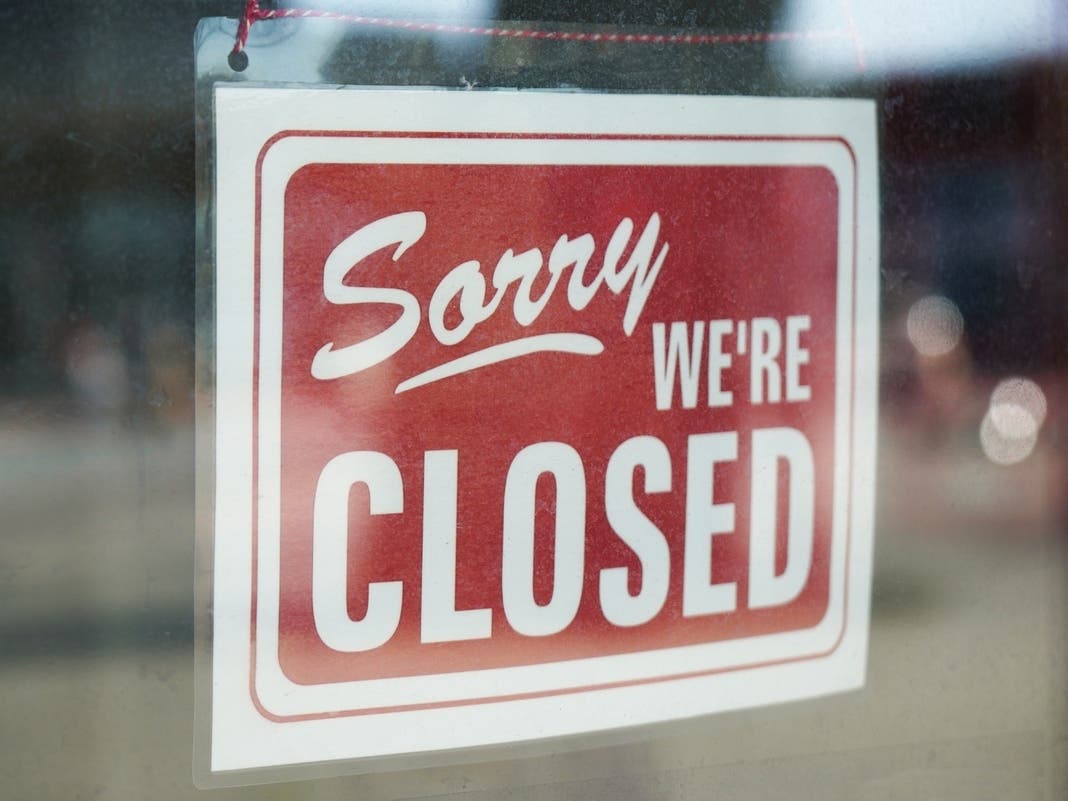
As local and state leaders celebrate the fastest wildfire debris removal in modern American history, the Palisades Bowl Mobile Home Estates (a rent-controlled, 170-unit enclave off Pacific Coast Highway) remains largely untouched since it burned down in January. Weeds grow through cracks in the broken pavement. A community pool is filled with a murky, green liquid. There’s row after row of mangled, rusting metal remains of former homes. Yet just across a nearly 1,500-foot-long shared property line, the Tahitian Terrace mobile home park (like thousands of fire-destroyed properties cleared by the U.S. Army Corps of Engineers over the last nine months) is now a field of cleaned, empty lots (photo above). The difference in treatment is based on standards used by the Federal Emergency Management Agency, which directed the corps’ cleanup efforts. FEMA, which focused on providing assistance to local residents (and not properties owned by real estate companies) argued in letters to state officials that since it could rely on the Tahitian’s owners to rebuild the heart of Pacific Palisades’ affordable housing, it would make an exception and include their property. However, it said it could not trust the owners of the Palisades Bowl to do the same. Both mobile home parks requested federal cleanup services, records obtained from the corps show. And both Los Angeles County and the city of Los Angeles lobbied the agency to include the properties in its mission. But in a May letter approving the corps’ cleanup of the Tahitian, FEMA noted that the property, riddled with asbestos and perched above busy Pacific Coast Highway, was a public health hazard and that the owners, with limited insurance money, probably would struggle to pay for the cleanup. FEMA Regional Administrator Robert Fenton also wrote to the state Office of Emergency Services, saying that he was “confident” including Tahitian “will accelerate the reopening of the park for its displaced tenants and ensure the community retains this affordable residential enclave in an otherwise affluent area.” But when it came to the Bowl, FEMA took a different tone. The agency said in a July letter to the state agency that with flatter terrain, the Bowl did not pose the same health hazard as the Tahitian Terrace did, and with $1.2 million in insurance money already disbursed to the property owners, it had “no indication the owner lacks the financial means to remove the debris independently.” In other real estate investor news, let’s get under the hood…
Joshua Tree’s Short-Term Rental Frenzy Cools. Many Angelenos dreamed about buying cheap land in the desert during the COVID-19 pandemic; Emmanuel Ruggiero actually did it. On his plot in Joshua Tree, the software engineer built a home specifically as a short-term rental — part of a craze that saw investors seeking to cash in on people fleeing the stress and contagion of cities to isolate in more-remote locales. He equipped his modern cabin with 16-foot ceilings, a swim spa and a private nine-hole golf course. Now, after two years as a top-rated Airbnb host, Ruggiero no longer wants to deal with the stress of managing a rental three hours away. He is hoping to sell his home for about $200,000 less than its appraised value when he first finished construction. “If I had bought stocks instead of putting the money into the house I built, I probably would have made more,” he said. Operators are exiting in droves the short-term rental market in the high desert east of Los Angeles. This year, the Joshua Tree area has seen a drop in average available listings for the first time since the pandemic drove the number to record highs — with 3,449 to date, compared with 3,906 at the same time last year, according to data from AirDNA. Some are selling at a potential loss in a real estate market that has cooled substantially since the dizzying heights of 2020 and 2021. Others are seeking long-term tenants to offset their mortgages as they wait to see whether home sales pick up. The shift may reflect a market correction after the saturation of vacation rentals became unsustainable and some inexperienced investors underestimated the difficulty and expense of managing properties. It may also be driven by a post-pandemic-emergency drop in tourism that has become more acute amid economic uncertainty and a volatile political climate, locals argue. Meanwhile, those who live in the Morongo Basin, a string of gateway communities outside Joshua Tree National Park, are left to grapple with how the vacation rental gold rush has left town.
Did Joshua Tree’s Invisible House Charge $10,000 For A Selfie? Speaking of Joshua Tree, a $10,000 selfie has captured headlines. In a series of now-viral videos posted to TikTok, entrepreneur Sean Davis alleges that a luxury short-term rental in Joshua Tree sent him a five-figure bill after someone in his party took a photo in the bathroom and tagged a brand on social media. Tabloids ran with the tale. But it’s not exactly true, according to the owners of the mirror-walled monolith known as the “Invisible House.” They say they charged Davis production fees after he was caught staging an unpermitted photoshoot for his clothing company on the trademarked property back in June of 2021. “His intention was to shoot some stuff there and he thought he could get around calling it a production,” says owner Chris Hanley, a film producer whose credits include cult classics “American Psycho” and “The Virgin Suicides.” Davis said he was surprised his videos generated so much attention, given his modest following. The co-founder of John Geiger clothing and footwear said he reserved the Invisible House for a company retreat but had hoped to make the most of the booking by also shooting content in the surrounding exteriors. During his stay, Davis and three others (a business partner, a photographer and a model) walked away from the home into what they thought was open desert to take photos. They didn’t realize the house sits on 90 acres and unpermitted commercial activity is forbidden anywhere on the property, he says. That’s the crux of the dispute: Was it a few innocent photos or an unauthorized production? Hanley and his wife Roberta, a screenwriter and director, built the Invisible House in 2019. Part abode, part modern art installation, it has been featured in Architectural Digest and served as the backdrop for more than 100 productions, including campaigns for Hermes and BMW, Hanley says, noting that famed photographer Annie Leibovitz has shot there for Vogue. Some of those shoots have also taken place outside the home — the natural desert landscape of the property is its own unique work of art, he says. The home can be reserved as a short-term rental for roughly $3,000 a night or it can be booked for commercial activity for about $1,000 an hour plus additional costs associated with film permits and site management, Hanley reports. Commercial activity also requires paperwork allowing a brand to use the property’s copyrights and trademarks. And while Davis said in his videos that he was billed $10,000 for the accommodations and another $10,000 in fees associated with the photoshoot, the Hanleys provided documents stating he was charged $9,000 in total — $3,000 for the booking, $2,500 in a forfeited security deposit and $3,500 upon signing a separation agreement and release of claims. I’ll have to sort this out before rendering judgment.
Find out what's happening in Culver Cityfor free with the latest updates from Patch.
Deserted Dreams: California’s Abandoned Oasis. Continuing with our desert theme, looking for a house in the desert? How about an entire abandoned city? The California desert stands as a testament to the ever-changing interplay between human ambition and the forces of nature. In the early pioneer days, towns would quickly spring up like mirages in the sand as people moved west in search of a better life. Yet, as quickly as these towns emerged, they faded into obscurity, leaving behind echoes of their former glory. Why? Many reasons. Mostly the unforgiving heat and unreliable water sources of the California desert took a toll that many were unprepared for. The very essence of desert life that had attracted people to this challenging terrain became the force that pushed them away. A new book, Desert Dreams, takes a journey through the remnants of this exodus, uncovering the abandoned places in the California desert. In this book, you will learn the stories of forgotten dreams as the author explores decayed motels, abandoned waterparks, the impossible railroad, and a mining town with over 400 abandoned structures, which has been closed to the public for the last forty years. This is the story of Deserted Dreams, a look into California’s Abandoned Oasis. The author, Kevin Lacy, is a native of Western New York State, but has called California home since 2014. Kevin’s career as a professional photographer has taken him all over the world, but he has always been drawn to the California desert. Over the past decade, he has been on an artistic journey to document the stark beauty, resilience, and enchantment of this captivating landscape. His work resonates with those who appreciate the delicate interplay of light and shadow in the arid wilderness, encapsulating the essence of the desert's allure, and the beauty of decaying structures in this unforgiving environment.
Third Quarter Sees Homes Grow Less Affordable in Much of Country. ATTOM, my favorite site for real estate analytics, released its latest “U.S. Home Affordability Report” showing that median-priced single-family homes and condos were less affordable than historical averages in 99 percent of U.S. counties for the third quarter of 2025. But as the nation hit a new record high median home price of $375,000 in the third quarter of 2025, affordability woes grew even worse in much of the country. Of the 580 counties in ATTOM’s analysis, 44.7 percent (259) had worse affordability index ratings in the third quarter than in the second. There has been some good news for prospective home buyers, however. Mortgage rates fell throughout the third quarter, with the average interest on a 30-year fixed rate loan dropping from 6.75 in mid-July to 6.26 percent in mid-September. Nationwide, the median value of a home has gone up 58 percent since the beginning of 2020 while typical wages have risen only 28 percent. In 79 percent (460) of the 580 counties in ATTOM’s analysis, home ownership expenses exceeded 28 percent of a typical resident’s wages, making owning a home unaffordable by standard guidelines. Those included counties encompassing some of the nation’s largest cities, such as Los Angeles, CA; Chicago, IL; and Brooklyn and Queens in New York City, NY. The most populous counties where home expenses accounted for less than 28 percent of a typical resident’s wages were Harris County, TX (expenses for a median home required 23.3 percent of typical annual wages); Wayne County, MI (17.1 percent of wages); Philadelphia County, PA (20.1 percent of wages); Cuyahoga County, OH (23.1 percent of wages); and Allegheny County, PA (22.4 percent of wages). The national median home price of $375,000 in the third quarter of 2025 was 2.0 percent higher than the previous quarter and 4.8 percent higher than the same time last year. Median home prices rose year-over-year in 75.5 percent (438) of the 580 counties in ATTOM’s analysis. The report includes counties with a population of at least 100,000 and at least 50 single-family home and condo sales and with sufficient data in the third quarter of 2025.
Find out what's happening in Culver Cityfor free with the latest updates from Patch.
Own A Piece Of History: George Washington’s Wartime Headquarters For Sale. There are dozens, perhaps hundreds of places that claim to have hosted the nation’s first president. There was even a 1940s comedy called George Washington Slept Here that spoofed the idea. But it’s rare to find a location where Washington actually lived for a substantial period of time. The “Emlen House”” just outside of Philadelphia, served as General Washington’s Continental Army headquarters during the early stages of the Revolutionary War. And now it can be yours for just under $3.3 million. The historic Emlen House in Fort Washington was George Washington’s headquarters during the Revolutionary War. Built in 1745 as a summer retreat for a prominent Quaker family, the colonial estate was used by Washington and his officers during the Whitemarsh encampment, when his troops monitored the British occupation of Philadelphia and protected cities to the west. A commemorative plaque outside the Emlen House notes that it was Washington’s headquarters. The Fort Washington property stayed within the Quaker community until the late 18th century, after which a series of wealthy owners would go on to spearhead several augmentations, including the addition of two wings. In 1956, prominent Polish-American businessman Edward J. Piszek acquired the three-story, 7,850-square-foot residence. Piszek even hosted Poland’s Cardinal Wojtyła at the home in the 1970s, before he became Pope John Paul II. The current owners—Demetrius and Morgan Sidberry—purchased the six-bedroom landmark in 2018 after it had fallen into disrepair The pair spearheaded a painstaking four-year renovation with Asher Slaunwhite Architects, designer Mimi Boston Johnson, and Cherokee Construction. The home recently underwent a total restoration by the current owners. Interior designer Mimi Boston Johnson collaborated on the recent restoration. The 2.6-acre grounds come with a three-car garage (formerly the horse stables), a circular driveway, a fieldstone terrace inlaid with brick, a rock wall, and mature trees. It also borders a nature preserve with meadows, wetlands, and hiking trails. The estate comes with five full baths and two powder rooms.
6th Annual Los Angeles Real Estate Grand Expo. Join the finest builders, contractors, property managers, landlords, investors, and related real estate professionals, at the largest real estate event in Southern California, featuring 12 national speakers, 70 real estate vendors, food trucks, free workshops, and the ultimate networking. Saturday, November 8, 2025, at the Iman Cultural Center, 3376 Motor Avenue, Culver City, CA. RSVP: www.LAGrandExpo.com. Free admission. Street and valet parking.
This Week. Looking ahead, investors will continue to watch for additional information about tariffs. The next Fed meeting will take place on Wednesday, and investors anticipate that there will be a 25-basis point reduction in the federal funds rate. The next European Central Bank meeting will take place on Thursday. With the government shutdown, it likely will be another light week for major economic data. Consumer Confidence will be released on Tuesday. Third quarter GDP is scheduled for Thursday and Core PCE inflation for Friday, but both reports are expected to be delayed.
Weekly Changes:
10-Year Treasuries: Flat 000 bps
Dow Jones Average: Rose 900 points
NASDAQ: Rose 500 points
Calendar:
Tuesday (10/28) Confidence
Wednesday (10/29) Fed Meeting
Thursday (10/30) ECB Meeting
For further information, comments, and questions:
Lloyd Segal
President