Community Corner
Some Foxes Have To Die So Endangered Piping Plovers Can Live
Predator foxes are sometimes trapped on public beaches, then shot to keep them away from the birds.


BRIGANTINE, NJ - Just surviving isn't easy for Piping Plovers, tiny birds who nest in the dunes on the barrier beaches of New Jersey.
"Piping plovers are having a really tough time along the coast," said Larry Hajna, a spokesperson for the state Department of Environmental Protection.
The birds lay their eggs in the dunes, but must go back and forth to the water to forage for food which makes them vulnerable to predators, he said.
Find out what's happening in Barnegat-Manahawkinfor free with the latest updates from Patch.
"Due to its precarious existence, the piping plover remains one of New Jersey's most endangered species," according to the DEP's New Jersey Fish and Wildlife Service website."The threats that it faces, including increased beach recreation and predation, continue to act as serious impediments to the recovery of this species. Without intense protection and management, it is unlikely that the piping plover would survive in New Jersey."
Predators, like foxes, will eat not only the birds, but their chicks and their eggs.
Find out what's happening in Barnegat-Manahawkinfor free with the latest updates from Patch.
So trapping and shooting predator foxes sometimes, reluctantly, has to be done, he said.
"These are not easy choices," said Dave Jenkins, head of the state Division of Fish and Wildlife's endangered species project. "We don't relish the idea of having to control foxes."
"We have no shortage of foxes in New Jersey," Hajna said. "They are everywhere."
Foxes are also vulnerable to diseases like rabies and mange, and can be aggressive. A fox aggressivly approached a young child at Island Beach State Park last summer and had to be put down, he said.
Poisoning foxes that live on the state's barrier beaches to keep them away from the plovers is not an option. The fox traps are checked everyday.
"This is the most most humane option available," Hajna said.
Plovers are a threatened species. Their numbers have dropped to 115 nesting pairs in New Jersey. That's down from the roughly 130-140 pairs a decade ago, Jenkins said.
Many of the plover nesting areas are also subject to human disturbances on beaches or other threats, and it is now considered an endangered or threatened species in all parts of its range, according to audubon.org.
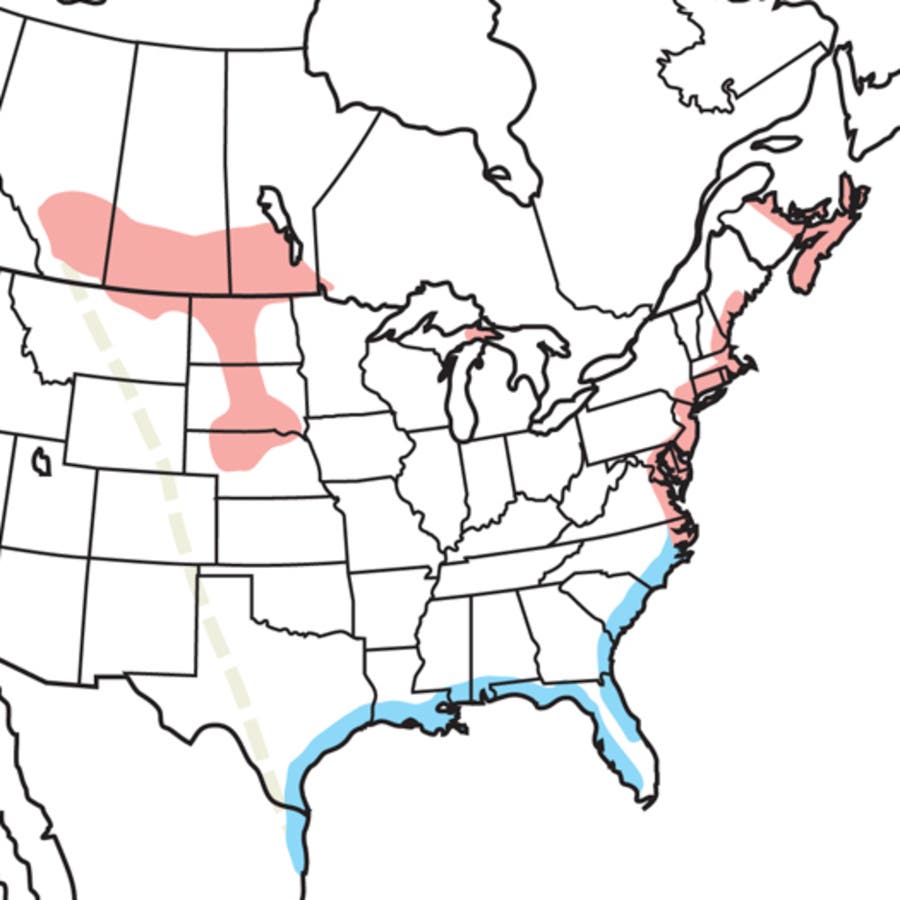
You can see by the map how few area the birds still inhabit the United States. Most are in the Great Lakes region and the barrier island beaches in the northeast.
Photo: Courtesy of New Jersey State Department of Environmental Protection. Map: Courtesy of audubon.org
Get more local news delivered straight to your inbox. Sign up for free Patch newsletters and alerts.